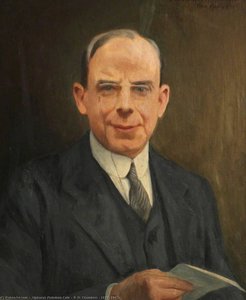
Alphaeus Philemon Cole: A Century and a Half of Vision
Alphaeus Philemon Cole (1876-1988) stands as an extraordinary figure in the annals of American art – not merely for his remarkable longevity, which saw him become the world’s oldest verified living man at 112 years old, but also for the enduring quality and captivating charm of his work. Born in Jersey City, New Jersey, to the renowned wood-engraver Timothy Cole, Alphaeus inherited a legacy of artistic skill and a deep appreciation for visual representation. His life spanned an era of immense social and technological change, witnessing events that shaped the 20th century – from the rise of industrialization to the dawn of the digital age – all while maintaining a consistent dedication to his craft.
Cole’s artistic journey began under the tutelage of Isaac Craig in Italy, an experience that exposed him to the classical traditions of European art. This early immersion laid the foundation for his meticulous technique and keen eye for detail. Later, he honed his skills at the Académie Julian in Paris from 1892 to 1901, studying under Jean Paul Laurens and Jean-Joseph Benjamin-Constant – influential figures known for their realism and mastery of light and shadow. These formative years instilled in him a sophisticated understanding of composition, color theory, and portraiture, elements that would become hallmarks of his distinctive style.
A Dual Career: Portraiture and Engraving
Cole’s artistic output was remarkably diverse, encompassing both portrait painting and wood/steel engraving. Initially, he gained recognition for his vibrant portraits, capturing the essence of his subjects with a subtle blend of realism and psychological insight. Works like “Dante Watching the Building of the Florentine Cathedral” (1900), exhibited at the Paris Salon, showcased his ability to convey emotion and narrative through carefully rendered figures. However, he also embraced the challenges and rewards of engraving, mastering the intricate process of creating images on wood blocks – a skill passed down from his father.
While portraiture proved commercially more successful, Cole’s engravings often received less attention. This disparity likely stemmed from the prevailing market conditions at the time, where portrait commissions were readily available while demand for decorative engraving was limited. Nevertheless, he continued to produce a substantial body of work in both mediums, demonstrating versatility and a deep commitment to his chosen artistic paths.
Marriage, Travel, and Artistic Recognition
In 1903, Cole married Margaret Ward Walmsley, a sculptor, marking the beginning of a long and fulfilling partnership. The couple relocated to England in 1903, seeking new creative opportunities and exposure to different artistic circles. This period saw him further develop his engraving techniques and experiment with various styles. Returning to America in 1911, Cole found a renewed sense of purpose and continued to refine his skills.
Throughout the early 20th century, Cole’s work was exhibited at prestigious venues such as the Royal Academy in London (in 1912) and the Pan-American Exposition in Buffalo, New York (1901). He became a member of the Salmagundi Club in 1918 – an esteemed organization dedicated to promoting fine arts – and later served as president of the New York Watercolor Club from 1931 to 1941. His contributions extended beyond his own artistic practice; he also taught portrait and still life classes at Cooper Union from 1924 to 1931, sharing his knowledge and inspiring a new generation of artists.
Later Years and Legacy
In the mid-20th century, Cole played a pivotal role in shaping the art market by serving as a judge for paintings at Max Pochapin’s Manhattan Hall of Art – an innovative initiative that brought contemporary art to a wider audience. Following the death of his first wife in 1961, he remarried to Anita Rio (née Higgins), a singer and widow of painter Eugene Higgins, in 1962. Despite these personal losses, Cole remained active as an artist until his remarkable age of 103, continuing to exhibit his work and refine his craft.
Alphaeus Philemon Cole’s legacy extends far beyond his impressive lifespan. His paintings and engravings are now held in the permanent collections of prestigious institutions such as London's National Portrait Gallery and the Brooklyn Museum – a testament to the enduring quality of his artistic vision. More importantly, he represents an extraordinary example of human resilience, creativity, and dedication to one’s craft, reminding us that art can transcend time and continue to inspire generations long after its creator has passed away.
Key Influences and Artistic Style
Influences:**- Isaac Craig: Early exposure to classical European art in Italy.
- Jean Paul Laurens & Jean-Joseph Benjamin-Constant: Parisian instructors who emphasized realism, light, and shadow.
- Timothy Cole (Father): Inherited a strong foundation in wood engraving techniques.
- Realism with Impressionistic Touches: A meticulous attention to detail combined with an expressive use of color and light.
- Portraiture: Known for capturing the personality and character of his subjects.
- Still Lifes & Genre Interiors: Displayed a keen eye for composition and arrangement.
- Engraving Technique: Masterful control of line, texture, and tonal values in wood engravings.
His work is characterized by a quiet dignity and an understated elegance – qualities that reflect both his personal life and the enduring power of his artistic vision.