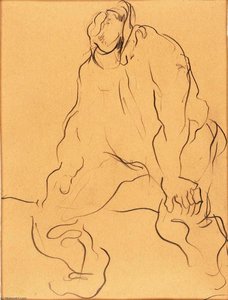
Alfred Sessler: A Pioneer of Color Lithography and Wisconsin Muralism
Alfred A. Sessler (1909–1963) stands as a significant figure in American art history, particularly recognized for his contributions to the WPA era’s mural movement and his innovative approach to printmaking—specifically color lithography—which cemented his place among Wisconsin's artistic luminaries. Born in Milwaukee on January 14, 1909, Sessler’s formative years were marked by a dedication to visual arts education, culminating in studies at the Layton School of Art before pursuing formal academic training at Milwaukee State Teachers College and subsequently earning his Master of Arts degree from University of Wisconsin–Madison. This grounding in artistic principles would profoundly shape his subsequent career as an educator and artist.
- Early Artistic Influences: Sessler’s artistic sensibilities were nurtured by exposure to European Impressionism and Expressionism, influences that resonated deeply within his stylistic choices. Notably, he admired the work of Edvard Munch and Pablo Picasso, whose explorations of emotion and form served as models for his own creative endeavors.
- The WPA Murals: Sessler’s artistic prominence ascended during the Great Depression when he was commissioned by the Treasury Section of Fine Arts to undertake two ambitious mural projects—Gager's Trading Post on the Wadsworth Trail in Morris, Minnesota and Lumbering in Early Lowell for the Lowell, Michigan post office. These murals exemplify Sessler’s commitment to social realism, capturing the essence of rural Wisconsin life and reflecting the spirit of the New Deal era.
Color Lithography: A Distinctive Technique
Sessler distinguished himself as a master of color lithography—a technique that involved transferring ink onto stone plates to produce multiple prints with vibrant hues. This method demanded meticulous planning and execution, requiring artists to carefully consider tonal values and layering processes. Sessler’s prints showcased an exceptional understanding of this medium's capabilities, resulting in artworks characterized by luminous colors and intricate textures. His prints are held in prominent collections including the National Gallery of Art and the Smithsonian American Art Museum.
- Wisconsin Academy Retrospective: In 1988, a retrospective exhibition at the Wisconsin Academy of Sciences, Arts, Letters Gallery celebrated Sessler’s artistic legacy, highlighting his prolific output and demonstrating the enduring appeal of his visual language.
Legacy and Recognition
Alfred Sessler's influence extended beyond his own artistic creations; he established a graphic arts program at University of Wisconsin–Madison where he mentored generations of students, fostering a tradition of experimentation and innovation in printmaking. His work continues to inspire artists today, serving as a testament to the transformative power of art during times of social upheaval. Sessler's inclusion in the exhibition Founders & Visionaries: Wisconsin Jewish Artists from the Milwaukee Art Museum solidified his position as an important figure within Wisconsin’s artistic heritage.
Notable Works
Among Sessler’s most celebrated pieces is "(Seated Man in Cap)", a lithograph print that exemplifies his masterful command of color and composition—a testament to his enduring contribution to American art.