


The Dawn of Rebirth: Understanding the Renaissance Humanist Spirit
 Renaissance
The Renaissance (UK: rin-AY-sənss, US: REN-ə-sahnss) was a European period of history and cultural movement taking place at the end of the Late Middle Ages and the beginning of the early modern era. It is variously defined as covering the 15th and 16...
To contemplate the Renaissance is to witness one of the most profound transformations in the history of human consciousness. Emerging from the twilight of the Middle Ages, this era was not merely a chronological period but a radical rebirth—a resurgence of the intellectual and artistic vigor found in classical antiquity. At its heart lay the philosophy of Humanism, a movement that shifted the focus from purely divine preoccupations to the dignity, potential, and agency of man. This shift, famously encapsulated by the sentiment that man is the measure of all things, breathed new life into every facet of European culture, from the scientific inquiries of polymaths to the lyrical poetry of Petrarch.
As this spirit took root in the Italian city-states, particularly within the flourishing Republic of Florence, it fundamentally altered the purpose of art. The artist was no longer a mere craftsman executing religious icons; they became intellectuals, observers of nature, and architects of the human soul. This era of discovery sought to harmonize the spiritual devotion of the past with a new, empirical understanding of the world. It was a time when the rediscovery of ancient Greek and Roman texts provided a foundation for a culture that celebrated both the earthly realm and the divine, creating a tension that would drive the most magnificent artistic achievements in Western history.
Northern Realism vs. Italian Idealism: A Study in Light and Form
 Deposition Diptych (Small Deposition, right wing)
Hugo van der Goes’s Deposition Diptych (Small Deposition, Right Wing): A Masterpiece of Flemish Realism Hugo van der Goes's "Deposition Diptych (Small Deposition, right wing)," painted around 1480, stands as a monumental achievement in Northern Renai...
While the Italian Renaissance sought perfection through proportion, geometry, and the idealized human form, a parallel revolution was unfolding in the North. The Northern Renaissance, led by masters such as Hugo van der Goes, pursued a different kind of truth—one found in the meticulous, almost microscopic observation of the physical world. Where an Italian master might use linear perspective to create a mathematically perfect space, a Flemish painter would capture the way light clings to a velvet robe or the rugged texture of a stone tomb. This Flemish Realism brought an unprecedented psychological depth to biblical narratives, imbuing religious scenes with a palpable, human vulnerability.
The contrast between these two movements creates a breathtaking dialogue within art history. The Italian tradition, rooted in the clarity of Piero della Francesca, emphasized structural harmony and the monumental presence of figures. In contrast, the Northern masters utilized the medium of oil to achieve a luminous, layered effect that celebrated the minute details of nature. This divergence was not a conflict but a beautiful synthesis; as the centuries progressed, the sophisticated techniques of the North began to merge with the classical foundations of the South, enriching the European visual language with both structural grandeur and an exquisite, tactile intimacy.
Chiaroscuro and Emotion: The Dramatic Power of Masterful Shadow
 Chiaroscuro
In art, chiaroscuro (English: kee-AR-ə-SKOOR-oh, -SKURE-, Italian: [ˌkjaroˈskuːro]; lit. 'light-dark') is the use of strong contrasts between light and dark, usually bold contrasts affecting a whole composition. It is also a technical term used by a...
One of the most enduring legacies of this era is the mastery of chiaroscuro—the deliberate use of strong contrasts between light and dark to achieve a sense of volume and dramatic intensity. This technique does far more than merely model three-dimensional forms; it serves as a psychological tool, directing the viewer's gaze and heightening the emotional stakes of the composition. Through the manipulation of shadow, artists could shroud mystery in darkness while illuminating the profound grief or ecstatic joy of their subjects, creating a theatricality that resonates even centuries later.
This mastery reached its zenith in works that utilized tenebrism, an extreme form of chiaroscuro where darkness becomes a dominant, atmospheric force. By plunging much of the canvas into shadow, artists could focus the viewer's attention on key emotional gestures—the trembling hand of a mourner or the luminous skin of a saint. This interplay of light and shadow creates a sense of breathing space within the painting, allowing the atmosphere to vibrate with life. It is through this technical brilliance that art transcends mere representation, becoming an immersive experience that speaks directly to the human spirit's capacity for both sorrow and transcendence.
The Architect of Soul: El Greco and the Spiritual Intensity of Late Renaissance
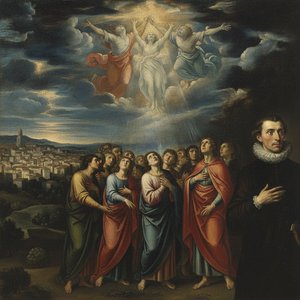 Masterpieces of Light and Spirit: The 25 Best Artworks by El Greco
Introduction To step into the world of Doménikos Theotokópoulos, known universally as El Greco , is to leave the boundaries of the physical realm and enter a space where light, shadow, and spirit collide. His canvases do not merely depict scenes; the...
As the Renaissance transitioned into the late sixteenth century, the boundaries of the physical realm began to blur. No artist embodied this spiritual metamorphosis more profoundly than Doménikos Theotokópoulos, known universally as El Greco. Born in the Byzantine tradition, El Greco carried a legacy of iconographic precision through the coloristic mastery of Venice and the sophisticated distortions of Roman Mannerism. His work represents a departure from the balanced equilibrium of the High Renaissance, moving instead toward an otherworldly energy where light, shadow, and spirit collide.
In his canvases, figures become elongated, almost flame-like, pulling the viewer’s gaze upward in a state of spiritual ascent. His brushwork is restless and visible, suggesting a presence that transcends the physical boundaries of the canvas. To view an El Greco masterpiece is to embark on a pilgrimage through the soul; his art captures the feverish intensity of the Spanish Counter-Reformation, reflecting the eternal human struggle between the earthly and the divine. He anticipated the emotional raw power of modern movements by centuries, proving that true mastery lies in the ability to use distortion not as an error, but as a profound expression of ecstasy and devotion.
Legacy in the Modern Interior: Integrating Renaissance Grandeur into Luxury Spaces
 Interior of Hagia Sophia, Constantinople
Discover the exquisite interior of Hagia Sophia, Constantinople, by John Frederick Lewis. A detailed architectural sketch capturing Byzantine grandeur, perfect for art collectors and history enthusiasts.
For the discerning collector and the sophisticated interior designer, the Renaissance is not a closed chapter of history, but a living influence that can elevate a contemporary space. The presence of a classical masterpiece—or a meticulously crafted reproduction—introduas a sense of timeless elegance and intellectual depth to a room. Whether it is a large-scale multi-panel set spanning a grand staircase or a singular, intimate portrait in a study, these works provide an anchor of permanence in an ever-changing world.
Integrating such grandeur requires a thoughtful approach to scale, color, and texture. A well-placed reproduction of a Renaissance landscape can expand the perceived boundaries of a room, while a dramatic chiaroscuro piece can serve as a powerful focal point in a minimalist setting. The key is to treat art not merely as decoration, but as an architectural element that communicates heritage and prestige. By selecting works that resonate with the existing color palette—perhaps through the use of gold leaf frames or deep espresso tones—one can create a sanctuary of culture that honors the profound beauty of the Old Masters.
Preserving the Eternal: The Art of Curating Masterpiece Reproductions
The true value of art lies in its ability to endure, yet the physical preservation of such treasures is a delicate endeavor. At WahooArt.com, we believe that the majesty of the Renaissance should be accessible to all who cherish it, without compromising on the sanctity of the original vision. Our mission is to bridge the gap between history and the modern home through our Handmade Oil Reproductions. Each piece is a labor of passion, meticulously hand-painted by artists from prestigious academies on 100% cotton canvas, ensuring that every visible brushstroke and tonal depth reflects the soul of the original masterpiece.
We offer more than mere copies; we offer the opportunity to remix history. Through our professional services, a client may transform a personal photograph into a 17th-century portrait in the style of Rembrandt, or request an aged craquelure finish to evoke the venerable character of an antique treasure. From our bespoke digital mockups that allow for personalized color matching to our global logistics network that ensures safe delivery via DHL and FedEx, we provide a full-service experience for the most demanding collectors. Whether you are an interior designer sourcing for a luxury hotel or a homeowner seeking a legacy piece, WahooArt.com invites you to bring the eternal beauty of the Renaissance into your world.


