


The Philosophy of Silence: Why Stillness is the Ultimate Luxury
In an era defined by relentless digital noise and the frenetic pace of global connectivity, true luxury has undergone a profound transformation. It is no longer merely about the acquisition of rare objects or the display of opulence; rather, it is found in the reclamation of silence. For the discerning collector, the most coveted commodity is stillness—that rare, unassailable moment of pause where the soul can breathe. This pursuit of tranquility finds its most profound expression through the curation of art that does not demand attention with loud colors or jarring compositions, but instead invites a deep, meditative gaze.
Integrating works of quiet reflection into a private residence or a high-end hospitality space creates an emotional sanctuary. These pieces act as anchors, grounding a room and providing a visual respite from the chaos of the outside world. When we surround ourselves with art that embodies stillness, we are not merely decorating a wall; we and we are constructing an atmosphere of permanence and peace. This is the true essence of a curated life: selecting works that resonate with the quietude we seek to cultivate within our own sanctuaries.
Atmospheric Mastery: The Impressionist Light and the Soul of Landscape
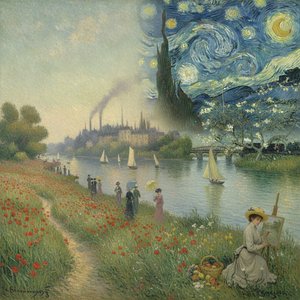 10 Iconic Impressionist Landscapes That Changed Art Forever
Introduction To step into the world of Impressionist landscapes is to abandon the rigid boundaries of reality and embrace the fleeting dance of light and atmosphere. Imagine standing on the banks of the Seine or amidst a sun-drenched meadow in Givern...
To understand the power of stillness in art, one must look to the revolutionary era of Impressionism, where the rigid boundaries of reality were abandoned in favor of the ephemeral dance of light. Artists such as Claude Monet and Pierre-Auguste Renoir did not seek to document the world with photographic precision; instead, they sought to capture the very pulse of a moment—the soft haze of a morning mist or the way sunlight shimmers across a lily pond. In these works, the air itself feels alive, vibrating with a delicate, atmospheric energy that transcends the canvas.
The technical mastery required to evoke such serenity is breathtaking. Through the use of broken brushstrokes and a luminous, often pastel-driven palette, Impressionist masters achieved a sense of movement that paradoxically induces calm. Consider the works of Camille Pissarro, where even a simple dirt road or a cluster of trees becomes an electric experience of light and shadow. This movement teaches us that beauty is found in the transient; by capturing the fleeting moment before the light shifts, these artists allow the viewer to inhabit a state of eternal, sun-drenched peace. It is an invitation to slow down, to observe the subtle nuances of a sunset, and to find wonder in the seemingly mundane.
Curating Solitude: Selecting Textures and Tones for Tranquil Spaces
 (Landscape of Dead Fallen Tree and Pond), (painting)
Explore Frank Hayward’s ‘Landscape of Dead Fallen Tree.’ A monochromatic oil painting showcasing Romanticism & Luminism with impasto texture. Captivating solitude & atmosphere.
The art of curation lies in the delicate balance between visual interest and emotional repose. When designing an interior intended for reflection, the selection of texture plays a pivotal role. A flat, printed image lacks the soul required to anchor a room; true depth is found in the tactile richness of oil on canvas. The visible, energetic brushstrokes of a master—the impasto technique that creates physical ridges of paint—add a dimension of organic life that breathes within a space. This texture catches the light, creating subtle shadows that change as the day progresses, much like the natural world itself.
Color palette selection is equally critical in maintaining this sense of serenity. While bold, vibrant tones can offer vitality, a more sophisticated approach for tranquil interiors involves a mastery of tonal range and harmony. Earthy browns, deep oranges, and muted blues—as seen in the evocative landscape studies of Sir Alfred James Munnings—can create a sense of groundedness and warmth. Conversely, the use of monochromatic or low-contrast palettes can evoke a profound sense of solitude and mystery. By layering these tones with precision, a collector can orchestrate a visual symphony that promotes introspection rather than distraction.
From Renaissance to Modernity: A Journey Through Contemplative Eras
 joachim patinir
A Pioneer of the Northern Renaissance Landscape Joachim Patinir, a name often whispered alongside that of Albrecht Altdorfer as a foundational figure in landscape painting, emerged from the artistic milieu of the Low Countries during the early 16th c...
The lineage of contemplative art stretches far beyond the 19th century, rooted in the foundational landscapes of the Northern Renaissance. Pioneers like Joachim Patinir were instrumental in inventing a new way of seeing, imbuing landscapes with narrative power and symbolic depth. These early works often featured vast, fantastical vistas that, while complex, offered a window into a world of quiet wonder and spiritual exploration. The meticulous realism of this era provided a structured form of beauty that demanded a slow, disciplined observation.
As art evolved, so too did the expression of solitude. We see a transition from the symbolic landscapes of the 16th century to the more personal, emotive explorations of the late 19th and early 20th centuries. Even in contemporary works, such as the bold abstractions of Wayne Bennett, we find echoes of this contemplative spirit. Though his palette may be more vibrant and his forms more abstract, the underlying intent remains: to capture the essence of nature with an uncompromising passion that resonates with the viewer's own emotional landscape. This historical continuum demonstrates that while techniques change, the human desire to find meaning in the stillness of nature remains constant.
Architectural Integration: Scaling Masterpieces for Grand Interiors
For the elite collector or the luxury interior designer, the final challenge is the seamless integration of these masterpieces into the architectural fabric of a space. Art does not exist in isolation; it interacts with the scale, light, and volume of its surroundings. Large-format works, such as custom-painted murals or expansive multi-panel compositions, can transform a grand hall or a sweeping staircase into a cohesive narrative experience. The use of group set paintings—splitting a single landscape across three or five panels—allows for a modern, architectural look that directs the eye and defines the rhythm of a room.
Furthermore, the technical execution of framing and mounting is essential to preserving the integrity of the work. A solid wood frame in gold leaf or deep espresso provides the necessary weight to anchor a significant piece, while frameless options like MirrorWrap offer a contemporary, seamless aesthetic. When art is scaled correctly and integrated thoughtfully, it ceases to be an ornament and becomes part of the architecture itself—a permanent, breathing element of the home that continues to offer its quiet, profound gift of reflection for generations to come.
At WahooArt.com, we specialize in bringing these moments of stillness to life through our museum-quality, hand-painted oil reproductions. Whether you are seeking to recreate a classic Impressionist landscape or commission a bespoke piece that transforms a personal memory into a masterpiece, our artists utilize centuries-old techniques on premium cotton canvas to ensure every brushstroke resonates with authenticity and prestige. From professional art consultations to global logistics, we provide a full-service experience for the most discerning collectors.


