


The Dawn of Discovery: Napoleon, Egyptology, and the Spark of Western Curiosity
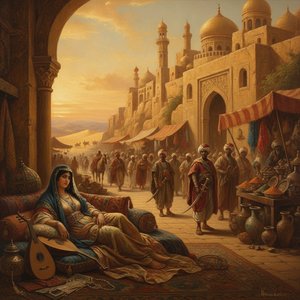 Orientalism: Exploring the Exotic Allure and Complex Legacy of 19th-Century Masterpieces
The Dawn of Discovery: Napoleon, Egyptology, and the Spark of Western Curiosity 19th-century French art 19th-century French art was made in France or by French citizens during the following political regimes: Napoleon's Consulate (1799–1804) and Empi...
To understand the profound fascination with the Orient that gripped the nineteenth-century European consciousness, one must look toward the dust and drama of military conquest. The year 1798 marked a seismic shift in the Western psyche when Napoleon Bonaparte’s expedition to Egypt brought more than just soldiers; it brought an army of scholars, scientists, and artists. This era of unprecedented exploration ignited a feverish interest in Egyptology and the broader Middle East, transforming distant lands from mere geographical entities into realms of mythic possibility. As the spoils of discovery flowed back to Paris, they carried with them a new visual vocabulary—a language of intricate patterns, sun-drenched ruins, and an atmosphere of profound mystery.
This period of intense curiosity was not merely academic; it was deeply emotional. The influx of archaeological findings provided a tangible connection to the ancient world, fueling a romanticized view of the East as a place where time itself seemed to stand still. This fascination laid the groundwork for an entire movement of painting that sought to bridge the gap between the known and the imagined, creating a window into a world that felt both tantalizingly close and infinitely exotic.
Academic Rigor Meets Exotic Allure: The Mastery of Jean-Léon Gérôme
 Jean-Léon Gérôme: Academic Rigor & Orientalist Visions Shaping 19th-Century French Painting
The Foundations of Academic Mastery: Gérôme's Early Training & Influences Wikipedia: Jean-Léon Gérôme Jean-Léon Gérôme (French pronunciation: [ʒɑ̃ leɔ̃ ʒeʁom]; 11 May 1824 – 10 January 1904) was a French painter and sculptor in the style now known as...
Within this burgeoning fascination, few names command as much reverence as Jean-Léon Gérôme. A titan of the French Academic movement, Gérôme possessed a rare, dual capability: the meticulous precision of a master technician and the evocative soul of a storyteller. His training under Paul Delaroche instilled in him an unwavering commitment to photographic fidelity, a trait that allowed him to reconstruct historical and Orientalist scenes with breathtaking clarity. When one gazes upon his masterpieces, such as The Dance of the Almeh, one does not merely see a painting; one steps through a veil into a vibrant cultural spectacle.
Gérôme’s brilliance lay in his ability to ground the exotic in reality. In works like Cleopatra and Caesar, he utilized his profound knowledge of historical detail to create a sense of lived truth, even when navigating the boundaries of legend. His technique—the way light dances across a silk gown or how the texture of polished stone is rendered with near-scientific accuracy—servent to validate the fantasy. He did not simply paint the Orient; he built it, layer by meticulous layer, using oil and canvas to create a window into a world steeped in grace, movement, and an irresistible, practiced allure.
Architects of Antiquity: Gustave Boulanger and the Neo-Grec Vision
 boulanger gustave
The Architect of Antiquity: The Life and Vision of Gustave Boulanger In the grand, sweeping tapestry of nineteenth-century French art, few threads are as intricately woven with classical elegance and exotic allure as those spun by Gustave Clarence Ro...
While Gérôme captured the vibrant pulse of contemporary Orientalist life, Gustave Boulanger sought to find its classical heartbeat. A leading figure of the Néo-Grec movement, Boulanger’s work represents a sophisticated synthesis of classical elegance and exotic splendor. His artistic journey, shaped by the profound study of ancient ruins in Italy and Greece, allowed him to infuse his canvases with an authentic sense of historical weight. For Boulanger, the past was not a dead relic but a living inspiration that could be rejuvenated through a lens of modern sensuality.
His paintings often serve as architectural triumphs in their own right, where the grandeur of antiquity meets a subtle, whimsical charm. By documenting the majesty of sites like Pompeii with academic precision, he created works that felt both monumental and intimate. His ability to bridge the austere beauty of the Mediterranean past with the lush, atmospheric textures of the East provided a stylistic rebellion against the burgeoning Impressionist trend, offering instead a sanctuary of form, structure, and enduring classical grace.
A Tapestry of Light and Mystery: The Romantic Sensibility of Alexandre René Verón
 alexandre rene veron
A Life Immersed in Light and the Orient Alexandre Rene Veron, born in France in 1826 and passing away in 1897, was a painter whose career blossomed during a period of intense artistic change and burgeoning European fascination with the “Orient.” Whil...
In the broader tapestry of nineteenth-century art, Alexandre René Verón carved a distinct and luminous niche. While perhaps less celebrated in the grand halls of the Academy than his contemporaries, Verón’s work embodies the romantic sensibility that defined the era's fascination with the East. His paintings are characterized by an evocative use of light and shadow, where Middle Eastern scenes are imbued with a soft, atmospheric glow that suggests much more than what is visible to the eye.
Verón’s approach moved beyond strict academic adherence, embracing a style influenced by the Barbizon school’s emphasis on direct observation. His landscapes and genre scenes possess a quiet, contemplative depth, capturing the subtle emotional currents of the Orient. Through his brush, the East becomes a place of light-drenched vistas and romanticized stillness, where every shadow holds a secret and every sunbeam tells a story of a world far removed from the industrializing West.
The Complex Legacy of Orientalism: Between Observation and Imagination
Julia Tugwell takes a look at the art movement of Orientalism, and the way in which North Africa and the Middle East were represented.
To reflect upon Orientalism today is to navigate a complex landscape of beauty and contradiction. It is an art movement that exists at the intersection of genuine cultural exchange and the pervasive practice of exoticization. While these masterpieces offer us unparalleled glimpses into the aesthetic splendor of North Africa and the Middle East, they are also products of their time—shaped by the colonial contexts and the romanticized stereotypes of the nineteenth-century European gaze. The "exotic" was often a construction of the observer as much as it was a reflection of the observed.
Yet, to dismiss these works solely through a modern critical lens would be to overlook their profound artistic achievement. There is an undeniable truth in the craftsmanship—a dedication to capturing the texture of life that transcends political boundaries. The legacy of Orientalism remains a powerful testament to the human desire to find meaning in the "other," creating a visual dialogue between cultures that, despite its complexities, continues to captivate the modern imagination with its sheer, unadulterated beauty.
Curating the Orient: Integrating Masterpiece Reproductions into Luxury Interiors
For the discerning collector and the visionary interior designer, the works of the Orientalist masters offer an unparalleled opportunity to infuse a space with history, depth, and a sense of worldly sophistication. Integrating these themes into a contemporary luxury environment requires a delicate touch—a way to honor the grandeur of the original while ensuring the aesthetic remains timeless. A large-format, hand-painted reproduction of a Gérôme or Boulanger can serve as a profound focal point in a grand salon or a stately library, providing a window into another era.
At WahooArt.com, we specialize in bringing this historical splendor to life through our bespoke, museum-quality oil reproductions. Our artists, trained in the rigorous traditions of the Fine Arts academies, hand-paint each piece on 100% cotton canvas, ensuring that the visible brushstrokes and rich tonal ranges of the masters are preserved. Whether you are seeking a multi-panel arrangement to adorn a wide architectural feature or a custom "remixed" portrait that blends historical style with personal significance, our service is designed for the most exacting standards of luxury. We invite you to explore our collection and transform your space into a curated gallery of global heritage.


