Introduction To step into the world of Ukiyo-e is to enter a realm of floating delights, where the ephemeral beauty of a passing moment is captured forever in ink and pigment. The term itself, translating to "pictures of the floating world," evokes t...
To understand the Japanese landscape is to grasp the concept of ukiyo, a term that translates to the "floating world." While often associated with the hedonistic pursuits of the Edo period—the theater, the pleasure districts, and the fleeting joys of urban life—this philosophy carries a deeper, more contemplative weight. It suggests a recognition of the ephemeral nature of existence, where beauty is found precisely because it cannot last. This tension between the passing moment and the enduring spirit defines much of the era's visual output.
Long before the landscape became a central subject in woodblock prints, the Japanese artistic tradition was shaped by the kara-e style, heavily influenced by Chinese aesthetics. These earlier works often focused on formal, sometimes rigid, depictions of history and myth. However, as the Edo period progressed, a shift occurred toward the yamato-e tradition, which emphasized native Japanese themes and a more intimate connection to the local environment. This transition mirrors the movement from the grand, distant narratives of the past to a focused appreciation for the immediate, lived experience of the Japanese archipelago.
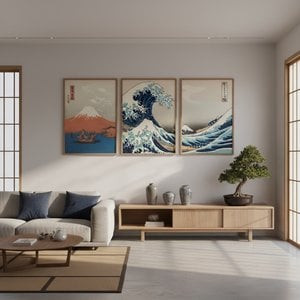
Today, this philosophy remains a cornerstone for collectors seeking works that offer more than mere decoration. A landscape print is not simply a view of a mountain or a river; it is an invitation to contemplate the passage of time. Whether through the stillness of a snow-covered station or the rhythmic surge of a wave, these works capture a sense of permanence within the transient, much like the way a well-placed piece of art can anchor a modern interior against the chaos of contemporary life.
Mokuhanga Mastery: The Collaborative Precision of Woodblock Production
Woodblock printing in Japan (木版画, mokuhanga) is a technique best known for its use in the ukiyo-e artistic genre, but it was also used for printing books in the same period. Invented in China during the Tang dynasty, woodblock printing was widely ado...
The creation of a ukiyo-e print was never the solitary act of a single genius, but rather a sophisticated division of labor involving an artist, a carver, a printer, and a publisher. This collaborative ecosystem ensured a level of technical precision that individual painters rarely achieved. The artist provided the initial design, but it was the carver’s steady hand that translated fluid brushstrokes into the rigid medium of wood, and the printer’s mastery over water-based inks that breathed life back into the carved lines through subtle gradations and color blending.
This structured production finds a historical echo in the early development of Japanese book printing. In the 13th century, monks at temples like Kofuku-ji in Nara utilized woodblock technology to reproduce sacred texts such as the Lotus Sutra. These early religious endeavors established the fundamental mechanics of the medium—the necessity of precise carving and the importance of ink consistency. What began as a tool for spiritual dissemination eventually evolved into a commercial powerhouse capable of mass-producing the vibrant, secular imagery that would define an entire era.
For the discerning collector, the value of these prints lies in this very technical complexity. The ability of a printer to achieve delicate color transitions—a technique known as bokashi—is a mark of true quality. When examining a work like Hokusai’s depictions of waterfalls, one observes how the hand-applied pigments create an atmospheric depth that machine-printed reproductions simply cannot replicate. It is this tactile, human element of the production process that preserves the soul of the floating world.
Chromatic Evolution: Prussian Blue and the Expansion of Visual Depth
Introduction To embark on a journey through the 25 most celebrated artworks of Katsushika Hokusai is to enter a world where ink blossoms into waves, mountains breathe with life, and everyday scenes resonate with profound beauty. These pieces aren’t m...
The visual language of Japanese landscape art underwent a profound transformation in the early 19th century, driven by a single technological advancement: the introduction of Prussian Blue. Before this imported pigment became available, artists relied on organic, vegetable-based blues that were prone to fading and lacked intensity. The arrival of this stable, brilliant mineral pigment allowed for a new level of expressive freedom, particularly in the depiction of expansive skies and deep, churning waters.
This shift toward saturated color finds its parallel in the earlier beni-e or red-picture prints of the 1740s. In those early stages, color was applied with restraint, often limited to a few distinct hues. The transition from these monochromatic or limited-palette works to the full-color nishiki-e (brocade prints) of the 1760s represents a similar trajectory of expanding visual possibilities. Just as Prussian Blue expanded the artist's palette, the development of multiple woodblocks allowed for a much more complex and layered chromatic experience.
This evolution is most evident in the works of Katsushika Hokusai. In his Thirty-six Views of Mount Fuji, the use of Prussian Blue provides a structural weight to the composition, allowing the water to appear both heavy and translucent. For those curating high-end spaces, these deep, enduring tones offer a sophisticated way to introduce color without overwhelming a room's aesthetic. The stability of the pigment ensures that the visual impact remains as potent today as it was during the Edo period.
The Landscape Emergence: From Urban Portraits to Natural Vistas
--- title: JAPANESE LANDSCAPE PRINTS url: https://www.ashmolean.org/collections/japanese-landscape-prints hostname: ashmolean.org description: Explore a selection of collection highlights from the master of Japanese landscape prints, Utagawa Hiroshig...
Landscape did not emerge as a primary subject in ukiyo-e until the early 1800s. For much of the movement's history, the focus remained on the human element—the dramatic poses of Kabuki actors, the elegance of courtesans, and the bustling energy of the chōnin class. However, as travel became more common among the Japanese populace for pilgrimage and sightseeing, a new demand arose for souvenir prints that captured famous landmarks, roads, and natural wonders.
This movement toward nature can be traced back to the ancient tradition of ink wash painting, or sumi-e, introduced by Zen monks in the 14th century. While sumi-e focused on the spiritual essence of a subject through monochrome brushwork, the later landscape prints of Hiroshige and Hokusai brought these natural elements into the light of the everyday. They took the spiritual reverence for nature found in ink wash paintings and married it to the vibrant, accessible reality of the traveling public.
The result was a genre that celebrated both the monumental and the mundane. A print might feature the towering presence of Mount Fuji alongside a quiet moment of a traveler resting by a roadside inn. This duality makes landscape prints particularly versatile for modern collectors; they can serve as grand focal points in a large hall or as intimate, meditative accents in a private study, bridging the gap between the epic scale of nature and the quietude of domestic life.
Global Lineage: The Endament Resonance of Japanese Aesthetics
Introduction Imagine walking through the neon-drenched streets of modern Tokyo, where every vibrant billboard and graphic anime frame carries a hidden DNA of the past. Long before the digital glow of our screens, there was Ukiyo-e —the art of the 'Fl...
The influence of ukiyo-e landscapes extended far beyond the borders of Japan, fundamentally altering the course of Western art history through the phenomenon of Japonisme. As these prints reached Europe in the late 19th century, they provided a radical alternative to the academic traditions of the West. The bold outlines, flattened perspectives, and unconventional cropping found in the works of Hiroshige and Hokusai offered fresh visual vocabulary to masters such as Monet, Degas, and Van Gogh.
This cross-cultural dialogue finds its echo in the way Japanese artists themselves were constantly absorbing and adapting foreign influences. The introduction of Western perspective and new pigments was not seen as a loss of tradition, but as an opportunity for expansion. Much like the Impressionists reinterpreted Japanese motifs through a European lens, the ukiyo-e masters integrated new tools to refine their depiction of the familiar, creating a lineage of innovation that spans centuries and continents.
Today, we see this legacy in everything from modern graphic design to contemporary cinematic framing. The structural clarity and compositional intelligence of the floating world continue to inform our global aesthetic DNA. At WahooArt.com, we honor this enduring craftsmanship by offering hand-painted reproductions that capture the true texture and tonal depth of these historical treasures, ensuring that the spirit of the floating world remains a living part of the modern collector's repertoire.
Journey through the soul of Japan with our curated guide to the 25 greatest works by Katsushika Hokusai. From The Great Wave to iconic ukiyo-e landscapes, explore the stories behind these timeless masterpieces and find museum-quality art reproductions on WahooArt.com.
Explore the vibrant world of Ukiyo-e. Discover the history, technical mastery, and iconic masters of Japanese woodblock prints, from Hokusai to Hiroshige. A definitive guide for art historians and collectors seeking to understand the profound legacy of the 'Floating World'.
Journey through the 'Floating World' with our curated guide to 10 Ukiyo-e masterpieces. From Hokusai’s waves to Hiroshige’s landscapes, explore the stories behind these iconic woodblock prints. Find museum-quality reproductions for your decor at WahooArt.com. Explore the full collection online.



 10 Iconic Ukiyo-e Masterpieces That Defined Japanese Art
 Woodblock printing in Japan
 Hokusai's Masterpieces: 25 Iconic Prints & Paintings for Art Lovers | WahooArt
 10 Iconic Ukiyo-e Masterpieces That Defined Japanese Woodblock Art


