


The Neon Rebellion: How Pop Art Shattered the Walls of High Culture
Pop art is an art movement that emerged in the United Kingdom and the United States during the mid-to late 1950s. The movement presented a challenge to traditions of fine art by including imagery from popular and mass culture—including advertising, c...
To understand the seismic shift that occurred in the mid-20th century, one must look past the heavy, introspective shadows of Abstract Expressionism and witness the sudden, electric explosion of color that redefined our visual reality. For decades, fine art was a walled garden, reserved for the elite and preoccupied with the profound, often inaccessible depths of the human psyche. Then came Pop Art—a movement that didn't just knock on the gates but tore them down with the energy of a printing press. Emerging from the United Kingdom and the United States in the late 1950s, this rebellion turned the gaze away from the internal struggle and toward the external spectacle. It took the banal, the kitsch, and the mass-produced—the very things society was taught to ignore—and elevated them to the status of icons.
This wasn't merely a change in subject matter; it was a fundamental challenge to the definition of art itself. By incorporating imagery from advertising, comic strips, product packaging, and celebrity culture, artists began to blur the boundaries between high culture and the everyday consumerist dream. It was a movement that embraced the glossy, the vibrant, and the accessible, proving that there is profound cultural significance in the objects we touch, consume, and celebrate every day. This rebellion transformed the canvas into a mirror of the modern, industrial age, inviting us to find beauty in the repetitive pulse of mass media.
Iconic Collisions: Reimagining Legends from Mickey Mouse to Warhol
 Andy mouse
Andy Mouse: A Pop Art Icon Reimagined Keith Haring’s *Andy Mouse* isn't merely a cartoon; it’s a vibrant collision of artistic movements and cultural icons. Born from the late 20th-century Neo-Pop Art movement, this piece brilliantly merges the unive...
The true magic of this era lies in its ability to perform a brilliant cultural alchemy, merging disparate worlds into something entirely new and undeniably potent. Consider the vibrant collision found in Keith Haring’s Andy Mouse. This isn't just a playful cartoon; it is a sophisticated dialogue between two titans of the late 20th century. By injecting his signature Neo-Pop aesthetic—characterized by bold, energetic lines and simplified forms—into the universally recognized silhouette of Disney’s Mickey Mouse, Haring created a hybrid icon. When layered with the groundbreaking, silkscreened aesthetic pioneered by Andy Warhol, the piece becomes a commentary on the very nature of fame and the commodification of childhood innocence.
< p>This spirit of reimagination extends to the works of Roy Lichtenstein, who acted as a primary architect of this new visual language. He took the low-brow, disposable imagery of comic books and pulp fiction and imbued it with a strange, detached emotional depth. In masterpieces like Studio the dance, we see a vibrant, almost comic-book explosion of color where figures are caught in stylized, intimate interactions. Through his meticulous use of Ben-Day dots and heavy black outlines, Lichtenstein transformed fleeting, voyeuristic moments into monumental artistic statements. These collisions of pop iconography remind us that history is not a static timeline, but a living, breathing playground where legends can be remixed to resonate with the energy of the present.Beyond the Surface: Decoding the Hidden Symbols in Mass Media Imagery
 More Than Meets the Eye: Decoding the Hidden Symbols and Bold Layers of Allegorical Pop Art
Beyond the Surface: Why Pop Art is More Than Just Eye Candy Pop art Pop art is an art movement that emerged in the United Kingdom and the United States during the mid-to late 1950s. The movement presented a challenge to traditions of fine art by incl...
At first glance, Pop Art can appear as nothing more than eye candy—a neon explosion designed for easy consumption and instant digital-age appeal. However, to dismiss it as mere surface-level decoration is to miss the profound interrogation of modern life happening beneath the pigment. Every saturated hue and familiar face carries a weight of meaning. The movement functions as a decoding tool for the hidden language of mass media, revealing how we consume images, emotions, and stories in an increasingly saturated world.
When we look at the work of artists like Justin McCarthy, we see a fascinating precursor to this depth. His unique vision blended naive expressionism with pop culture fascination and even biblical storytelling, anticipating the movement's ability to find the extraordinary within the ordinary. Similarly, the use of mechanical reproduction techniques—like the simulated halftone patterns seen in the works of Damien Delorme—serves to highlight the tension between reality and its commercialized representation. These artists invite us to look closer at the symbols we take for a given: the celebrity, the advertisement, the mass-produced object. They challenge us to recognize that our visual culture is not just something we observe, but something that actively shapes our identity and our understanding of truth.
The Digital Pulse: Why Mid-Century Aesthetics Rule Modern Design
 Damien Delorme
The Architect of Pop Precision Born in 1968, Damien Delorme has emerged as a preeminent figure in contemporary digital imagery, masterfully resurrecting the high-drama aesthetics of mid-century Americana. Working from his studio in Lyon, Delorme dire...
There is a reason why the aesthetics of the mid-century Pop movement feel so at home in our current digital landscape. We live in an era defined by rapid-fire imagery, high-contrast graphics, and a constant stream of visual stimuli that mirrors the very energy Lichtenstein and Warhol first explored. The bold primary colors, thick outlines, and graphic punch of this era resonate with the sleek, high-impact design language of modern branding, gaming, and street culture. It is an aesthetic of immediacy and impact.
The technical innovations of the past—the simulation of the printing press and the celebration of the mechanical—have found a second life in our digital interfaces. The way we interact with screens today, moving through layers of saturated color and stylized icons, is a direct descendant of the Pop Art revolution. This enduring relevance proves that the movement's core strength lies in its ability to capture the heartbeat of an era. Whether it is through the electric energy of a comic-book inspired painting or the clean, aggressive lines of contemporary graphic art, the pulse of Pop remains the driving force behind much of our modern visual identity.
From Canvas to Street: The Evolution of Visual Impact and Pop Surrealism
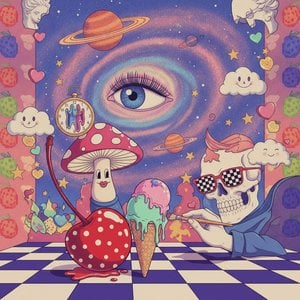 Pop Surrealism Unveiled: The Sophisticated Intersection of Vibrant Pop Art and Dreamlike Subconscious Landscapes
The Genesis of a Movement: From Post-War Optimism to Underground Rebellion Pop Surrealism: A Collision of Culture, Dreams & the Subconscious in Post-War Art The Roots of Rebellion: From Post-War Optimism to Underground Expression 100 Sources of Pop A...
As the decades progressed, the boundaries of Pop Art continued to expand, evolving into even more complex and dreamlike territories like Pop Surrealism. This movement represents a sophisticated intersection where the vibrant energy of Pop meets the deep, often unsettling landscapes of the subconscious. It takes the recognizable symbols of pop culture and places them within surreal, fantastical environments, creating a sense of beautiful tension. This evolution allows for a much richer narrative, moving from the celebration of the external world to an exploration of the internal dreamscape.
This progression shows that art is never truly finished; it is constantly being reinterpreted through new lenses. From the early, bold rebellions against academic tradition to the intricate, layered worlds of contemporary surrealism, the lineage of impact remains consistent. The goal has always been to create works that demand attention—pieces that do not merely sit on a wall but vibrate with life, forcing the viewer to reconsider the fabric of their own visual culture. It is this relentless pursuit of impact that keeps the spirit of Pop alive in every new generation of creators.
Remixing History: How You Can Transform Personal Memories into Pop Masterpieces
The most exciting frontier of this movement is how it allows us to participate in the act of creation. We are no longer just observers of art history; we are its remixers. At WahooArt.com, we believe that the bold energy of Pop Art should be applied to the most personal stories imaginable. The same techniques used by the masters—the vibrant color palettes, the transformative stylization, and the elevation of the everyday—can be used to turn your own life into a masterpiece.
Imagine transforming a cherished wedding photograph into a high-impact, multi-panel oil painting that echoes the dramatic tension of Lichtenstein. Or perhaps reimagining a portrait of a beloved pet with the neon, celebrity-obsessed energy of Warhol. Through our professional digital mockup services and expert hand-painted reproductions, we offer you the tools to bridge the gap between personal memory and fine art. Whether it is through a "Period Shift" that turns a modern selfie into a historical icon or an AI-driven transformation into a Cubist dream, the power to redefine your own history is now at your fingertips. Art is a lasting memory; let us help you make yours unforgettable.


