In art, chiaroscuro (English: kee-AR-ə-SKOOR-oh, -SKURE-, Italian: [ˌkjaroˈskuːro]; lit. 'light-dark') is the use of strong contrasts between light and dark, usually bold contrasts affecting a whole composition. It is also a technical term used by a...
To observe a painting is to witness a silent dialogue between the visible and the hidden. At the heart of this interaction lies chiaroscuro, a term derived from the Italian chiaro (light) and scuro (dark). Far more than a mere technical trick for shading, this method serves as the fundamental language used by artists to translate the three-dimensional reality of our world onto the deceptive flatness of a canvas. By meticulously manipulating the transition from brilliant highlights to deep, receding shadows, a painter breathes volume into a simple circle, transforming it into a heavy, palpable sphere.
This pursuit of form finds its early roots in the ancient practice of skiagraphia, or shadow-painting, utilized by Greek masters like Apollodorus to suggest burgeoning three-dimensional depth. Centuries later, this impulse was refined during the Renaissance, most notably by Leonardo da Vinci. In works such as his Adoration of the Magi, Da Vinci demonstrated how light could be used not merely to illuminate, but to sculpt. He worked with dark, tinted papers and built layers of light through white gouache highlights, achieving a sense of roundness that remains a standard for anatomical precision.
The true mastery of chiaroscuro resides in its ability to define edges and weight. Without the strategic placement of shadow, an object lacks presence; it becomes a mere silhouette, devoid of texture or mass. When an artist masters this balance, they create a tactile reality that invites the viewer to sense the velvet of a sleeve or the cold skin of a fruit. It is a construction of physical space where objects possess not just shape, but a soul.
Tenebrism: The Radical Shift Toward Psychological Intensity
While chiaroscuro provides the structure for volume, tenebrism introduces the element of theater. Tenebrism, derived from tenebroso (dark, gloomy), takes the concept of contrast to an extreme. It is a style where darkness becomes a dominating, physical presence rather than a mere absence of light. In this approach, much of the canvas is plunged into an impenetrable black void, leaving only select figures or moments spotlighted by a harsh, almost violent illumination.
This radical departure from the soft, diffused light of the Renaissance was pioneered by Michelangelo Merisi da Caravaggio. Arriving in Rome around 1592, Caravaggio rejected the idealized elegance of Mannerism in favor of something far more visceral. In works such as his The Calling of Saint Matthew, we see figures caught in a moment of profound expression, their postures shaped by sudden, directional light. The stark contrast between illuminated flesh and the enveloping darkness does not simply highlight the subject; it heightens the psychological impact, forcing an intimate confrontation with the figure's inner conviction.
This technique functions with a specific intent. By using light as a spotlight, the artist directs the viewer’s eye with surgical precision, creating a sense of mystery and foreboding. It is a method of storytelling that relies on what is left unseen. The darkness acts as a stage, isolating the subject from the distractions of the world and focusing all emotional energy onto a single, transformative moment.
Neapolitan Realism: The Gritty Truths of Light and Shadow
A Masterpiece of Baroque Sorrow In the profound stillness of Jusepe de Ribera’s The Tears of Saint Peter , we are invited into a private moment of spiritual crisis and overwhelming human vulnerability. Created in 1612, this work stands as a breathtak...
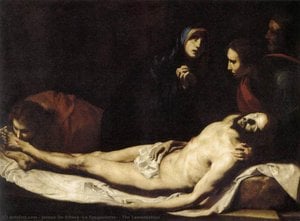
The influence of Caravaggio’s shadows did not remain confined to Rome; it traveled, mutating as it encountered new landscapes. In Naples, a city characterized by its own turbulent social climate, the style evolved into a grittier, more profound form of realism. Artists like Jusepe de Ribera, known as Lo Spagnoletto, absorbed the master's tenebrism but infused it with an unflinching commitment to the textures of human suffering and spiritual ecstasy.
Ribera’s work, such as The Tears of Saint Peter, exemplifies this Neapolitan sensibility. Here, a single, piercing light source strikes the aged, weathered face of the Apostle, illuminating the silvered strands of his beard and the damp glint of sorrow in his eyes. The background remains shrouded in an abyss, forcing the viewer to witness the raw edges of human vulnerability. This is not the idealized divinity of earlier eras; it is a divinity found in the dirt, the worn skin, and the physical reality of martyrdom.
This lineage of realism was furthered by figures such as Giovanni Battista Caracciolo, who brought a distinctly Neapolitan darkness to religious narratives. The movement also found a voice in Spain through Sebastián López De Arteaga, who introduced these tenebrist principles to Mexican Baroque painting. Through this expansion, the use of extreme shadow became a tool for exploring the human condition across continents, proving that the most profound truths are often found where the light is most sparse.
The Cinematic Legacy: From Rembrandt’s Portraits to Film Noir
Rembrandt lighting is a standard lighting technique that is used in studio portrait photography and cinematography; it is also used in contrast with butterfly lighting It can be achieved using one light and a reflector, or two lights, and is popular ...
The dramatic vocabulary established by the Baroque masters continues to dictate how we perceive narrative tension in modern visual media. The technique of "Rembrandt lighting," a staple of contemporary studio photography and cinematography, directly references the Dutch master's ability to use light to illuminate both the physical and emotional landscape. By creating a small, illuminated triangle of light under the eye on the shadowed side of the face, the technique achieves a sense of naturalism and depth that is instantly compelling.
This legacy is perhaps most visible in the genre of film noir. In the shadows of mid-century cinema, directors utilized low-angle shots and high-contrast lighting to evoke themes of crime, intrigue, and moral ambiguity. The darkness in film noir is as much a character as the actors themselves; it provides the necessary atmosphere for mystery and psychological tension. Much like Caravaggio’s canvases, the cinematic frame uses shadow to suggest what cannot be spoken, creating an environment where the boundary between truth and deception is perpetually blurred.
From the earliest uses of skiagraphia in Greek mosaics to the high-key lighting of modern Hollywood, the manipulation of contrast remains our most potent tool for directing attention. Whether through a single candle in a Georges de La Tourpainting or a harsh spotlight on a noir protagonist, the interplay of light and dark continues to command the human gaze, proving that the most enduring stories are those told in the balance of extremes.
Curating Drama: Integrating High-Contrast Art into Sophisticated Interiors
For the discerning collector, incorporating high-contrast works into a curated space requires a sense of restraint and architectural awareness. A painting defined by tenebrism is a powerful focal point; it possesses a gravitational pull that can anchor an entire room. Because these works often feature deep, earthy palettes—ochre, burnt umber, and midnight black—they integrate seamlessly into sophisticated, classical, or even modern minimalist interiors.
When displaying such pieces, consider the surrounding light. Much like the way Jusepe de Ribera used a single light source to sculpt his subjects, the lighting within a room can enhance or diminish the impact of a high-contrast canvas. Placing a tenebrist work in a space with controlled, directional lighting allows the shadows to retain their depth, preventing the dark pigments from appearing flat. For larger architectural projects, such as hotel lobbies or grand staircases, we even offer large-format murals and frescoes that recreate the dramatic atmosphere of historical ceilings.
Ultimately, selecting art is an act of personal expression. Whether you are drawn to the sculptural precision of a Renaissance chiaroscuro or the visceral drama of a Baroque oil reproduction, the goal is to create a space that speaks to the depth of human experience. At WahooArt.com, we specialize in bringing these historical tensions into the modern home through meticulous, hand-painted recreations on 100% cotton canvas, ensuring that every brushstroke and every shadow remains as profound as the original.
Master the use of chiaroscuro and tenebrism to add depth and drama to hospitality interiors. Our expert guide explores historical techniques for professional designers sourcing high-quality, hand-painted reproductions and custom large-scale art for hotels and corporate spaces.
Explore the high-impact science of Rembrandt's chiaroscuro. Discover how the master of light and shadow used dramatic contrast to define the Dutch Golden Age and how his techniques continue to inspire modern visual storytelling and cinematic lighting.





 Chiaroscuro
 The Calling of Saint Matthew
 The Tears of Saint Peter
 Rembrandt lighting


