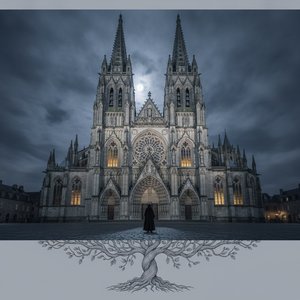
Shadows & Splendor: A Curated Guide to the Timeless Majesty of Gothic Art
Discover the profound beauty of Gothic art through our curated guide. Explore themes of chiaroscuro, dark romanticism, and architectural grandeur. Perfect for elite collectors seeking museum-quality reproductions and bespoke historical masterpieces.
Gothic art was a style of medieval art that developed in Northern France out of Romanesque art in the 12th century, led by the concurrent development of Gothic architecture. It spread to all of Western Europe, and much of Northern, Southern and Centr...
To understand the profound impact of the Gothic era, one must first look back at the heavy, somber shadows of the Romanesque period. For centuries, European art was defined by a sense of static stability and fortress-like weight, where the thick walls and rounded arches of the Romanesque style commanded awe through sheer mass and enclosure. However, the transition into the Gothic era represented a revolutionary shift in the human experience of space and divinity. It was a movement that sought to transcend the terrestrial, moving away from the heavy, somelness of the past toward a pursuit of light, height, and emotional resonance.
This evolution was not merely architectural but deeply psychological. As the 12th century progressed, particularly in Northern France, the introduction of the pointed arch and the ribbed vault allowed for structures that seemed to defy gravity itself. This period saw a fundamental reimagining of how we experience the sacred; where the Romanesque period offered a sense of protective enclosure, the Gothic movement provided an invitation for contemplation and upward movement. The art of this era began to breathe with a new vitality, transitioning from the rigid, iconic forms of the Byzantine influence toward a more humanized and affectionate depiction of the divine, such as the tender, maternal portrayations of the Virgin Mary that became hallmarks of the period.
Chiaroscuro & The Sublime: Mastering the Language of Light and Shadow
In art, chiaroscuro (English: kee-AR-ə-SKOOR-oh, -SKURE-, Italian: [ˌkjaroˈskuːro]; lit. 'light-dark') is the use of strong contrasts between light and dark, usually bold contrasts affecting a whole composition. It is also a technical term used by a...
Within the Gothic and its subsequent Romantic evolutions, there exists a quiet, commanding power found in the mastery of darkness. To step into a gallery of shadows is to encounter the profoundest depths of the human experience. This is most exquisitely realized through chiaroscuro—the technical use of strong contrasts between light and dark to achieve volume and dramatic intensity. In these works, black is never merely an absence of light; it is a rich, textured presence that holds weight, mystery, and an almost tactile gravity.
The use of deep, monochromatic tones pulls the viewer into a space where form emerges from the void, demanding a closer, more intimate inspection. This interplay between the revealed and the hidden creates a tension that is central to the Gothic aesthetic. Whether through the meticulous line work of 19th-century printmakers or the dramatic, high-contrast compositions seen in later movements, the mastery of shadow serves to focus the viewer's attention on the subject, imbuing even the most skeletal or haunting figures with a sense of monumental importance and spiritual depth.
Architectural Grandeur: The Soaring Spirit of Gothic Cathedrals and Spires
Cathedral of Barcelona – A Journey Through Time and Faith The Cathedral of Barcelona, officially Hohe Domkirche zu Köln (High Cathedral Church at Cologne), stands as a testament to centuries of artistic evolution and spiritual devotion. Located in th...
The true soul of Gothic art is perhaps best captured in the stone and glass of its cathedrals. These structures are not merely buildings but immersive experiences that transport the observer through time. From the soaring heights of the Cologne Cathedral to the intricate, neo-Gothic artistry of Barcelona’s Gothic Quarter, these monuments stand as testaments to centuries of artistic evolution and spiritual devotion. The architecture itself acts as a canvas for light, where stained glass windows transform sunlight into a kaleidoscope of theological narrative.
The structural bones of the Gothic style—the flying buttress, the spire, and the ribbed vault—work in harmony to create an atmosphere of celestial aspiration. These elements allow for thinner walls and larger windows, facilitating a dialogue between the interior sanctuary and the external world. In many ways, these cathedrals represent the pinnacle of human craftsmanship, where the heavy masonry of the past is transformed into a delicate, lace-like framework that directs the eye ever upward, mirroring the soul's own journey toward the divine.
Dark Romanticism: Exploring Mortality, Mystery, and the Human Condition
Dark Romanticism is a literary sub-genre of Romanticism, reflecting popular fascination with the irrational, the demonic and the grotesque. Often conflated with Gothic fiction, it has shadowed the euphoric Romantic movement ever since its 18th-centur...
As the centuries progressed, the Gothic aesthetic found a new, more visceral expression in the movement known as Dark Romanticism. This sub-genre embraced the irrational, the grotesque, and the hauntingly beautiful, reflecting a fascination with the psychological effects of guilt, sin, and human fallibility. Artists like Francisco de Goya explored the darker facets of existence, using symbolic imagery to confront universal fears and the inevitability of death.
In this realm, the boundaries between the corporeal and the ethereal often dissolve. We see it in works that present dense, visceral scenes of mortality, where skeletal forms serve as a memento mori, inviting reflection on the transient nature of life. This era of art does not shy away from the macabre; instead, it finds beauty within the decay and power within the shadows. It is an exploration of the human psyche in its most vulnerable state, navigating the turbulent waters of emotion, superstition, and the profound mystery of what lies beyond the veil of the known.
The Modern Noir Revival: Integrating Gothic Aesthetics into Contemporary Luxury Interiors
The Gothic Blueprint: From Medieval Shadows to Modern Noir Gothic Art Unveiled: The Dark Beauty and Drama of a Timeless Era The Gothic Dawn: Transitioning from Romanesque Rigidity to Emotional Depth To understand the profound impact of the Gothic era...
In the contemporary landscape, we are witnessing a sophisticated resurgence of these Gothic principles, often referred to as Modern Noir. This is not a mere imitation of the past filled with clichés, but a refined repurposing of the Gothic blueprint for the modern era. Today’s design language utilizes high-contrast silhouettes and deep, moody tones to create an atmosphere of mystery and understated elegance within luxury interiors.
Integrating these elements into a modern space requires a delicate balance of shadow and splendor. The use of dark, textured wall coverings, heavy draperies, and monochromatic art pieces can transform a room into a cinematic experience. By trading the theological light of medieval cathedrals for the dramatic shadows of urban landscapes, designers can evoke a sense of timelessness and prestige. This aesthetic celebrates the unseen, using the interplay of light and dark to create spaces that feel both intimate and grand, perfect for the discerning collector who appreciates the weight of history within a modern context.
Curating the Shadows: Expert Advice for Collecting Gothic Masterpieces
Introduction To step into a gallery of shadows is to encounter the profoundest depths of the human experience. While we often gravitate toward the sun-drenched landscapes of Impressionism or the vibrant hues of the Renaissance, there exists a quiet, ...
For the elite collector, acquiring works that embody the Gothic spirit requires an eye for authenticity and a deep appreciation for technical mastery. Whether you are drawn to the intricate maritime scrolls of the Victorian era or the monumental triptychs of the late Gothic period in Germany, the key lies in seeking pieces that possess a palpable sense of history and soul. When selecting reproductions or original works, consider the importance of texture—the visible brushstrokes and the depth of the tonal range are what differentiate a true masterpiece from a mere print.
Curating such a collection involves more than just aesthetic preference; it is about building a narrative within your space. Consider using multi-panel layouts to span wide architectural features, or employing custom framing in gold leaf or espresso to enhance the dramatic impact of dark-toned works. As you build your gallery of shadows, remember that the most impactful pieces are those that invite conversation and reflection, serving as enduring legacies of human creativity and the eternal fascination with the beautiful unknown.
At WahooArt.com, we specialize in bringing these historical wonders to life through our museum-quality, hand-painted oil reproductions. Our artists, trained in the finest academic traditions, meticulously recreate the textures, light, and emotional depth of Gothic masterpieces on 100% cotton canvas. Whether you seek a bespoke commission to transform a personal memory into a period-correct masterpiece or require expert consultation to curate a large-scale installation for a luxury estate, our team is dedicated to preserving the splendor of art history for your private collection.
Embark on a profound journey through the spiritual intensity of Gothic art. Explore the architectural marvels, luminous stained glass, and sacred sculptures that define this era of grandeur and human devotion.
Discover how Late Medieval art is revolutionizing modern interiors. From Gothic drama to Renaissance naturalism, learn to integrate high-impact, historical aesthetics into your urban space with expert trend forecasts and design inspiration.
Explore the profound beauty of Gothic art. From soaring cathedrals to sacred panel paintings, discover the history, symbolism, and spiritual legacy of this transformative era through our expert-led guide for art lovers and collectors.
Immerse yourself in the ethereal beauty of Gothic architecture through fine art. Explore our exquisite collection of hand-painted oil reproductions, from Romantic landscapes to Monet’s luminous cathedrals, bringing museum-quality grandeur and timeless elegance into your private sanctuary.



 Gothic art
 Chiaroscuro
 Cathedral
 Dark Romanticism
 Gothic Vibes: From Dark Shadows to Bold Modern Edge | The Ultimate Trend Forecast
 Shadow & Soul: 10 Iconic Masterpieces Defined by Black Tones