
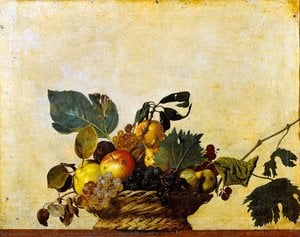


The Genesis of Contrast: From Renaissance Foundations to Chiaroscuro Mastery
 Mastering the Shadows: The Dramatic Power of Chiaroscuro and Tenebrism in Baroque Fine Art
The Genesis of Contrast: From Renaissance Foundations to the Birth of Chiaroscuro Chiaroscuro & Radiance: A Definitive Guide to the Mastery of Light and Shadow in Art History The Genesis of Contrast: From Renaissance Foundations to the Birth of Chiar...
The story of chiaroscuro, that mesmerizing dance between light and shadow, does not begin with a sudden rupture in artistic tradition but rather unfolds as a gradual, breathtaking evolution within the artistic sensibilities of the Italian Renaissance. While the term itself—derived from the Italian chiaro (light) and scuro (dark)—emerged later to define this specific technical mastery, the fundamental impulse to model form through contrasting values stretches back much further. We find early whispers of this concept in ancient Greek mosaics, where subtle shading first hinted at the possibility of three-dimensionality on a flat surface, suggesting a depth that transcended the two-dimensional plane.
As the Renaissance progressed, artists moved away from the flat, symbolic representations characteristic of the Middle Ages, seeking instead to understand the true behavior of light. They became obsessed with how illumination caresses a curved cheek, defines the heavy fold of a velvet robe, or reveals the volume of a human limb. This era saw the rise of sophisticated experimentation with colored paper, where masters would build up highlights using white chalk or gouseb while deepening tones with ink washes to create an illusion of profound depth. Leonardo da Vinci stands as the pivotal figure in this early exploration; his mastery over tonal gradations allowed him to capture not just light, but its very essence, creating a sense of atmospheric presence that felt profoundly alive and breathed life into the canvas.
Tenebrism: The Dramatic Architecture of Shadow and Light
 Tenebrism
Tenebrism, from Italian tenebroso ('dark, gloomy, mysterious'), also occasionally called dramatic illumination, is a style of painting using especially pronounced chiaroscuro, where there are violent contrasts of light and dark, and where darkness be...
When the use of shadow and contrast is taken to its extreme, we enter the realm of tenebrism. Derived from the Italian tenebroso, meaning dark, gloomy, or mysterious, this style represents a more violent and pronounced application of chiaroscuro. In tenebrism, darkness does not merely exist as a background element; it becomes a dominating, structural feature of the image. This technique was developed to add an unparalleled sense of drama through a spotlight effect, where sudden, piercing shafts of light emerge from an impenetrable void to strike the subject with startling intensity.
Unlike the broader use of chiaroscuro, which seeks to enhance the illusion of three-dimensionality and volume, tenebrism is utilized specifically to achieve a dramatic impact. It creates a stage-like atmosphere where the shadows are so deep they feel tangible, and the light is so sharp it seems to pierce through the canvas itself. This architectural use of darkness allows the artist to direct the viewer's gaze with absolute authority, stripping away unnecessary detail and forcing an intimate confrontation with the central figures. It is a technique of exclusion, where what is left in the dark is just as vital to the narrative tension as what is revealed by the light.
Caravaggio and the Baroque Revolution: Capturing Human Emotion through Illumination
 Caravaggio
A Life Forged in Shadow and Light Michelangelo Merisi da Caravaggio, a name synonymous with the dramatic intensity of Baroque painting, was born in Milan in 1571, a period steeped in both artistic flourishing and societal upheaval. His early life was...
Michelangelo Merisi da Caravaggio, a name synonymous with the dramatic intensity of Baroque painting, revolutionized the visual landscape of Rome. His arrival heralded a seismic shift in the art world, as he rejected the prevailing Mannerist style—characterized by its artificial elegance and elongated forms—in favor of an uncompromising realism. Caravaggio’s most defining innovation was his masterful use of chiaroscary, which he elevated to a new level of expressive power through tenebrism. He made this technique a dominant stylistic element, transfixing subjects in bright shafts of light and drowning the rest of the composition in heavy, brooding shadows.
Caravaggio’s brilliance lay in his ability to combine realistic observation of the human state, both physical and emotional, with this dramatic lighting. He eschewed idealized depictions, instead populating his paintings with ordinary people—often drawn from the streets of Rome—as models for religious figures. This radical approach imbued his works with a palpable sense of presence and psychological depth. His influence was so profound that it gave rise to the Caravaggisti, a generation of artists who adopted his dramatic use of light to express themes of struggle, torture, and death. Through his lens, light became a tool for storytelling, capable of capturing the very moment of spiritual or physical transformation.
The Spiritual Dimension: Light as a Symbol of Divinity in Spanish Baroque Art
 25 Masterpieces by Francisco de Zurbarán: The King of Spanish Baroque Tenebrism
Introduction Imagine stepping into a quiet, sun-drenched monastery in 17th-century Spain, where the air is thick with incense and the only sound is the soft rustle of a monk’s habit. In this stillness, light does not merely illuminate; it reveals the...
In the quiet, sun-drenched monasteries of 17th-century Spain, light took on a profoundly different, more contemplative character. This was the world of Francisco de Zurbarán, a master who turned the dramatic shadows of the Spanish Baroque into a language of devotion and silent strength. While his contemporaries often sought grand spectacles of movement, Zurbarán found magic in the motionless. He was a poet of tenebrism, using deep, velvety shadows and piercing highlights to transform simple subjects—a white linen cloth, a solitary saint, or a humble bowl of fruit—into monumental experiences of spiritual weight.
In this context, light does not merely illuminate; it reveals the soul. The interplay of shadow and radiance in Spanish Baroque art often carries deep symbolic meaning, particularly in religious works where light is frequently associated with divinity and grace. In the hands of artists like Zurbarán or Sebastián López de Arteaga, the darkness provides a sanctuary for contemplation, allowing the viewer to focus on the quiet intensity of faith. The heavy, tactile realism of his work—where one can almost feel the weight of a monastic robe—combined with this spiritual use of light, creates an immersive experience that transcends historical era, offering a sense of peace and profound stillness.
Curating the Shadows: Integrating Dramatic Masterpieces into Modern Luxury Interiors
For the discerning collector, incorporating works characterized by chiaroscuro and tenebrism offers a unique opportunity to introduce depth, drama, and intellectual weight into a modern interior. These paintings are not merely decorative; they are anchors of conversation and focal points of architectural interest. The high contrast inherent in these styles allows them to command attention even in large-scale settings, such as grand foyers or expansive dining halls, where the interplay of light within the painting can interact with the actual lighting design of the room.
When curating a collection, one might consider the "multi-panel" trend, splitting a dramatic scene across three or five panels to create a cohesive, modern architectural look that spans wide walls or staircases. For those seeking to personalize their space, the ability to "remix" art history is a powerful tool. One can commission a custom reproduction that transforms a personal milestone into a 17th-century masterpiece, utilizing the dramatic lighting of the Baroque era to elevate a modern memory into something timeless and monumental. Whether through a large-format mural or a carefully placed oil painting, the use of shadow allows for the creation of sophisticated, moody atmospheres that define luxury.
Preserving the Glow: The Science of Longevity for Oil Reproductions
 Light in painting
Light in painting serves both technical and aesthetic purposes. Technically, it is essential to visual representation, as it conditions the perception of color, texture, and volume. Aesthetically, its interplay with shadow and its effects on color an...
To protect such a significant investment, understanding the chemistry and craftsmanship behind fine art is essential. At WahooArt.com, our hand-painted oil reproductions are created with an uncompromising commitment to museum-grade standards. Our artists use flexible gesso to prevent cracking and specific oils, such as safflower for whites, to prevent the dreaded yellowing of pigments over time. Every painting is finished with a protective coat of Damar varnish, shielding the surface from dust, moisture, and atmospheric pollutants for generations.
True mastery lies in the details that ensure longevity. Unlike mass-produced prints, our 100% hand-painted works on cotton canvas feature visible brushstrokes and a deeper tonal range that captures the true essence of the original masterpiece. To preserve these works in your home or gallery, we recommend avoiding direct sunlight and utilizing acid-free matting for framed pieces to create an essential air gap. By choosing works crafted with academic excellence and rigorous quality control, you ensure that the dramatic interplay of light and shadow remains as vibrant and impactful for future generations as it was the day the artist laid down their brush.


