The Art of Domestic Tranquility: Curating Serenity Through Masterpieces of the Interior Gaze
Discover the profound beauty of domestic tranquility through curated masterpieces. From Dutch Golden Age intimacy to 19th-century serenity, explore how museum-quality oil reproductions and bespoke commissions transform your home into a sanctuary of timeless elegance and peace.
Introduction: The Rise of Domestic Interiors as Artistic Subject Matter For centuries, art largely focused on the grand narratives of history, mythology, and religion – the public lives of rulers, gods, and heroes. Yet, a subtle shift began to occur,...
For centuries, the grand theater of art was reserved for the monumental. The canvas served as a stage for the epic—the divine drama of religious altarpieces, the sweeping triumphs of historical conquests, and the mythic exploits of gods and heroes. These works were designed to inspire awe through scale and spectacle, projecting power and permanence far beyond the walls of the home. However, a profound shift began to stir within the artistic consciousness, particularly as we moved into the seventeenth century. The artist’s gaze, once fixed upon the heavens and the battlefield, began to turn inward, finding a new and much more intimate subject in the quietude of the domestic sphere.
This transition was not merely a change in scale, but a fundamental re-evaluation of what constituted a worthy artistic subject. The home emerged as a space ripe with symbolic potential, no longer just a backdrop for significant events but a sanctuary reflecting social status, personal values, and the burgeoning complexities of human relationships. This movement toward the petit genre—the painting of everyday life—allowed for a deeper exploration of realism and psychological nuance. As artists began to document the subtle rhythms of daily existence, they elevated the mundane to the level of the magnificent, proving that true majesty often resides in the most understated moments of our private lives.
The Golden Age of Quietude: Dutch Masters and the Poetry of Everyday Life
LE DUO CHANTEUSE ET JOUEUR DE LUTH THEORBE – A Window into Dutch Golden Age Intimacy Gerard ter Borch’s “Le Duo: chanteuse et joueur de luth théorbé,” painted around 1669-1670, stands as a quintessential example of Dutch genre painting—a movement tha...
The zenith of this inward gaze was undoubtedly reached during the Dutch Golden Age, a period characterized by unprecedented artistic flourishing and an almost spiritual devotion to the beauty of the commonplace. In the hands of masters such as Gerard ter Borch, Pieter de Hooch, and Johannes Vermeer, the domestic interior became a window into a world of profound serenity. These artists possessed a remarkable ability to capture the interplay of light and shadow within modestly furnished rooms, creating scenes that felt both remarkably real and poetically transcendent.
Consider the captivating works of Gerard ter Borch, such as Le Duo: chanteuse et joueur de luth théorbé. In this quintessential example of Dutch genre painting, we find a moment frozen in time—a man diligently playing a lute and a woman gracefully singing. The dark, atmospheric background serves to heighten the visual impact of the figures, drawing the viewer into a state of quiet contemplation. Similarly, the works of de Hooch often utilized doorways and windows as frames within frames, creating a sense of voyering intimacy that invites us to step into the warm, sun-drenched courtyards of middle-class life. These paintings are not merely records of domesticity; they are carefully constructed narratives about order, prosperity, and the harmonious pulse of a well-ordered home.
Light, Shadow, and Stillness: The Psychological Depth of 19th-Century Interiors
A Quiet Moment: Exploring Vilhelm Hammershøi’s “Interior with the Artist's Mother and Sister” Vilhelm Hammershøi’s 1889 oil on canvas, *Interior with the Artist's Mother and Sister*, is a captivating study in domesticity and understated emotion. Meas...
As art history progressed into the nineteenth century, the celebration of the interior evolved from the observational realism of the Dutch masters toward a more evocative, atmospheric exploration of emotion. The focus shifted from the social harmony of the home to the psychological landscape of the individual within it. This era saw artists utilizing light not just to illuminate objects, and textures, but to reveal the very soul of the space.
A profound example can be found in the works of Vilhelm Hammershøi, whose paintings serve as masterclasses in understated emotion. In pieces such as Interior with the Artist's Mother and Sister, we encounter a world of muted tones—greys, browns, and soft blues—that reject the vibrant palettes of his contemporaries in favor of a restrained, almost spectral beauty. His technique, characterized by smooth brushwork and a delicate handling of diffused light, creates a sense of stillness so profound it borders on the sacred. In these sparsely furnished rooms, the architecture itself seems to breathe, echoing the quiet contemplation of the figures within. This era proved that the absence of action could be just as powerful as its presence, using the emptiness of a room to reflect the depth of human introspection.
Architectural Harmony: Integrating Masterpiece Reproductions into Modern Luxury Spaces
Discover Gustave Caillebotte’s ‘Paris Street; Rainy Day’! A timeless Impressionist masterpiece capturing Parisian life. Explore its realism, symbolism & elegant charm.
For the discerning collector and interior designer, the challenge lies in integrating these historical echoes into the contemporary architectural landscape without disrupting the modern aesthetic. The goal is not to create a museum-like atmosphere of stagnation, but to foster a dialogue between the past and the present. A large-format reproduction of a classical interior can serve as an anchor for a room, providing a sense of heritage and weight to a minimalist space.
The use of multi-panel or group set paintings offers a sophisticated way to bridge this gap. By splitting a grand historical scene across three, four, or even five panels, one can create a modern, rhythmic installation that follows the lines of a staircase or spans a wide feature wall. This approach allows the artwork to function as an architectural element in its own right. Furthermore, the ability to customize these works—perhaps by requesting an impasto texture reminiscent of Van Gogh or a color palette tailored to a specific room's upholstery—ensures that the piece feels bespoke rather than merely decorative. When executed with precision, these reproductions do not just occupy a wall; they transform the very atmosphere of the home into one of curated tranquility.
Curating Your Sanctuary: Expert Advice on Selecting Art for Domestic Serenity
The Quiet Majesty of Genre Painting: Defining the Domestic Scene To step into a domestic scene is to enter a sanctuary of stillness, where the frantic pulse of the outside world fades into the soft hum of lived experience. In the grand lexicon of art...
Selecting art for a private residence is an act of curation that requires both intuition and expertise. To achieve true domestic serenity, one must look beyond the surface beauty of a piece and consider its emotional resonance and its relationship to the surrounding environment. The most successful collections are those that feel cohesive yet layered, offering a sense of discovery with every glance.
When approaching this task, consider the following principles of curation:
Scale and Proportion: Ensure the artwork respects the architectural boundaries of the room. A small, intimate portrait may be lost on a vast wall, while an overly large landscape can overwhelm a delicate study.
Color Harmony: Utilize professional color analysis to find pieces that complement your existing palette. An artwork can either act as a subtle tonal extension of the room or as a sophisticated focal point through contrast.
Thematic Continuity: Seek works that share a common emotional thread, such as the themes of light, stillness, or domestic intimacy, to create a sense of narrative flow throughout your home.
Ultimately, art is a lasting legacy. Whether it is a meticulously hand-painted oil reproduction that captures the brushstrokes of a master or a custom commission that transforms a personal memory into a classical masterpiece, the right piece serves as a sanctuary for the spirit. At WahooArt.com, we specialize in this intersection of history and luxury, providing collectors with the means to bring the profound beauty of the world's greatest interiors into their own private sanctuaries.
Pieter Janssens Elinga (1623-1682): Dutch Golden Age painter of intimate interiors, geometric perspective & still lifes. Influenced by De Hooch & Kalf, famed for his unique 'perspective box'.
Explore the fascinating history of domestic interiors in art! From Dutch Masters to Impressionism, discover how artists captured home life & social meaning. Expert analysis and insights at WahooArt.
Discover the profound beauty of domestic scene art. Explore how masterworks of genre painting capture intimacy and history, offering timeless elegance for the discerning collector seeking to infuse their home with soul and sophistication.
Explore 10 defining masterpieces of Romantic Realism! Discover Courbet, Millet & Daumier's powerful paintings—capturing emotion and social realities. Find museum-quality reproductions for your home at WahooArt.com.
Discover the art of serene living with our expert guide to curating masterpieces for a harmonious home. Learn to select fine oil reproductions and bespoke commissions that elevate your interior through color, light, and timeless elegance.



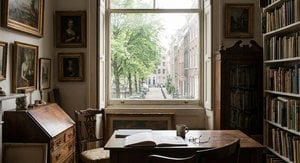 The Interior Gaze: Exploring Representations of Domestic Space in Art History
 LE DUO CHANTEUSE ET JOUEUR DE LUTH THEORBE
 Interior with the Artist's Mother and Sister
 Paris street, Rainy Day
 The Soul of the Interior: Exploring the Timeless Elegance of Domestic Scene Artworks


