


The Eternal Allure: Why Oil on Canvas Transcends the Digital Realm
 Turn Your Digital Art Into Hand‑Painted Oil Masterpieces—Earn Big on Every Sale and Build an Enduring Legacy
From Pixels to Pigment: Why Hand‑Painted Reproductions Elevate Digital Art The world of digital art is a vibrant, ever‑shifting landscape where pixels dance across screens and NFTs glitter in the ether. Yet for the discerning collector who seeks more...
In an era defined by the ephemeral glow of screens and the fleeting nature of digital captures, there exists a profound longing for something more substantial. We live in a world of infinite reproducibility, where a single moment can be replicated a thousand times with a mere click, yet these digital iterations often lack the tactile resonance that stirs the human soul. The true allure of fine art lies not in the perfection of a pixel, but in the physical presence of the medium itself—the subtle, rhythmic ridges of a brushstroke and the way light interacts with layers of dried pigment.
To hold a hand-painted oil work is to engage in a sensory dialogue that no high-resolution monitor can replicate. There is an inherent gravitas in the weight of a canvas and the scent of linseed oil, a connection to a lineage of collectors and patrons that stretches back through the centuries. While photography captures the light of a single moment, oil painting captures the essence of time itself. The depth of color achieved through glazing and the interplay of chiaroscuro create a three-dimensional experience, inviting the viewer to pause, breathe, and truly see the subject through a lens of permanence.
The Alchemy of Transformation: From Pixels to Pigment and Brushstroke
 From Lens to Canvas: The Evolution of Photography and the Artistry of the Digital Renaissance
The Genesis of Light: From Camera Obscura to the First Permanent Image History of photography The history of photography began with the discovery of two critical principles: The first is camera obscura image projection; the second is the discovery th...
The metamorphosis of a digital photograph into an oil masterpiece is nothing short of modern alchemy. It begins with the capture of light—a process that finds its ancient roots in the camera obscura—and evolves through the meticulous hands of master artists. This journey is not merely about copying an image; it is about reinterpreting reality. The artist takes the flat, mathematical precision of pixels and breathes life into them using organic materials: pigments, binders, and fine cotton canvas.
During this transformative process, the artist employs techniques that have remained unchanged since the Renaissance. Through the application of impasto textures or the delicate building of translucent glazes, the two-dimensional photograph gains a new dimension of life. The artist considers the tonal range, enhancing the shadows to create drama and brightening the highlights to simulate luminosity. This transition from the digital to the physical requires a deep understanding of light, texture, and composition, ensuring that the final work possesses a soulful depth that transcends its digital origin.
Bespoke Artistry: Customizing Eras through Period Shifts and Stylistic Remixes
 Bridging Centuries: Digital Visualization & Classical Oil Painting Techniques in Contemporary Art Commissioning
The Enduring Legacy of Classical Oil Painting Techniques Wikipedia: Oil painting Oil painting is a painting method involving the procedure of painting with pigments combined with a drying oil as the binder. It has been the most common technique for a...
One of the most enchanting possibilities in contemporary art commissioning is the ability to "remix" history. For the discerning collector, a photograph is not a static document but a creative starting point. Imagine the profound impact of taking a modern family portrait and requesting it be rendered with the expressive, swirling energy of Vincent van Gogh, or perhaps reimagining a landscape through the soft, light-drenched impressionism of Claude Monet.
This concept of "Period Shifts" allows for a breathtaking level of personalization. A contemporary wedding photograph can be transformed into a 17th-century masterpiece, adopting the dramatic lighting and regal atmosphere characteristic of Rembrandt. Such customizations allow individuals to bridge the gap between their personal milestones and the grand narrative of art history. By selecting specific styles—be it the structured elegance of Neoclassicism or the bold geometry of Cubism—the collector can curate a collection that reflects not just their memories, but their unique aesthetic philosophy.
Precision in Commissioning: The Role of Digital Mockups in Achieving Perfection
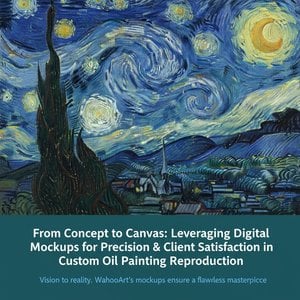 From Concept to Canvas: Leveraging Digital Mockups for Precision & Client Satisfaction in Custom Oil Painting Reproduction
The Evolution of Bespoke Art: From Traditional Commissions to Digital Precision Chinese Scholar Contemplating a Waterfall For centuries, the desire to possess a unique artwork – a reflection of personal taste, a commemoration of loved ones, or simply...
The pursuit of perfection in bespoke art requires a bridge between initial vision and final execution. Historically, the commissioning process was fraught with uncertainty, relying heavily on verbal descriptions and preliminary sketches that could lead to misinterpretations. Today, however, we utilize digital visualization to eliminate doubt. The professional digital mockup service serves as an essential tool for both the patron and the artist, providing a high-resolution preview of the intended composition.
This stage is particularly vital for complex commissions, such as group portraits where subjects from multiple photographs must be seamlessly integrated into a single, cohesive scene. Digital mockups allow for precise adjustments in color palette, lighting, and placement before a single drop of paint touches the canvas. This ensures that the final hand-painted reproduction aligns perfectly with the client's interior design requirements and personal expectations. It is a marriage of digital precision and classical artistry, ensuring that the ultimate result is nothing short of extraordinary.
A Legacy Preserved: Ensuring Longevity through Masterful Craftsmanship and Materials
A true masterpiece is an investment intended to endure for generations. Therefore, the integrity of the materials used is paramount. The foundation of a lasting painting begins with high-quality supports, such as 100% cotton canvas, prepared with flexible gesso to prevent future cracking. The chemistry of the paint itself is carefully managed; for instance, using specific oils like safflower for whites prevents the dreaded yellowing that can plague lesser works over time. Every layer is protected by a final coating of Damar varnish, which shields the surface from dust, moisture, and atmospheric pollutants.
Beyond the chemistry, there is the human element of craftsmanship. The artists we collaborate with are specialists, often holding degrees from prestigious fine arts academies, bringing a level of academic excellence to every stroke. When a painting is finished, it bears the unmistakable signature of the artist’s pride and skill. Whether it is a large-scale mural for a luxury hotel or an intimate portrait for a private study, the commitment to museum-grade standards ensures that these works remain vibrant, breathtaking, and structurally sound for decades to come.
At WahooArt.com, we specialize in making this extraordinary journey possible. From our global library of over 465,000 paintings to our bespoke custom services, we provide the expertise, the artistry, and the guarantee of excellence required to turn your most cherished digital moments into timeless, hand-painted legacies.


