The Chiaroscuro Revolution: Mastering Light and Shadow
To step into the world of the Baroque is to enter a realm where light does not merely illuminate, but performs. At the heart of this era lies chiaroscuro, a technique that transcends simple shading to become a profound language of contrast. This mastery of light and dark allows artists to sculpt figures out of the void, creating a sense of three-dimensionally palpable presence that was revolutionary for its time. The interplay between brilliant highlights and deep, impenetrable shadows creates a visual tension that pulls the viewer into the very center of the canvas.
This revolution was not merely about visibility; it was about the psychological weight of what remains unseen. By obscuring certain details in shadow, painters invited the spectator to complete the scene with their own imagination, heightening the sense of mystery and spiritual depth. The sudden emergence of a face or a hand from the darkness serves as a theatrical spotlight, directing our gaze toward the most critical emotional beats of the narrative. It is through this deliberate manipulation of luminosity that the Baroque masters achieved a level of realism that felt both visceral and divine.
Emotional Intensity: The Narrative Power of Baroque Composition
Beyond the technical brilliance of light, the Baroque period is defined by an unyielding commitment to pathos. Unlike the balanced, serene compositions of the Renaissance, Baroque art embraces the chaotic, the climactic, and the intensely human. Every brushstroke is designed to evoke a response, whether it be awe, terror, or profound piety. The compositions often utilize diagonal lines and swirling movements to create a sense of instability and motion, suggesting that the moment captured on canvas is but a single, breathless second in an unfolding epic.
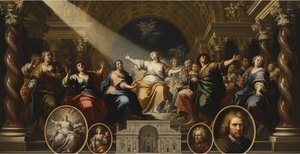
This era mastered the art of the "frozen moment." In works such as those by Václav Vavřinec Reiner, we see the weight of suffering and the ecstasy of devotion rendered with such raw intensity that the viewer can almost hear the silence of a cathedral or the cries of the persecuted. The narrative power lies in this ability to bridge the gap between the historical event and the contemporary observer, making ancient religious or mythological struggles feel urgently present. It is an art of movement, where even the stillness is charged with an underlying kinetic energy.
Caravaggism and its Disciples: From Genoa to the Global Stage
The seismic shift in European painting can be traced back to the shadow of Michelangelo Merisi da Caravaggio. His development of tenebrism—a heightened form of chiaroscuro where darkness dominates the composition—set a new standard for dramatic realism. This "Caravaggism" spread like wildfire across the continent, influencing masters in every corner of Europe. In Genoa, artists such as Gioacchino Assereto adopted this gritty, textured approach, infusing religious scenes with a palpable, earthy humanity that stripped away the idealized veneer of previous centuries.
The influence of this movement was not confined to Italy; it reached into the Spanish Golden Age and the vibrant traditions of Central Europe. We see the echoes of Caravaggio in the somber, devout works of Francisco de Zurbarán, whose ability to render the heavy folds of monastic robes through stark light creates a meditative atmosphere. This lineage of artists shared a common goal: to use the physical reality of light to communicate the metaphysical truths of the soul, creating a global visual language that remains one of the most influential chapters in art history.
Texture and Tenebrism: The Tactile Depth of Baroque Masterpieces
A true Baroque masterpiece is as much about touch as it is about sight. The use of tenebrism provides a stage upon which texture can truly shine. When light strikes a surface, the artist reveals the intricate details of silk, the ruggedness of stone, or the weathered skin of an elder. This tactile quality is essential to the era's realism; it grounds the dramatic subject matter in a world that feels physically accessible to the viewer.
The application of paint itself often mirrors the drama of the subject. The heavy, textured layers—reminiscent of impasto—allow light to catch on the ridges of the brushwork, adding a three-dimensional dimension to the canvas. In works like Guercino’s Sainte Cecile, the luminosity of the landscape and the softness of the figure are balanced by a structural depth that makes the painting feel alive. This marriage of light, shadow, and physical texture ensures that the artwork is not merely a window into another time, but a living, breathing entity.
The Legacy of Drama: Bringing Baroque Grandeur into Modern Interiors
The enduring appeal of the Baroque lies in its ability to command attention. In a modern world often characterized by minimalism and muted tones, the bold contrasts and emotional depth of Baroque art offer a profound sense of character and soul. Integrating these pieces into contemporary spaces allows for a sophisticated dialogue between historical grandeur and modern elegance. A single, well-placed reproduction of a Caravaggist masterpiece can serve as the dramatic anchor of a room, providing a focal point that invites contemplation.
Whether through large-scale murals that recreate the awe of a ceiling fresco or intimate oil paintings that add layers of history to a study, the Baroque spirit continues to inspire. It teaches us that art is at its most powerful when it dares to be dramatic, when it embraces the shadows as much as the light, and when it refuses to shy away from the full spectrum of human emotion. To surround oneself with such works is to live in constant conversation with the masters of light.
At WahooArt.com, we are dedicated to preserving this legacy of human creativity. From meticulously handcrafted oil reproductions that capture every tactile brushstroke to museum-quality Giclée prints, our mission is to make the profound beauty of the Old Masters accessible to collectors worldwide. Whether you seek a custom commission to transform a personal memory or a breathtaking reproduction of a Baroque icon, WahooArt provides the expertise and craftsmanship to bring historical grandeur into your modern home.