Acrylic On CanvasWallArtWahooArt Database
 1576Renaissance
 351.0 x 389.0 cm
Hand-painted oil on canvas in your size and frame, made to order by our artists. ( Switch to Print Switch to Digital Image)





























Pick from our preset sizes that match the artwork's original proportions.

Type the width and the height you need, to fit your frame or your wall. This is hand-painted, so for a size with a different shape the artist can paint a bit more around the picture, or cut a bit — you choose. We send you a digital mockup to approve before the painting starts. The picture shown on this page does not show the real result — only the mockup does.
Worldwide Delivery () in 3/4 weeks instead of standard 5 weeks. (26 October). No compromise on quality.
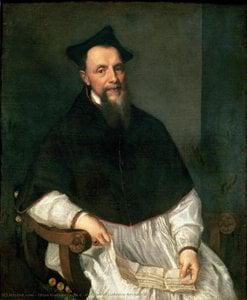
Pieta
Reproduction Size
Titian Ramsay Peale II's *Pieta*, completed in 1576, is not merely a painting; it’s a poignant echo of the High Renaissance ideals brought to life on American soil. Standing at an impressive 351 x 389 cm, this monumental work commands attention, drawing viewers into a scene steeped in sorrow and spiritual contemplation. While bearing the title *Pieta* – traditionally depicting the Virgin Mary cradling the body of Jesus – Peale’s interpretation diverges from the Italian masters like Michelangelo, offering a uniquely American sensibility to this timeless subject. The composition is dynamic, filled with figures that convey a palpable sense of grief and devotion. A kneeling figure dominates the foreground, his hands raised in supplication, while the central form—presumably representing Christ—is held with tender reverence. In the background, flanking what appears to be a doorway or architectural recess, stand two angels, their presence both ethereal and grounding.
To understand *Pieta*, one must consider Titian Ramsay Peale II within the context of his family. Born in 1799, he was the son of Charles Willson Peale, a celebrated American portraitist and founder of the Pennsylvania Academy of the Fine Arts. This familial connection provided young Titian with an early immersion into the world of art, though he ultimately forged his own path, blending artistic training with a deep fascination for natural history—a pursuit that would define much of his career. The influence of the High Renaissance is undeniable in *Pieta*. Peale’s meticulous attention to detail, refined color palette, and balanced composition all point towards an admiration for masters like Raphael and Titian (for whom he was named). However, unlike many American artists who traveled to Europe to study the Old Masters firsthand, Peale II largely developed his style through exposure to works available in America and through familial instruction. This resulted in a distinctive synthesis of European tradition and American artistic sensibilities.
The *Pieta* motif itself is laden with symbolism, representing not only the sorrow of Mary over her son’s death but also themes of sacrifice, redemption, and divine love. Peale II's rendition amplifies these emotions through careful arrangement and expressive gestures. The kneeling figure embodies human grief and faith, while the angels symbolize heavenly solace and intervention. The architectural setting in the background isn’t merely decorative; it suggests a sacred space—a church or temple—further emphasizing the religious nature of the scene. While details regarding specific iconographic choices within Peale's *Pieta* remain open to interpretation due to limited documentation, the overall effect is profoundly moving. The painting evokes a sense of solemnity and quiet contemplation, inviting viewers to reflect on themes of mortality, faith, and compassion. The work’s scale contributes significantly to its emotional impact; it isn’t a small, intimate devotional piece but rather a grand statement of religious belief.
For collectors and interior designers seeking a statement piece that blends historical significance with artistic beauty, Titian Ramsay Peale II's *Pieta* offers an exceptional opportunity. A hand-painted reproduction from WahooArt allows you to bring this rediscovered masterpiece into your space, adding a touch of Renaissance grandeur and American artistry. The painting’s somber yet hopeful tone makes it suitable for a variety of settings—from traditional libraries and studies to more contemporary living areas seeking a focal point with depth and meaning. Its large size demands attention, making it ideal for spacious rooms where its details can be fully appreciated. *Pieta* is not simply a decorative element; it’s an invitation to engage with art history, contemplate profound themes, and enrich your surroundings with the legacy of a remarkable American artist.
"Pieta" is available as a hand-painted oil reproduction on linen canvas. The order can be placed on its Hand-Painted Reproduction page, with a choice of sizes.
"Pieta" is a wall art piece.
In terms of perceived brightness, "Pieta" by Titian Ramsay Peale II is deep_shadow.

To look at the work of Titian Ramsay Peale II is to see a deliberate attempt to reconcile the rigorous demands of 19th-century natural history with the aesthetic weight of the High Renaissance. Born in Philadelphia in 1799, he did not merely inherit a famous name as the son of Charles Willson Peale; he inherited a specific way of seeing. His early years were defined by this dual focus. He was an explorer and a scientific illustrator long before he was purely a painter. During the Stephen Harriman Long expedition to the Rocky Mountains between 1819 and 1820, his task was documentation. He recorded flora and fauna with a precision that required anatomical accuracy. This period of fieldwork provided the technical foundation for his later canvases. He understood how light hit a wing or how texture defined a specimen.
This scientific training prevented his later religious and mythological works from becoming mere abstractions. When he turned to subjects like St. Augustine, he applied the same scrutiny to the folds of a garment as he would to a botanical specimen. He utilized techniques such as sfumato to soften edges, yet the underlying structure remained grounded in physical reality. His work exists in the tension between the observational eye of a naturalist and the stylistic ambitions of Venetian colorism.
Peale’s development was marked by an refusal to adhere to the purely utilitarian trends of American art in his era. While many contemporaries focused on straightforward portraiture or landscape, he looked backward to the principles of artists like Rubens and the Venetian masters. This is most evident in his handling of color and light. He sought a luminous quality that mirrored the Old World traditions. His religious paintings, such as The Holy Family with a Shepherd, demonstrate a controlled use of oil paint to build depth through layers. He did not rely on superficial beauty; he relied on the structural application of pigment.
His technical repertoire was broad and functional. He worked across several media to achieve his goals:
This versatility allowed him to move between the microscopic detail of a Cicada watercolor and the atmospheric scale of a landscape. He was not interested in style for its own sake, but in how specific techniques could communicate the weight of his subject matter.
For much of the 20th century, Peale’s significance was obscured by the sheer scale of the Peale family's broader impact on American culture. He did not fit the mold of the purely commercial portraitist. His career included roles as a chief naturalist for the United States Exploring Expedition from 1838 to 1842 and work within the United States Patent Office. These were not distractions from his art; they were the source of it. The precision found in his wildlife drawings informed the dignity he brought to his classical subjects.
Today, the value of his work lies in this specific synthesis. He represents a moment when American identity was being formed through the simultaneous exploration of new territories and the reinterpretation of ancient artistic values. His paintings, now held in institutions such as the Uffizi Gallery and the Scottish National Gallery of Modern Art, remain relevant because they refuse to separate the intellect from the aesthetic. He proved that scientific observation and classical reverence could occupy the same canvas.

1799 - 1885

Embark on a scholarly journey through the sacred beauty of High Medieval art. Discover the profound symbolism, luminous iconography, and spiritual depth of Gothic masterpieces in this expert guide for classical art enthusiasts.

Explore the luminous mastery of Titian. Discover how the Venetian master revolutionized color and light through breathtaking Renaissance techniques, from Venus Anadyomene to profound allegories, and learn to bring this timeless brilliance into your private collection.
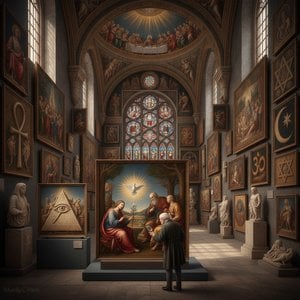
Explore the profound power of religious symbolism in art history. From Renaissance masterpieces to sacred iconography, uncover the hidden meanings behind divine details in a deep dive into classical art excellence.

 Preview
 Send
Send Share
Share
 Details
 Guide
Guide

 Download
 Similars
 X-Ray
X-Ray Diaporama
 Stats
Stats Read More









 Glass option is only available in size under 110 CM