

Hand-painted oil on canvas in your size and frame, made to order by our artists. ( Switch to Print Switch to Digital Image)





























Pick from our preset sizes that match the artwork's original proportions.

You may enter your own dimensions to fit a specific frame or space. If your selected size does not match the original image's proportions, we will either crop the artwork or extend the painting with additional hand-painted elements. A digital mockup will be sent for your approval before production begins.
Please note that the on-screen preview does not reflect the actual cropping or extension. Only the mockup will accurately show the final composition.
While custom sizes are available, we recommend selecting a dimension from the predefined list to preserve the original proportions.
Worldwide Delivery () in 3/4 weeks instead of standard 5 weeks. (12 September). No compromise on quality.


Robert Burns, 1759 - 1796. Poet
Reproduction Size
Alexander Nasmyth's 1787 portrait of Robert Burns is more than just a likeness; it’s a pivotal moment in the solidification of Scottish national identity. Painted during a period of burgeoning literary and cultural pride, this intimate depiction captures not merely the physical appearance of the poet but also his spirit – a blend of rustic charm, intellectual curiosity, and profound connection to the land. Nasmyth, a landscape painter as much as a portraitist, brought a unique sensibility to his work, imbuing portraits with a sense of place and atmosphere that transcends simple representation. The painting’s immediate impact was immense; it became, and remains, the most recognizable image of Burns, a symbol inextricably linked to Scotland's heritage.
Nasmyth’s masterful technique reveals a sophisticated understanding of light and shadow – hallmarks of the Neoclassical style he embraced. The portrait is rendered with meticulous detail, particularly in Burns's expressive face, capturing the subtle nuances of his features and conveying a sense of intelligence and warmth. Note the delicate rendering of the fabric of his shirt, the play of light on his beard, and the atmospheric haze that softens the distant landscape. The use of oil paint allows for rich textures and vibrant colors, contributing to the painting’s overall luminosity. The slightly unfinished quality – a deliberate choice by Nasmyth – adds an element of immediacy and intimacy, as if we are witnessing a fleeting moment captured in time.
Key elements of his style include:The portrait is laden with symbolic meaning. Burns’s attire – a simple white shirt and dark coat – speaks to his humble origins, while his gaze, directed directly at the viewer, suggests an openness and honesty that resonated deeply with the public. The mountainous backdrop isn't merely decorative; it represents the rugged beauty of Scotland and the poet’s deep connection to its landscape. Furthermore, the inclusion of a small, almost imperceptible, book in Burns’s hand subtly alludes to his intellectual pursuits and his role as a literary figure. It’s a visual shorthand that encapsulates the complex duality of the man – both a passionate poet and a thoughtful scholar.
Reproductions of Nasmyth's portrait have become ubiquitous, appearing on everything from postage stamps to tea towels. Yet, despite its widespread dissemination, the image retains an undeniable power. It evokes a sense of nostalgia for a bygone era, celebrating Scottish heritage and reminding us of the enduring legacy of Robert Burns. When considering a high-quality reproduction, one should appreciate not only the technical skill involved in creating the original but also the profound cultural significance embedded within its frame. This portrait is more than just an image; it’s a window into the soul of Scotland.

Alexander Nasmyth was a pivotal figure in Scottish art history, renowned as both a portraitist and, more significantly, a landscape painter. He is often credited with being the "father of Scottish landscape painting," bridging the gap between traditional portraiture and the burgeoning Romantic movement's focus on natural scenery.

1758 - 1840 , United Kingdom

Explore the captivating world of David Roberts, a pioneering Scottish painter renowned for his detailed Orientalist scenes & stunning Egyptian landscapes. Discover his legacy and find museum-quality reproductions at WahooArt.

Journey through 10 Romantic landscape masterpieces by Friedrich, Turner & Cole. Explore emotional art, sublime nature scenes & iconic 19th-century paintings. Find museum-quality reproductions for your home at WahooArt.com – discover the full collection online!
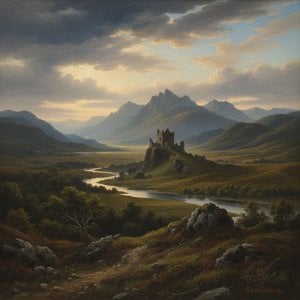
Explore the life & art of Alexander Nasmyth, a pivotal figure in Scottish Romantic landscape painting. Discover his iconic works, including portraits of Robert Burns, and learn about his lasting influence on national identity. Fine art reproductions available.

Explore the captivating landscapes of Patrick Nasmyth, a key figure in Scottish Romanticism. Discover his Dutch influences, embrace of the Grand Manner, and lasting artistic legacy. Learn more at WahooArt.

Explore the rich history of landscape art with WahooArt. Discover renowned artists, movements like Impressionism & Romanticism, and expert guidance for collecting timeless pieces. Find your perfect serene escape today!

 Preview
 Send
Send Share
Share
 Details

 Download
 Similars
 X-Ray
X-Ray Diaporama
 Stats
Stats


 Read More







 Glass option is only available in size under 110 CM


