Sell
x
PreviewPreview AR previewAR preview Buy Print Buy PrintBuy Image Buy Image SendSend
DetailsDetails Add to favorites Add to favorites DownloadDownload SimilarsSimilars X-RayX-Ray DiaporamaDiaporama

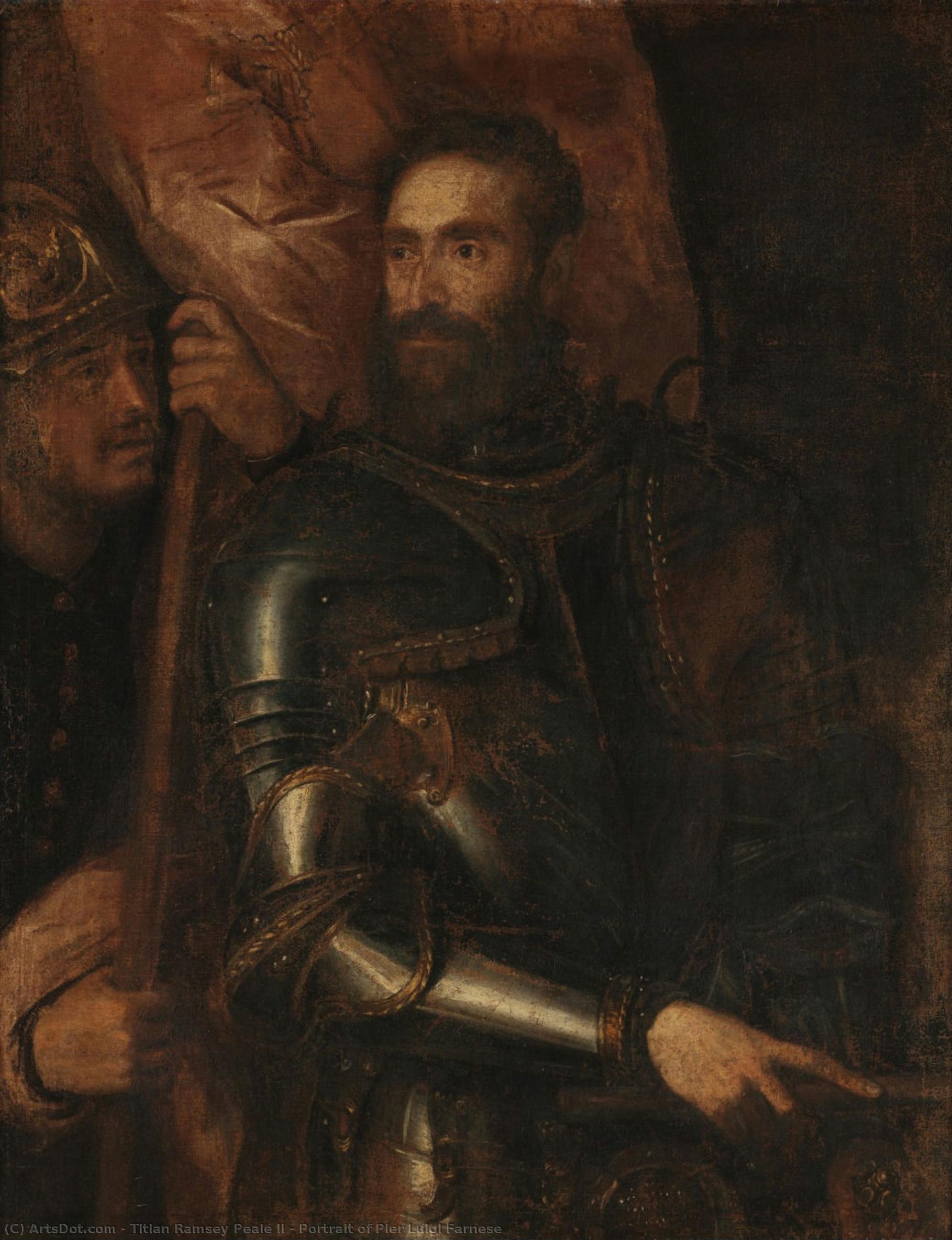
Portrait of Pier Luigi Farnese

Admire Titian Ramsey Peale II’s stunning 1546 portrait of Pier Luigi Farnese! This Renaissance masterpiece showcases the Duke's power, armor & military command with masterful light and detail.

Explore Titian Ramsay Peale II (1799-1885), an American artist & naturalist blending High Renaissance artistry with scientific observation. Discover his stunning wildlife paintings and legacy.

Hand Made Oil Reproduction

Hand-painted oil on canvas in your size and frame, made to order by our artists. (Buy Print Buy PrintBuy Image Buy Image)

P118B $10
P118H $10
P118W $10
P438Z $10
P508JH $12
P508YH $12
P805H $10
P805Z $10
P919BZ $10
P919G $10
P919XJ $10
P959ZH $10
P968JZ $12
W106C $8
W218G $10
W218JH $8
W218Y $10
W307PJ $10
W316G $10
W316PJ $8
W316Y $10
W398PJ $8
W4111J $10
W500HY $15
W500JH $15
W692G $12
W849H $8
W940BG $15
W953PJ $8

Standard
custom
CM
INCH

Pick from our preset sizes that match the artwork's original proportions.

width
height

You may enter your own dimensions to fit a specific frame or space. If your selected size does not match the original image's proportions, we will either crop the artwork or extend the painting with additional hand-painted elements. A digital mockup will be sent for your approval before production begins.
Please note that the on-screen preview does not reflect the actual cropping or extension. Only the mockup will accurately show the final composition.
While custom sizes are available, we recommend selecting a dimension from the predefined list to preserve the original proportions.

Examples of what can be changed: Replace face with customer photo; Add pet (e.g., replace cat with dog); Include hidden message in background; Change background landscape or elements.
After order, WahooArt.com team will email client for instructions and provide a mockup preview

Worldwide Delivery () in 3/4 weeks instead of standard 5 weeks. (15 August). No compromise on quality.

why_choose_icon
Free Worldwide Express Shipping
why_choose_icon
High-Quality Linen Canvas
why_choose_icon
Full Shipping Insurance
why_choose_icon
Customs Tax Refund Guarantee
why_choose_icon
True Color Matching Guarantee
why_choose_icon
60-Day Return Policy (Defects Only)
why_choose_icon
100% Money-Back Guarantee
why_choose_icon
Bulk Discount Offer

Total Price

$ 272

reproduction

Portrait of Pier Luigi Farnese

Reproduction Medium

Reproduction Size

-

Total Price

$ 272

Quick Facts

  • Artistic style: Renaissance portraiture
  • Movement: High Renaissance
  • Notable elements or techniques:
    • Luminous effects of light
    • Detailed armor depiction
  • Medium: Oil on canvas
  • Year: 1546
  • Influences: Titian

Art Quiz

There is only one correct answer for each question.

Question 1:
What is the primary subject depicted in Titian Ramsay Peale II’s ‘Portrait of Pier Luigi Farnese’?
Question 2:
What symbolic element does the baton held by Pier Luigi Farnese represent?
Question 3:
Approximately when was this portrait painted?
Question 4:
What artistic style does the painting primarily align with?
Question 5:
According to the description, what is a notable characteristic of the painting’s texture?

Artwork Description

A Glimpse into Power: Portrait of Pier Luigi Farnese by Titian Ramsay Peale II

Titian Ramsay Peale II’s 1546 portrait of Pier Luigi Farnese is more than just a likeness; it's a window into the Renaissance court, showcasing power, military command, and the artistic skill of a rediscovered American master. This oil painting offers a compelling study of a prominent figure within the Papal States, rendered with meticulous detail and symbolic depth.

Subject and Historical Context

The portrait depicts Pier Luigi Farnese, eldest son of Pope Paul III, and Duke of Castro, Parma, and Piacenza. His elevation to these titles reflects the political maneuvering of his father, who sought to consolidate power within Italy. The painting’s creation around 1546, following Titian's invitation to Rome by Pope Paul III, places it firmly within the High Renaissance period, a time of artistic flourishing and significant political shifts in Europe. Pier Luigi likely encountered Titian during the artist’s travels through the Emilia region of Italy in 1543, setting the stage for this remarkable commission.

Artistic Style and Technique

Peale II's work demonstrates a clear embrace of the High Renaissance aesthetic, evident in his meticulous attention to detail and refined color palette. The portrait is executed in oil on canvas, showcasing Peale’s mastery of technique. He skillfully captures Pier Luigi in a three-quarter profile, a pose that allows for both a sense of formality and psychological insight. The averted gaze suggests a transition from contemplation to action, further emphasized by the Duke's hand grasping the baton – a potent symbol of his military command. Peale’s use of light is particularly noteworthy; he expertly depicts how it glistens upon Pier Luigi’s armor, creating a luminous effect that highlights the textures and richness of the materials. The inclusion of a soldier hoisting a crimson banner behind the Duke serves to accentuate his stately presence and reinforces his authority.

Symbolism and Emotional Impact

Beyond its aesthetic qualities, the portrait is rich in symbolism. Pier Luigi’s armor represents power, status, and military prowess – essential attributes for a man of his position. The baton signifies his command over troops and territories. The crimson banner, boldly displayed behind him, further underscores his authority and allegiance. Peale II masterfully conveys a sense of dignity and seriousness through the somber color palette dominated by dark browns, ochres, and blacks. While the composition is formal, there's an underlying tension suggested by Pier Luigi’s gaze, hinting at the weighty responsibilities he carried as a leader within the Papal States. The painting evokes a feeling of respect and awe, inviting viewers to contemplate the complexities of Renaissance power dynamics.

Rediscovering Peale II: A Legacy Revived

Titian Ramsay Peale II (1799-1885) remains a relatively lesser-known figure in art history. Born into a family of artists – his father being Charles Willson Peale, a prominent American portrait painter – he developed a profound passion for artistic expression and naturalism. His dedication to the High Renaissance style, as exemplified by this portrait of Pier Luigi Farnese, demonstrates his skill and appreciation for classical artistry. The rediscovery and recognition of Peale II’s work offer a valuable opportunity to appreciate a unique voice within the broader context of 19th-century art.


Artist Biography

A Renaissance Echo in the New World

Titian Ramsay Peale II occupies a fascinating, often overlooked niche within the landscape of 19th-century American art. Born in Philadelphia in 1799, he was steeped in artistic lineage as the youngest son of Charles Willson Peale, a pivotal figure in early American portraiture and founder of the nation’s first museum. While his father's legacy loomed large, Titian forged his own path, one deeply rooted in the aesthetic ideals of the High Renaissance, particularly those emanating from Venice. He wasn’t merely replicating styles; he was channeling a profound artistic sensibility, imbuing his canvases with a meticulous detail and vibrant color palette that set him apart from many of his contemporaries. His life unfolded against a backdrop of burgeoning American identity, yet his artistic heart remained tethered to the classical masters, creating a compelling tension between Old World reverence and New World expression.

From Naturalist’s Sketchbook to Painter's Canvas

Peale’s early years were marked by a dual fascination with art and natural history – a combination fostered by his father’s multifaceted pursuits. He accompanied expeditions, notably Stephen Harriman Long’s journey to the Rocky Mountains in 1819-20, documenting flora and fauna with an increasingly refined artistic eye. This period wasn't simply about recording observations; it was about *understanding* form, light, and texture – skills that would prove invaluable when he turned his full attention to painting. His work as a naturalist informed his art, lending a scientific precision to his depictions of the natural world, but also imbuing them with an emotional resonance that transcended mere documentation. He wasn’t just showing us what things looked like; he was revealing their inherent beauty and spiritual significance. This dedication to both disciplines is evident in pieces such as “The Tribute Money,” a dramatic rendering showcasing masterful light and shadow reminiscent of Rubens, and "Nymph and Shepherd", blending nature, mythology, and sensual beauty.

Venetian Influences and Sacred Visions

The influence of Venetian colorism – the emphasis on rich, luminous colors and atmospheric effects championed by artists like Titian (from whom he took his first name) – is undeniable in Peale’s oeuvre. He wasn't simply copying these masters; he was internalizing their principles and adapting them to his own artistic vision. This is particularly evident in his religious works, such as “Altar Shrine with Four Saints” and "Adoration of the Shepherds". These paintings aren’t merely depictions of biblical scenes; they are immersive experiences, drawing the viewer into a world of spiritual contemplation through carefully orchestrated compositions and a masterful use of color to evoke emotion. The meticulous attention to detail in these works speaks not only to his technical skill but also to a deep reverence for his subject matter. “The Beauty,” a striking portrait, further demonstrates his ability to capture human form and character with elegance and refinement.

Rediscovery and Lasting Significance

For much of the 20th century, Titian Ramsay Peale II remained largely obscured from art historical narratives. His work didn’t fit neatly into prevailing trends, and his dedication to a classical style felt anachronistic in a rapidly changing artistic landscape. However, recent years have witnessed a growing reassessment of his contributions. Scholars and collectors are recognizing the unique blend of American sensibilities and European traditions that characterizes his paintings. The rediscovery of his work is not merely about filling gaps in art history; it’s about gaining a deeper understanding of the complex cultural forces that shaped 19th-century America. Peale represents a bridge between worlds, a testament to the enduring power of classical ideals, and a reminder that artistic innovation often arises from unexpected combinations of influences. His paintings, now found in collections like those at WahooArt, the Uffizi Gallery, and Palazzo Pitti, offer a compelling glimpse into a forgotten corner of American art history – a corner illuminated by the radiant glow of the Renaissance.

Quick Facts

  • Artistic Movement Or Style: High Renaissance
  • Artists Who Influenced This Artist:
    • Titian
    • Venetian masters
  • Date Of Birth: 1799
  • Date Of Death: 1885
  • Full Name: Titian Ramsay Peale II
  • Nationality: American
  • Notable Artworks:
    • Altar Shrine with Four Saints
    • Adoration of the Shepherds
    • The Beauty
    • Tribute Money
    • Holy Family w/ Shepherd
    • Nymph and Shepherd
Explore artworks organized by themes, styles, and characteristics.