

Hand-painted oil on canvas in your size and frame, made to order by our artists. ( Switch to Print Switch to Digital Image)





























Pick from our preset sizes that match the artwork's original proportions.

You may enter your own dimensions to fit a specific frame or space. If your selected size does not match the original image's proportions, we will either crop the artwork or extend the painting with additional hand-painted elements. A digital mockup will be sent for your approval before production begins.
Please note that the on-screen preview does not reflect the actual cropping or extension. Only the mockup will accurately show the final composition.
While custom sizes are available, we recommend selecting a dimension from the predefined list to preserve the original proportions.
Worldwide Delivery () in 3/4 weeks instead of standard 5 weeks. (9 September). No compromise on quality.


The Martyrdom of St. Lucy
Reproduction Size
Luca Giordano's "The Martyrdom of St. Lucy," painted in 1659, isn’t merely a depiction of a historical event; it’s a visceral explosion of Baroque drama, a testament to the artist’s prodigious talent and his mastery of capturing intense emotion on canvas. This monumental work, now available as a stunning reproduction by WahooArt, transports the viewer directly into the heart of Saint Lucy's final moments – a scene brimming with violence, piety, and an almost unbearable sense of tragedy. Giordano, nicknamed “Luca fa presto” for his remarkable speed and versatility, was a whirlwind of creativity in 17th-century Naples, known for transforming entire churches and palaces with his vibrant frescoes and dynamic paintings. His early apprenticeship under Jusepe de Ribera instilled a deep understanding of dramatic lighting and realistic portrayal, but Giordano quickly forged his own distinctive style—one characterized by an unprecedented luminosity and movement that set him apart from his teacher’s often somber palette.
The painting immediately commands attention with its sheer scale and the overwhelming intensity of its composition. A central group of figures dominates the scene: Saint Lucy, serene amidst the chaos, is presented as a noble martyr, her expression one of quiet acceptance rather than fear. She’s surrounded by a throng of onlookers – some in horrified witness, others offering silent prayers—a carefully orchestrated tableau designed to evoke both pity and awe. The executioners, clad in dark robes, are rendered with brutal realism, their faces obscured yet conveying the cold efficiency of state-sanctioned violence. The sword poised above Lucy’s neck is a stark reminder of her fate, while the woman holding a knife represents the potential for retribution and the enduring power of faith.
Giordano's technical skill is breathtakingly evident in every detail. He employs a masterful use of chiaroscuro—the dramatic contrast between light and shadow—to sculpt the figures, creating a sense of depth and volume that draws the viewer into the scene. The colors are rich and vibrant, dominated by deep reds, blues, and golds, reflecting the opulent style of the Baroque period. Notice particularly the way Giordano uses color to highlight Lucy’s face – a subtle glow suggesting her unwavering faith amidst suffering. His brushstrokes are loose and expressive, contributing to the painting's dynamic energy and conveying the immediacy of the event. The composition itself is carefully balanced, guiding the eye through the scene with a deliberate rhythm that amplifies the drama.
The painting’s style firmly places it within the late Baroque tradition, influenced by artists like Pietro da Cortona and drawing on the dynamism of Rubens. However, Giordano transcends mere imitation; he infuses his work with a distinctly Neapolitan sensibility—a passion for color, movement, and theatricality that is uniquely his own. He wasn’t simply replicating existing styles; he was actively pushing the boundaries of Baroque painting, creating a visual experience that is both emotionally resonant and technically brilliant.
The subject matter—the martyrdom of St. Lucy—holds profound significance within its historical context. Saint Lucy was a young Christian woman who lived in Syracuse, Sicily, during the late 3rd century. She was known for her piety and generosity, and she was eventually betrayed by a disgruntled suitor who accused her of being a Christian. Despite her pleas, she was condemned to death and beheaded in 304 AD during the Diocletianic Persecution—a period of intense religious persecution under the Roman Emperor Diocletian. Her story quickly became a symbol of unwavering faith and sacrifice, and she was soon venerated as a saint throughout the Christian world.
The painting reflects this historical narrative, capturing the essence of Lucy’s martyrdom and serving as a powerful reminder of the challenges faced by early Christians. The scene is not simply a recounting of events; it's an evocation of the spiritual struggle between faith and persecution—a theme that resonated deeply with viewers during the Baroque period.
Beyond its historical context, “The Martyrdom of St. Lucy” is rich in symbolism. The sword represents death and violence, while the onlookers symbolize the community’s response to the saint's sacrifice. Lucy herself embodies virtue, courage, and unwavering faith—qualities that were highly valued during the Baroque era. The painting’s emotional impact is undeniable; it evokes a sense of sorrow, pity, and admiration for Saint Lucy’s selfless devotion. It’s a powerful reminder of the enduring strength of the human spirit in the face of adversity.
As a high-quality reproduction by WahooArt, this painting offers an exceptional opportunity to experience Giordano's genius firsthand. Whether adorning a grand salon or adding a touch of dramatic flair to a contemporary space, “The Martyrdom of St. Lucy” is sure to captivate and inspire.

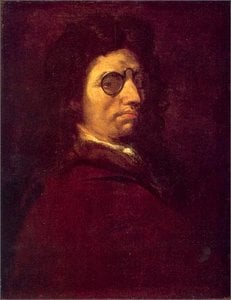
1634 - 1705 , Italy

Embark on a sophisticated journey through Italian Baroque art. Discover the dramatic interplay of light and emotion in Caravaggio’s masterpieces and explore how to bring this timeless grandeur into your collection with expert art insights.

 Preview
 Send
Send Share
Share
 Details

 Download
 Similars
 X-Ray
X-Ray Diaporama
 Stats
Stats


 Read More







 Glass option is only available in size under 110 CM


