Sell Your Art
x
PreviewPreview AR previewAR preview Switch to Print Switch to PrintSwitch to Image Switch to Image SendSend
DetailsDetails Add to favorites Add to favorites DownloadDownload SimilarsSimilars X-RayX-Ray DiaporamaDiaporama

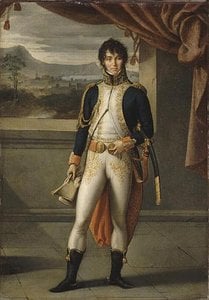
LE GENERAL COMTE FRANCOIS FOURNIER SARLOVEZE

Admire Antoine-Jean Gros's 'Le Général Fournier Sarlovèze,' a dramatic portrait capturing the authority of a French general amidst a battlefield scene. Rich colors, dynamic lines, and masterful lighting evoke Napoleonic grandeur.

Antoine-Jean Gros (Baron Gros) was a pivotal French Romantic painter renowned for his dramatic historical scenes & portraits of Napoleon's era. Explore his powerful works blending Neoclassicism with Romantic intensity.

Hand Made Oil Reproduction

Hand-painted oil on canvas in your size and frame, made to order by our artists. (Switch to Print Switch to PrintSwitch to Image Switch to Image)

P118B $10
P118H $10
P118W $10
P438Z $10
P508JH $12
P508YH $12
P805H $10
P805Z $10
P919BZ $10
P919G $10
P919XJ $10
P959ZH $10
P968JZ $12
W106C $8
W218G $10
W218JH $8
W218Y $10
W307PJ $10
W316G $10
W316PJ $8
W316Y $10
W398PJ $8
W4111J $10
W500HY $15
W500JH $15
W692G $12
W849H $8
W940BG $15
W953PJ $8

Standard
custom
CM
INCH

Pick from our preset sizes that match the artwork's original proportions.

width
height

You may enter your own dimensions to fit a specific frame or space. If your selected size does not match the original image's proportions, we will either crop the artwork or extend the painting with additional hand-painted elements. A digital mockup will be sent for your approval before production begins.
Please note that the on-screen preview does not reflect the actual cropping or extension. Only the mockup will accurately show the final composition.
While custom sizes are available, we recommend selecting a dimension from the predefined list to preserve the original proportions.

Examples of what can be changed: Replace face with customer photo; Add pet (e.g., replace cat with dog); Include hidden message in background; Change background landscape or elements.
After order, WahooArt.com team will email client for instructions and provide a mockup preview

Worldwide Delivery () in 3/4 weeks instead of standard 5 weeks. (8 August). No compromise on quality.

why_choose_icon
Free Worldwide Express Shipping
why_choose_icon
High-Quality Linen Canvas
why_choose_icon
Full Shipping Insurance
why_choose_icon
Customs Tax Refund Guarantee
why_choose_icon
True Color Matching Guarantee
why_choose_icon
60-Day Return Policy (Defects Only)
why_choose_icon
100% Money-Back Guarantee
why_choose_icon
Bulk Discount Offer

Total Price

$ 272

reproduction

LE GENERAL COMTE FRANCOIS FOURNIER SARLOVEZE

Reproduction Medium

Reproduction Size

-

Total Price

$ 272

Quick Facts

  • Influences: Neoclassicism
  • Notable elements: Dramatic lighting, strong lines
  • Artistic style: Portraiture
  • Title: LE GENERAL COMTE FRANCOIS FOURNIER SARLOVEZE
  • Medium: Oil on canvas
  • Artist: Antoine-Jean Gros

Art Quiz

There is only one correct answer for each question.

Question 1:
What is the primary artistic style of Antoine-Jean Gros’s ‘Le Général Comte François Fournier Sarloveze’?
Question 2:
The painting prominently features a dramatic use of lighting. What is the effect of this lighting?
Question 3:
Which color palette dominates the composition of ‘Le Général Comte François Fournier Sarloveze’?
Question 4:
Considering the historical context, what likely inspired Gros to depict General Fournier in a ceremonial pose?
Question 5:
What technique is most evident in the rendering of the general’s uniform and drapery?

Artwork Description

A Portrait of Command: Antoine-Jean Gros’s *Le Général Comte François Fournier Sarloveze*

Antoine-Jean Gros’s “Le Général Comte François Fournier Sarloveze” is more than simply a military portrait; it's a carefully constructed tableau of power, authority, and the calculated drama inherent in Napoleonic France. Painted around 1807, this oil on canvas work exemplifies Gros’s mastery of Neoclassical style while simultaneously capturing the dynamism and intensity of a pivotal moment within the Grande Armée. The painting immediately commands attention with its rich palette – a symphony of deep reds, opulent golds, and earthy browns that evoke both the grandeur of military achievement and the somber weight of strategic command. These colors aren’t merely decorative; they speak to the wealth and prestige associated with the French Empire under Napoleon.

The composition itself is meticulously balanced. General Fournier dominates the scene, his posture radiating a controlled strength. He's positioned centrally, drawing the viewer’s eye immediately to his face – an expression of resolute determination tempered by a hint of weary authority. The artist skillfully employs strong lines to delineate the folds of his uniform, the sharp angles of his armor, and the precise details of his weaponry—a saber held with unwavering confidence. These lines aren't just descriptive; they contribute significantly to the painting’s sense of order and stability, mirroring the hierarchical structure of the military itself. Geometric shapes – particularly in the meticulously rendered breastplate and the drapery – are juxtaposed against organic forms representing the distant battlefield, creating a visual dialogue between individual power and the vastness of war.

Theatricality and Historical Context

Gros was renowned for his ability to infuse historical scenes with theatrical drama, and “Le Général Comte François Fournier Sarloveze” is a prime example. The background, though somewhat indistinct, suggests a chaotic battlefield – a strategic retreat, perhaps, or the aftermath of a significant engagement. This isn’t a straightforward depiction of battle; instead, it's a carefully staged moment designed to glorify the general and his troops. The inclusion of elements like the drum and the saber are not incidental; they are potent symbols of military prowess and leadership—visual shorthand for the authority wielded by Fournier.

Crucially, this painting emerged during Napoleon’s rise to power and his relentless campaigns across Europe. The Napoleonic era was defined by a desire for monumental achievements and a carefully cultivated image of imperial grandeur. Gros, as Napoleon's official painter, played a vital role in shaping this narrative. He understood the importance of visual propaganda and skillfully employed his artistic talents to portray Napoleon and his officers in the most favorable light. The portrait’s commission likely served not only to celebrate Fournier’s service but also to bolster public support for the Emperor’s military endeavors.

Technique and Artistic Detail

Gros's technical skill is evident in every brushstroke. The layering of paint creates a remarkable sense of texture, particularly noticeable in the fabric of the uniform and the weathered surfaces of the weaponry. Dramatic lighting—a chiaroscuro effect—is used to highlight Fournier’s face, casting deep shadows that add depth and volume to his features while simultaneously emphasizing his commanding presence. This masterful use of light and shadow isn't merely aesthetic; it serves to draw attention to the general as the focal point of the composition.

The artist’s attention to detail is extraordinary. The intricate embroidery on Fournier’s uniform, the gleam of the saber, and the subtle nuances of his expression are all rendered with painstaking precision. Furthermore, Gros employs atmospheric perspective—a technique where distant elements appear paler and less distinct—to create a sense of depth and distance within the background landscape. This adds to the painting's realism and reinforces the impression that Fournier is positioned at the heart of a vast and complex military operation.

Symbolism and Emotional Resonance

Beyond its technical brilliance, “Le Général Comte François Fournier Sarloveze” resonates with profound symbolic meaning. The general’s posture—straightened, alert, and resolute—conveys an unwavering commitment to duty and a willingness to face any challenge. The painting speaks not only of military victory but also of leadership, discipline, and the sacrifices demanded by war. It's a portrait that embodies the ideals of the Napoleonic era – ambition, power, and the pursuit of glory. The subtle suggestion of a past conflict in the background hints at the burdens carried by those who command, adding a layer of complexity to the image’s overall message.


Artist Biography

The Dramatic Visions of Antoine-Jean Gros: Chronicler of an Empire

Antoine-Jean Gros, later Baron Gros, emerged as a defining voice in the transition from Neoclassical formality to the passionate fervor of Romanticism. Born in Paris in 1771, his artistic journey was inextricably linked with the tumultuous era he inhabited – the French Revolution and the rise and fall of Napoleon Bonaparte. Unlike many artists who sought refuge in idealized pasts, Gros found inspiration in the immediacy of contemporary events, becoming a master of historical painting that resonated with both political power and human drama. His early life offered little indication of the fame that awaited him; his father was a silk merchant, and while he received some initial artistic training, it wasn’t until he entered the studio of Jacques-Louis David in 1789 that his true potential began to unfold. This mentorship proved pivotal, instilling in Gros a rigorous academic foundation but also exposing him to the revolutionary spirit sweeping France.

From Revolutionary Zeal to Napoleonic Glory

The early years of Gros’s career were marked by paintings reflecting the fervor of the Revolution. However, his trajectory shifted dramatically with Napoleon's ascent. Recognizing Gros’s talent for capturing spectacle and emotion, Napoleon became a crucial patron, commissioning works that served as powerful propaganda tools. “Napoleon Visiting the Plague-Stricken in Jaffa” (1804), perhaps his most iconic painting, exemplifies this period. It wasn't merely a depiction of an event; it was a carefully constructed image designed to portray Napoleon as a compassionate leader, fearlessly tending to his troops despite the horrors of war. The scene is imbued with a theatrical intensity – the dramatic lighting, the expressive gestures of both Napoleon and the suffering soldiers, and the overall sense of pathos all contribute to its emotional impact. This work broke from Neoclassical conventions by prioritizing feeling over idealized form, foreshadowing the Romantic movement’s emphasis on subjective experience. He continued this trend with monumental canvases like “Battle of Eylau” (1808), a stark and unflinching portrayal of the brutal realities of warfare, yet still framed within Napoleon's heroic narrative. These paintings weren’t simply historical records; they were carefully curated myths that solidified Napoleon’s image as a military genius and benevolent ruler.

A Bridge Between Styles: Neoclassical Roots & Romantic Flourishes

Gros’s artistic style represents a fascinating synthesis of opposing forces. He inherited the meticulous draftsmanship, clarity of composition, and emphasis on anatomical accuracy from his teacher, David – hallmarks of Neoclassicism. However, he infused these qualities with a newfound dynamism, emotional intensity, and a willingness to embrace dramatic color palettes that distinguished him from his predecessor. His compositions often featured complex arrangements of figures, creating a sense of movement and chaos reminiscent of Baroque painting. Unlike the cool detachment favored by Neoclassical artists, Gros’s works are charged with emotion – grief, fear, courage, and despair are palpable in his depictions of battle scenes and portraits. He masterfully employed chiaroscuro to heighten dramatic effect, drawing attention to key figures and creating a sense of depth and atmosphere. This blending of styles allowed him to create paintings that were both visually compelling and emotionally resonant, appealing to a broad audience while simultaneously pushing the boundaries of artistic convention.

Later Years & Lasting Legacy

Following Napoleon’s downfall, Gros struggled to adapt to the changing political landscape. The restored Bourbon monarchy offered less patronage, and his attempts to return to more traditional historical subjects met with limited success. He became a professor at the École des Beaux-Arts in 1809, but found teaching frustrating. A growing disillusionment with the glorification of war and a personal tragedy – the loss of his wife in 1832 – contributed to a period of depression. In 1835, Gros tragically drowned while painting a portrait on the banks of the Seine River. Despite this somber end, his legacy remains secure. He paved the way for Romantic painters like Eugène Delacroix and Théodore Géricault, inspiring them to embrace emotional intensity and contemporary subject matter.
  • His influence can be seen in their shared interest in dramatic compositions, expressive brushwork, and a willingness to challenge academic conventions.
  • Gros’s paintings continue to captivate audiences with their powerful depictions of historical events and human emotion.
  • He stands as a pivotal figure in the transition from Neoclassicism to Romanticism, bridging the gap between two distinct artistic movements.
Antoine-Jean Gros wasn't merely a painter of battles; he was a chronicler of an empire, a master of propaganda, and ultimately, a visionary artist who helped redefine the landscape of 19th-century art.

Quick Facts

  • Artistic Movement Or Style: Romanticism
  • Artists Who Influenced This Artist: ['Jacques-Louis David']
  • Date Of Birth: 1771
  • Date Of Death: 1835
  • Full Name: Antoine-Jean Gros
  • Nationality: French
  • Notable Artworks: ['Napoleon Visiting the Plague-Stricken in Jaffa']
  • Place Of Birth: Paris, France
Explore artworks organized by themes, styles, and characteristics.