Sell
x
PreviewPreview AR previewAR preview Buy Print Buy PrintBuy Image Buy Image SendSend
DetailsDetails Add to favorites Add to favorites DownloadDownload SimilarsSimilars X-RayX-Ray DiaporamaDiaporama

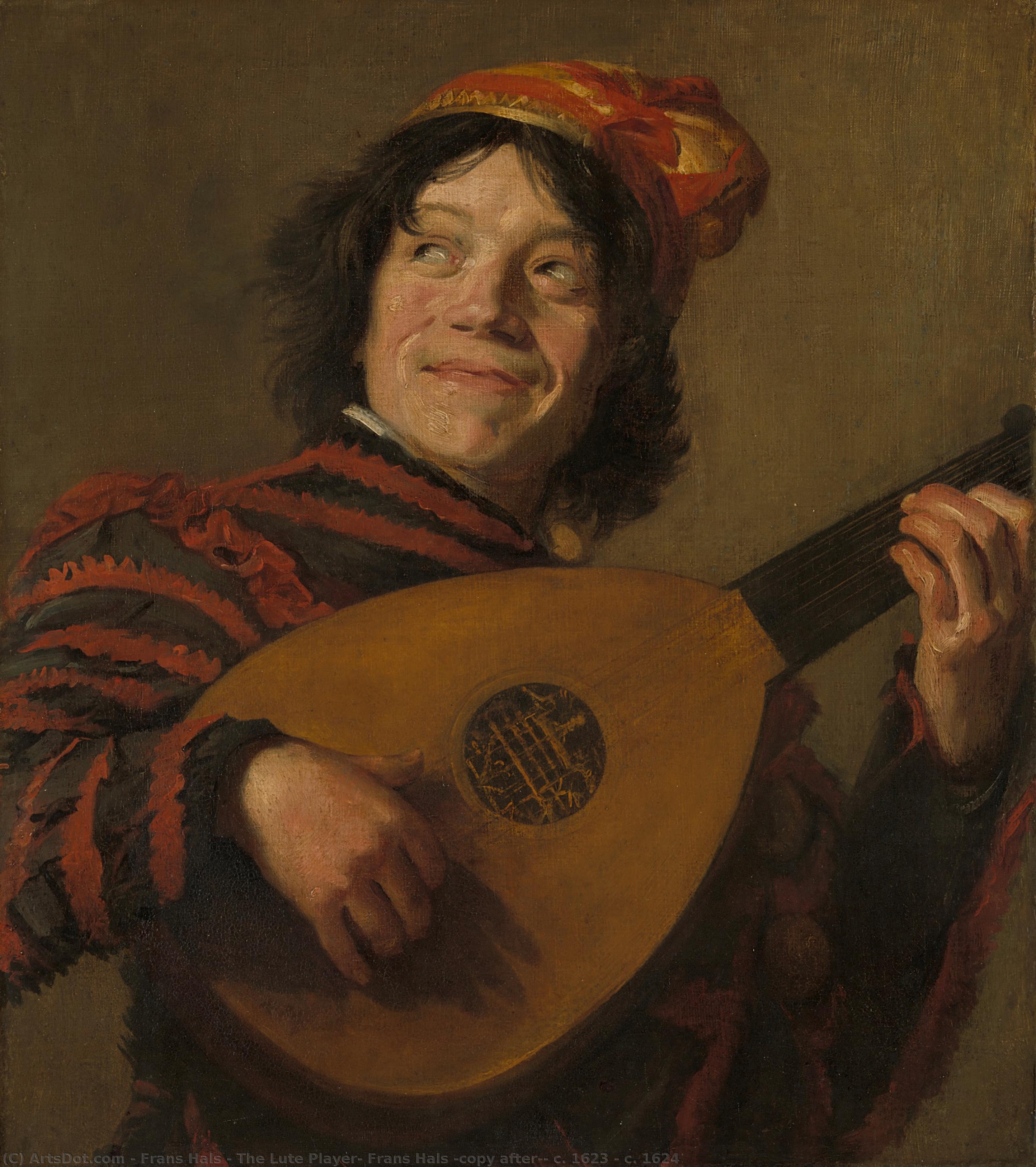
The Lute Player, Frans Hals (copy after), c. 1623 - c. 1624

Discover Frans Hals’ ‘The Lute Player’ copy – a captivating 17th-century portrait showcasing Dutch Golden Age artistry & technique. Explore its unique details & historical context.

Explore Frans Hals I: Dutch Golden Age master of portraiture & genre scenes. Known for loose brushwork & capturing personality! #FransHals #DutchArt

Hand Made Oil Reproduction

Hand-painted oil on canvas in your size and frame, made to order by our artists. (Buy Print Buy PrintBuy Image Buy Image)

Standard
custom
CM
INCH

Pick from our preset sizes that match the artwork's original proportions.

width
height

You may enter your own dimensions to fit a specific frame or space. If your selected size does not match the original image's proportions, we will either crop the artwork or extend the painting with additional hand-painted elements. A digital mockup will be sent for your approval before production begins.
Please note that the on-screen preview does not reflect the actual cropping or extension. Only the mockup will accurately show the final composition.
While custom sizes are available, we recommend selecting a dimension from the predefined list to preserve the original proportions.

Examples of what can be changed: Replace face with customer photo; Add pet (e.g., replace cat with dog); Include hidden message in background; Change background landscape or elements.
After order, WahooArt.com team will email client for instructions and provide a mockup preview

Worldwide Delivery () in 3/4 weeks instead of standard 5 weeks. (15 August). No compromise on quality.

why_choose_icon
Free Worldwide Express Shipping
why_choose_icon
High-Quality Linen Canvas
why_choose_icon
Full Shipping Insurance
why_choose_icon
Customs Tax Refund Guarantee
why_choose_icon
True Color Matching Guarantee
why_choose_icon
60-Day Return Policy (Defects Only)
why_choose_icon
100% Money-Back Guarantee
why_choose_icon
Bulk Discount Offer

Total Price

$ 272

reproduction

The Lute Player, Frans Hals (copy after), c. 1623 - c. 1624

Reproduction Medium

Reproduction Size

-

Total Price

$ 272

Artwork Description

This painting is a copy of Hals’s Lute Player in the Louvre (fig. a). The original has more vibrant colours and a greater sophistication of modelling. It is especially the crude application of white highlights in the figure’s face and left hand that leave no doubt that the Rijksmuseum version is not an autograph replica. A number of small details, such as the figure’s hair and the shadows, differ from the prototype. The buffoon’s right hand has also been placed much closer to the lute’s sound hole than in the original. A pentimento shows that the little finger of the left hand was originally placed in the same position as in the Louvre painting. That little finger was painted out and a new, extended one painted beside it. This minor difference and others indicate that the present painting and not the original served the Leiden artist David Bailly as the model for two drawings he executed in 1624 and 1626 (RP-T-1886-A-562, see fig. b).6 Like the Rijksmuseum painting, too, the buffoon in Bailly’s drawings looks less askance than in the Louvre picture. The figure in the Rijksmuseum painting has more hair on the left side of his face, which was also followed in Bailly’s drawings. While the materials used to create the present painting confirm that it was executed in the 17th century, the fact that Bailly copied it in a 1624 drawing provides a terminus ante quem. A terminus post quem of circa 1623 is indicated by Slive’s convincing dating of the Louvre prototype.7 This replica was executed, therefore, almost immediately after Hals’s prototype in the Louvre was finished. After being initially considered an original by Frans Hals,8 the Rijksmuseum painting was attributed consecutively to Dirck Hals,9 one of Frans Hals’s sons,10 and to Judith Leyster.11 None of these attributions are tenable, however. A slightly larger copy of the present painting on a wooden support was in a German private collection in 1989.12 Jonathan Bikker, 2007 See Bibliography and Rijksmuseum painting catalogues See Key to abbreviations and Acknowledgements This entry was published in J. Bikker (ed.), Dutch Paintings of the Seventeenth Century in the Rijksmuseum Amsterdam, I: Artists Born between 1570 and 1600, coll. cat. Amsterdam 2007, no. 113.

Artist Biography

Frans Hals I: A Life in Paint

Frans Hals I was a Dutch painter born in Antwerp, Belgium, around 1580. Though his early life remains somewhat shrouded in mystery, he rose to become one of the most important figures of the Dutch Golden Age, celebrated for his innovative portraiture and genre scenes.

Early Life and Training

Details surrounding Hals’s formative years are scarce. It is believed he received initial artistic training in Antwerp, a prominent center for painting at the time. However, due to religious and political turmoil, his family relocated to Haarlem in the Netherlands. He became a member of the Haarlem Guild of St. Luke in 1610, marking the formal beginning of his professional career.

Artistic Style and Development

Hals distinguished himself through a remarkably fresh and spontaneous style. Unlike many of his contemporaries who favored meticulous detail, Hals employed a loose and expressive brushstroke. This technique imbued his paintings with a sense of immediacy and vitality, capturing the personality and character of his subjects in a way that was revolutionary for its time.

  • His portraits weren’t simply likenesses; they were psychological studies.
  • He excelled at depicting fleeting moments – laughter, conversation, or contemplation.
  • Hals's use of light and shadow added depth and drama to his compositions.

Notable Works

While Hals produced a wide range of works, he is best known for his portraits. Some of his most celebrated paintings include:

  • The Laughing Cavalier (1624) – A quintessential example of his ability to capture character and movement.
  • Malle Babbe (c. 1633-1635) – A striking portrayal of an elderly woman, showcasing Hals’s skill in depicting age and personality.
  • Portraits of the Regents of the Old Men's Home in Haarlem (1664) - Demonstrating his mastery of group portraiture.

He also created compelling genre scenes – depictions of everyday life – that offered glimpses into Dutch society.

Influences and Legacy

Determining Hals’s direct influences is challenging, as he developed a highly individual style. However, it's likely he was aware of the work of earlier Flemish painters like Pieter Bruegel the Elder. His innovative approach to portraiture profoundly impacted subsequent generations of artists.

  • He influenced artists such as Adriaen Brouwer and Johannes Vermeer.
  • His emphasis on capturing personality paved the way for more intimate and psychological portraits.
  • Later artists, including the Impressionists, admired his loose brushwork and focus on light.

Historical Significance

Frans Hals I played a crucial role in shaping Dutch painting during the Golden Age. His work reflects the burgeoning prosperity and individualism of the Netherlands at that time. He moved away from rigid formality towards a more naturalistic and expressive style, leaving an enduring legacy on the art world.

Today, his paintings are highly sought after and can be found in major museums worldwide, including the Frans Hals Museum in Haarlem, which houses the largest collection of his work. His contributions continue to inspire artists and captivate audiences centuries later.

frans hals i

frans hals i

1580 - 1585 , Belgium

Quick Facts

  • Birth Date: 1580
  • Birth Place: Antwerp, Belgium
  • Death Date: 1585
  • Movement: Dutch Golden Age
  • Name: Frans Hals I
  • Nationality: Dutch
  • Notable Works: Portraits and genre scenes
Explore artworks organized by themes, styles, and characteristics.