A Symphony in Bloom: Jan van Huysum’s “Flower Still Life, c. 1734”
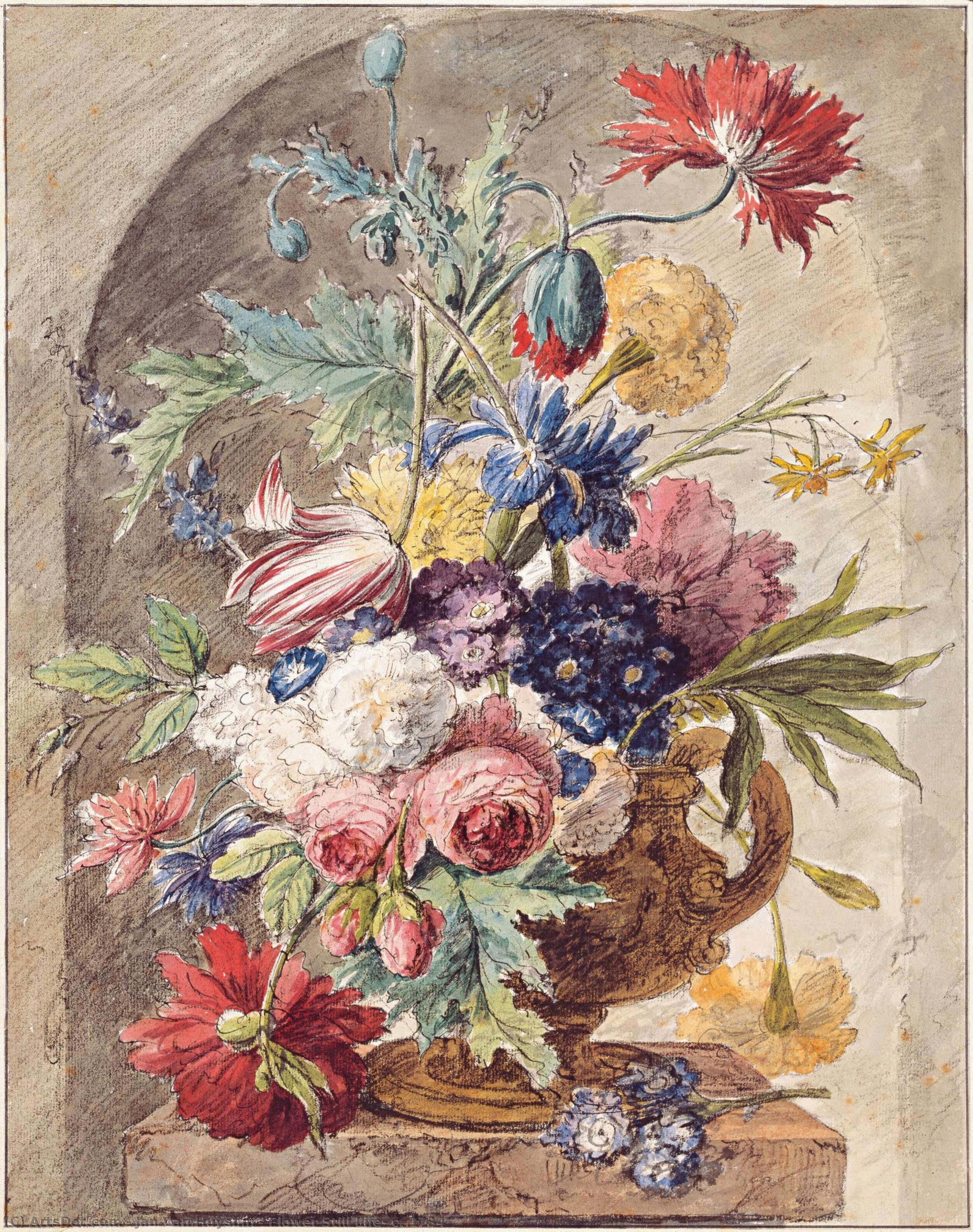
Step into a world of exquisite detail and delicate beauty with Jan van Huysum's "Flower Still Life, c. 1734," a masterpiece that transcends mere botanical illustration to become a profound meditation on nature’s fleeting splendor. Painted in the heart of the Dutch Golden Age, this work isn’t simply a depiction of flowers; it’s an invitation to pause and contemplate the ephemeral beauty of life itself – a concept deeply rooted in the artistic philosophy known as vanitas.
Van Huysum, a master of his craft, possessed an almost uncanny ability to render the textures and nuances of each blossom with breathtaking realism. His meticulous attention to detail—the velvety petals of roses, the delicate veins of leaves, the glistening droplets of water – creates an illusion so convincing that one feels compelled to reach out and touch them. The composition is a carefully orchestrated arrangement, a vibrant tapestry woven from a diverse collection of flowers: crimson roses, pale pink carnations, sapphire blue morning glories, and a scattering of delicate white blossoms. These aren’t merely arranged; they seem to be caught in the midst of a silent, graceful dance.
The painting's technique is as captivating as its subject matter. Van Huysum employed a layered approach, beginning with underpaintings in blue and brown, followed by washes that built up depth and luminosity. He then meticulously added details – highlights on petals, shadows within the leaves – using fine brushes to achieve an unparalleled level of precision. The use of light is particularly masterful, casting soft glows across the arrangement and creating a sense of three-dimensionality that draws the viewer into the scene. Notably, he often worked directly from life, assembling fresh flowers over extended periods to capture their most vibrant state, ensuring each bloom was at its peak.
The Language of Flowers: Symbolism in Van Huysum’s Palette
Beyond its technical brilliance, “Flower Still Life” is rich with symbolic meaning. Van Huysum's work frequently engaged with the vanitas tradition, a popular movement during this period that used still life paintings to remind viewers of mortality and the transience of earthly pleasures. Each flower carries a specific weight of symbolism – roses representing love and beauty, carnations signifying remembrance, morning glories symbolizing faith and hope. The inclusion of a watch, a common motif in vanitas paintings, serves as a poignant reminder of the passage of time and the inevitability of death.
The arrangement itself is carefully considered. The juxtaposition of vibrant colors against a dark background creates a dramatic effect, emphasizing the beauty of the flowers while simultaneously hinting at their fragility. The inclusion of a small, almost hidden, butterfly adds another layer of symbolism – representing transformation and the cycle of life and death. Even the placement of each flower—the drooping petals, the tilted heads—suggests a sense of quiet contemplation and acceptance.
A Window into 18th-Century Dutch Art
“Flower Still Life, c. 1734” offers a remarkable glimpse into the artistic world of 18th-century Holland. During this period, flower painting reached its zenith, driven by a burgeoning interest in botany and horticulture. The Dutch were renowned for their elaborate gardens and their passion for collecting exotic plants – a trend reflected in the lavish displays of flowers depicted in paintings like this one. Jan van Huysum’s work stands as a testament to the skill and artistry of the era, capturing not only the beauty of nature but also the cultural values and philosophical concerns of its time.
The painting's popularity during Van Huysum’s lifetime—with prices reaching several times those of Rembrandt’s works—underscores its significance. It was highly sought after by European royalty, including William V, Prince of Orange, who acquired numerous examples for his collection at Het Loo Palace. Today, “Flower Still Life” remains a treasured example of Dutch Golden Age art, admired for its technical mastery, symbolic richness, and enduring beauty.
Bringing the Beauty Home: Reproductions & Interior Design
The exquisite detail and evocative atmosphere of Van Huysum’s "Flower Still Life" make it an ideal subject for high-quality reproductions. Whether you choose a hand-painted replica or a meticulously printed canvas, this artwork can bring a touch of timeless elegance to any interior space.
Consider the painting's color palette – the rich reds, vibrant blues, and delicate pinks – when selecting complementary furnishings and décor. The arrangement’s sense of tranquility and contemplation would be particularly well-suited for a study or living room where relaxation and reflection are valued. The inclusion of natural elements—such as potted plants or floral arrangements—can further enhance the painting's impact, creating a harmonious blend of art and nature.
Explore our collection of meticulously crafted reproductions to experience the beauty and artistry of Jan van Huysum’s “Flower Still Life” in your own home.



 Preview
 Buy Print
 Send
Send Share
Share
 Details

 Download
 Similars
 X-Ray
X-Ray Diaporama


 Read More






































 Glass option is only available in size under 110 CM