
x


Hand-painted oil on canvas in your size and frame, made to order by our artists. ( Buy Print Buy Image)





























Pick from our preset sizes that match the artwork's original proportions.

You may enter your own dimensions to fit a specific frame or space. If your selected size does not match the original image's proportions, we will either crop the artwork or extend the painting with additional hand-painted elements. A digital mockup will be sent for your approval before production begins.
Please note that the on-screen preview does not reflect the actual cropping or extension. Only the mockup will accurately show the final composition.
While custom sizes are available, we recommend selecting a dimension from the predefined list to preserve the original proportions.
Worldwide Delivery () in 3/4 weeks instead of standard 5 weeks. (30 August). No compromise on quality.


Cérès protégeant Triptolème contre le roi Lyncus
Reproduction Size
This captivating oil painting depicts a dramatic scene drawn directly from Greek mythology. It portrays Cérès (Roman goddess Ceres), the powerful deity of agriculture, fertility, and motherhood, fiercely protecting Triptolème, an Athenian king credited with introducing agriculture to mankind. The narrative centers on a perilous encounter where Cérès intervenes against King Lyncus, who, in a fit of rage or madness, attempted to kill Triptolème. A serpentine figure adds another layer of threat and divine intervention to the scene.
The artwork is firmly rooted within the Baroque style, characterized by its dynamic composition, intense emotion, and dramatic use of light and shadow (chiaroscuro). Dumont masterfully employs a diagonal thrust in the arrangement of figures, creating a sense of urgency and movement. The muscular depiction of Cérès, actively defending Triptolème who lies upon an ornate bed, conveys strength and courage. The presence of Triptolème, standing protectively nearby with what appears to be a staff or scepter, reinforces the theme of guardianship. Noticeable brushstrokes and layering of paint contribute to the texture and depth of the scene. The artist’s skillful use of warm tones – reds, browns, and golds – contrasted with cooler blues and greens in the drapery creates visual richness and enhances the dramatic impact.
Beyond its narrative depiction, the painting is rich in symbolic meaning. Cérès embodies divine power and maternal protection, while Triptolème represents the gift of agriculture to humanity. The serpent symbolizes danger, evil, or a test of faith, highlighting the perilous situation faced by Triptolème. The overall emotional tone is one of intense drama and urgency, evoking feelings of fear, courage, and ultimately, divine intervention. The muscular figure's heroic stance and protective gesture powerfully convey strength and determination in the face of adversity.
Jacques Dumont dit "le Romain" (1704-1781) was a French history and portrait painter who enjoyed considerable celebrity during his lifetime. He trained initially in Paris, later studying in Rome – hence the moniker “le Romain.” He became a respected member of the Académie royale de peinture et de sculpture. While perhaps less known today than some of his contemporaries, Dumont’s work reflects the artistic tastes and values of the 18th century, particularly the continued popularity of mythological subjects and the emphasis on dramatic storytelling through painting. This piece exemplifies his ability to capture dynamic scenes with a keen eye for detail and a mastery of Baroque techniques.


1701 - 1781 , France

Explore the dramatic evolution from Baroque's intense chiaroscuro to Rococo's golden elegance. Our expert guide decodes the shift from high-drama shadows to playful, ornate grace for art enthusiasts and collectors seeking deep historical insight.

Explore the profound differences between Baroque drama and Rococo elegance. Our expert guide delves into art history, chiaroscuro, and the evolution of European masterpieces for collectors and enthusiasts seeking deep historical context.
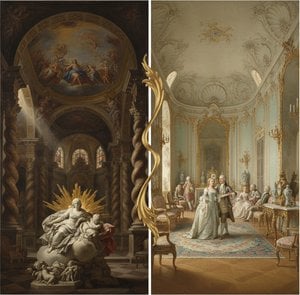
Explore the captivating evolution from Baroque's drama to Rococo's grace! Discover key artists, characteristics & lasting influence of these art movements with expert insights at WahooArt.

Embark on a cultural journey through the dramatic grandeur of Baroque and the delicate grace of Rococo art. Discover the history, techniques, and timeless beauty of these magnificent eras with our expert-led exploration of European masterpieces.

Explore the opulent world of Rococo art! Discover its origins, key artists like Watteau & Boucher, and lasting influence on design. Expert insights for collectors & enthusiasts.


Stay updated with the latest art news, exclusive offers, and decoration ideas.
Tell us about your project and our art experts will provide you with 3 personalized art suggestions.
Let Us Curate 3 Options Just for You - Free!

 Preview
 Send
Send Share
Share
 Details

 Download
 Similars
 X-Ray
X-Ray Diaporama

 Read More







 Glass option is only available in size under 110 CM


