

 Tempera On PanelWallArtBaroque Decorative Style
 1488Renaissance
 191.0 x 196.0 cm
 Staatliche Museen
Hand-painted oil on canvas in your size and frame, made to order by our artists. ( Switch to Print Switch to Digital Image)





























Pick from our preset sizes that match the artwork's original proportions.

You may enter your own dimensions to fit a specific frame or space. If your selected size does not match the original image's proportions, we will either crop the artwork or extend the painting with additional hand-painted elements. A digital mockup will be sent for your approval before production begins.
Please note that the on-screen preview does not reflect the actual cropping or extension. Only the mockup will accurately show the final composition.
While custom sizes are available, we recommend selecting a dimension from the predefined list to preserve the original proportions.
Worldwide Delivery () in 3/4 weeks instead of standard 5 weeks. (9 September). No compromise on quality.


Virgin and Child Enthroned with Saints
Reproduction Size
In the quiet sanctity of the late 15th century, few artists could command the eye with as much decorative splendor and spiritual intensity as Carlo Crivelli. His monumental masterpiece, Virgin and Child Enthroned with Saints, painted in 1488, serves as a breathtaking portal into the Late Gothic soul. This is not merely a painting; it is an immersive experience of divine presence. As one gazes upon this expansive altarpiece, measuring an imposing 191 x 196 cm, the viewer is immediately struck by a sense of profound majesty. Crivelli, a master of the Venetian school who found his true voice in the Marche region, weaves together a tapestry of sacred figures that feels both physically tangible and ethereally distant.
At the very heart of this celestial assembly sits the Virgin Mary, depicted with a regal poise that commands reverence. Seated upon an intricately adorned throne, she embodies the purity and grace of the Mother of God. Beside her, the Christ Child rests, bathed in a soft, divine light that seems to emanous from within the canvas itself. Surrounding this central duo is a holy court of saints—including Saint Jerome, Saint Sebastian, and Saint Catherine of Siena—each rendered with such meticulous detail that they appear to inhabit the same space as the observer. The composition is a masterclass in visual hierarchy, guiding the eye from the humble, kneeling donor at the base toward the luminous heights of the divine figures, creating a rhythmic movement of devotion.
What truly distinguishes Crivelli’s work for the discerning collector or interior designer is his unparalleled command of trompe l'oeil—the art of tricking the eye. He possessed an uncanny ability to manipulate texture and light, making stone, fabric, and fruit appear almost touchable. In this piece, the interplay of shadows against the stone wall and the delicate floral motifs on the throne create a three-dimensional depth that breathes life into the flat surface. His palette is a sophisticated arrangement of golds, deep blues, and rich reds—colors traditionally reserved for royalty and the sacred—which lends the work an opulent, jewel-like quality.
Every element within the frame is heavy with symbolic resonance. Note the presence of the apple in the upper corner, a poignant reminder of the Fall of Man and the necessity of redemption through Christ. The meticulous attention to detail, from the fine threads of a saint's garment to the cold hardness of the architectural elements, serves to ground the spiritual narrative in a physical reality. For those seeking to incorporate such grandeur into a curated space, a high-quality reproduction of this work offers more than just decoration; it provides a focal point of historical depth and aesthetic brilliance. It is an invitation to contemplate the eternal through the lens of exquisite, late-medieval craftsmanship.

carlo crivelli, an italian renaissance painter, was born in venice around 1430-35. he came from a family of painters and received his artistic formation in venice and padua. crivelli's early training is believed to have been under jacobello del fiore, who was still active in 1436. he also studied at the school of vivarini in venice.
crivelli spent his early years in the veneto, absorbing influences from vivarini, squarcione, and mantegna. by 1458, he left the veneto and spent most of his career in the march of ancona, developing a distinctive personal style that contrasts with that of his venetian contemporary giovanni bellini. crivelli's work is characterized by a conservative late gothic decorative sensibility, marked by a linear quality, attention to detail, and the use of "trompe l'oeil" techniques.
* carlo crivelli's painting "madonna and child enthroned" (106 x 55 cm, museum of fine arts, budapest, hungary) is a prime example of his style. * he collaborated with his younger brother vittorio crivelli on several projects. * pietro alemanno, a painter who immigrated to the march of ancona from germany/austria, was his pupil and collaborator.
* the pinacoteca di brera in milan, italy, features several of crivelli's works, including "pietà" (128 x 241 cm). * the museum san giovanni in bragora in venice, italy, has a collection of artworks from various periods and styles, including some attributed to crivelli.
crivelli's legacy continues to inspire art enthusiasts and scholars alike, with his work remaining a testament to the enduring power of conservative late gothic decorative sensibility.

1435 - 1495 , Italy

Explore the exquisite elegance of Late Gothic art. Discover how masters like Carlo Crivelli and Stefan Lochner blended intricate detail and religious devotion to bridge the Middle Ages and the Renaissance in this expert art history guide for true connoisseurs.
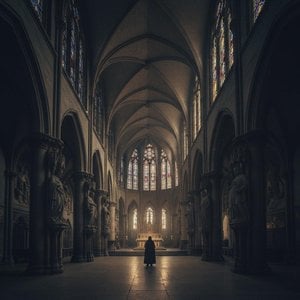
Embark on a journey through the dramatic era of Gothic art. Discover the profound beauty of illuminated manuscripts, sacred gold leaf masterpieces, and the transition to naturalism in this expert-led exploration of medieval artistry and historical grandeur.

Transform your digital artistry into a prestigious global brand with WahooArt’s premium Giclée prints. Experience museum-quality archival excellence and seamless on-demand fulfillment designed for the modern creative entrepreneur seeking to build a lasting artistic legacy.

Embark on a scholarly journey through the spiritual grandeur of Late Medieval art. Discover the intricate symbolism, technical mastery, and profound religious narratives that define the Gothic era in this expert-led guide for art enthusiasts and collectors.

Master the nuances of Giclée printing with our expert guide. Discover how pigment-based inks and museum-grade substrates create fade-resistant, high-fidelity art reproductions designed for discerning collectors seeking unparalleled quality and longevity.

 Preview
 Send
Send Share
Share
 Details

 Download
 Similars
 X-Ray
X-Ray Diaporama
 Stats
Stats Read More







 Glass option is only available in size under 110 CM


