Δείτε σε πραγματικό χώροΔείτε σε πραγματικό χώρο Προεπισκόπηση σε ARΠροεπισκόπηση σε AR Μετάβαση σε Εκτυπωση Μετάβαση σε ΕκτυπωσηΑγορά χειροποίητου πίνακα Αγορά χειροποίητου πίνακα ΑποστολήΑποστολή
ΛεπτομέρειεςΛεπτομέρειες Προσθήκη στα αγαπημένα Προσθήκη στα αγαπημένα ΛήψηΛήψη Παρόμοια αντικείμενα συλλογήςΠαρόμοια αντικείμενα συλλογής ΑκτινογραφίαΑκτινογραφία ΠαρουσίασηΠαρουσίαση ΣτατιστικάΣτατιστικά

Vulcan

Witness the power of Roman mythology! Guillaume Coustou II's neoclassical sculpture 'Vulcan' captures the god of fire and metalworking with dramatic chiaroscuro lighting and intricate detail. A timeless masterpiece.

Guillaume Coustou II (1716-1777): French sculptor bridging Baroque & Neoclassical styles. Known for 'Horse Tamers' & the Monument to the Dauphin, his dramatic works influenced 18th-century art.

Αγοράστε μια ψηφιακή εικόνα υψηλής ανάλυσης και βελτιωμένης ποιότητας, πολύ ανώτερης από την προεπισκόπηση στο διαδίκτυο.

Κάθε αρχείο προετοιμάζεται σχολαστικά από τους εξειδικευμένους συνεργάτες μας, με τη χρήση προηγμένων εργαλείων και χειροκίνητου ρετουσαρίσματος υψηλής ακρίβειας. Εξασφαλίζουμε ότι κάθε εικόνα προσφέρει εξαιρετική ευκρίνεια, απόλυτη πιστότητα στο χρώμα και λεπτομερή ανάδραση των λεπτομερειών.

Το τελικό αρχείο παραδίδεται μέσω email εντός 72 ωρών, βελτιστοποιημένο για άμεση χρήση σε επαγγελματικά, εκδοτικά και έντυπα περιβάλλοντα. Πρόκειται για την ίδια ποιότητα που εμπιστεύονται κορυφαία studios σχεδιασμού, εκδότες και γκαλερί.

Ψηφιακή εικόνα

Κατεβάστε ένα αρχείο υψηλής ανάλυσης για προσωπική χρήση, εκτύπωση και δημιουργικά έργα. (Μετάβαση σε Εκτυπωση Μετάβαση σε ΕκτυπωσηΑγορά χειροποίητου πίνακα Αγορά χειροποίητου πίνακα)

Συνολικό Κόστος

$ 24,90

Περιλαμβάνεται σε κάθε παραγγελία ψηφιακής εικόνας

Επαγγελματική Ψηφιακή Παράδοση με Εγγύηση

Όταν επιλέγετε το WahooArt.com, δεν αποκτάτε απλώς μια εικόνα – λαμβάνετε ένα επαγγελματικά αναβαθμισμένο ψηφιακό έργο τέχνης, δημιουργημένο με ακρίβεια και με εγγύηση ικανοποίησης. Δείτε όλα όσα περιλαμβάνονται στην παραγγελία σας, αυτόματα:

shipping_icon
Άμεση αποστολή μέσω email

Το ψηφιακό σας αρχείο εικόνας υψηλής ανάλυσης θα σας σταλεί μέσω email εντός 72 ωρών από την παραγγελία σας — έτοιμο για άμεση χρήση.

canvas_icon
Ψηφιακό Αρχείο με Τεχνητή Νοημοσύνη

Το έργο σας βελτιστοποιείται επαγγελματικά με τη χρήση προηγμένων εργαλείων Τεχνητής Νοημοσύνης και χειροκίνητης επεξεργασίας, εξασφαλίζοντας μέγιστη λεπτομέρεια, ευκρίνεια και ακρίβεια χρωμάτων.

insurance_icon
Δωρεάν επανεκδόσεις مدى ζωής

Απώλησες ή διαγράψατε κατά λάθος το αρχείο σας; Μην ανησυχείτε — θα σας το ξαναστείλομε οποιαδήποτε στιγμή, δωρεάν.

tax_icon
Χωρίς Τελωνειακούς Φόρους - Ποτέ

Απολαύστε αμέσως τα έργα τέχνης σας χωρίς δασμούς, φόρους ή έξοδα αποστολής - οι ψηφιακές λήψεις είναι πάντα αφορεশিপτεία.

color_icon
Εγγύηση Ακριβούς Χρωματισμού

Εξασφαλίζουμε ότι η ψηφιακή σας εικόνα αποτυπώνει τα αυθεντικά χρώματα όσο το δυνατόν πιστότερα, χρησιμοποιώντας επαγγελματικά εργαλεία και διαχείριση χρωμάτων.

return_icon
Εγγύηση Ικανοποίησης 100 Ημερών

Εάν δεν είστε ικανοποιημένοι με την ψηφιακή σας εικόνα, θα την τροποποιήσουμε ή θα σας επιστρέψουμε το 100% εντός 100 ημερών - χωρίς κανένα ερώτημα.

guarantee_icon
100% Εγγύηση Επιστροφής Χρήματος

Δεν είστε ικανοποιημένοι; Λάβετε πλήρη επιστροφή των χρημάτων σας εντός 100 ημερών από τη λήψη του ψηφιακού σας αρχείου - χωρίς κανένα ερώτημα.

discount_icon
Εκπτώσεις για μαζικές παραγγελίες

Αγοράστε 3 εικόνες, κάντε εξοικονόμηση 10% - Αγοράστε 5, κάντε εξοικονόμηση 15% - Αγοράστε 10+, κάντε εξοικονόμηση 20%. Ιδανικό για δημιουργικά έργα, γκαλερί και agencies.

Γρήγορα στοιχεία

  • Dimensions: 69 cm x 50 cm x 41 cm
  • Location: Louvre Museum, Paris
  • Year: 1742
  • Influences: Van Clève's Polyphemus
  • Title: Vulcan
  • Movement: Neoclassicism
  • Subject or theme: Roman God Vulcan

ΚВИΖ Τέχνης

Για κάθε ερώτηση υπάρχει μόνο μία σωστή απάντηση.

Ερώτηση 1:
What is the primary subject depicted in Guillaume II Coustou’s sculpture, ‘Vulcan’?
Ερώτηση 2:
Based on the image description, what is a prominent feature of Vulcan’s pose?
Ερώτηση 3:
What artistic style is most evident in Guillaume II Coustou’s sculpture, ‘Vulcan’?
Ερώτηση 4:
The photograph utilizes dramatic chiaroscuro lighting. What effect does this primarily create?
Ερώτηση 5:
Considering the historical context provided, what role did Guillaume Coustou II play in the artistic landscape of his time?

The Sculptor’s Gaze: Guillaume Coustou's "Vulcan"

Guillaume II Coustou’s “Vulcan,” a remarkable marble sculpture from 1742, isn’t merely a depiction of the Roman god of fire and metalworking; it’s a poignant meditation on labor, isolation, and the weight of divine responsibility. Created during a pivotal period in French art history – bridging the Baroque’s dramatic flourishes with the burgeoning Neoclassicism – this work offers a rare glimpse into the emotional landscape of a mythological figure. Coustou, trained within a distinguished family lineage of sculptors, masterfully captures not just Vulcan's physical form but also an underlying sense of weariness and quiet contemplation that elevates the piece beyond simple portraiture.
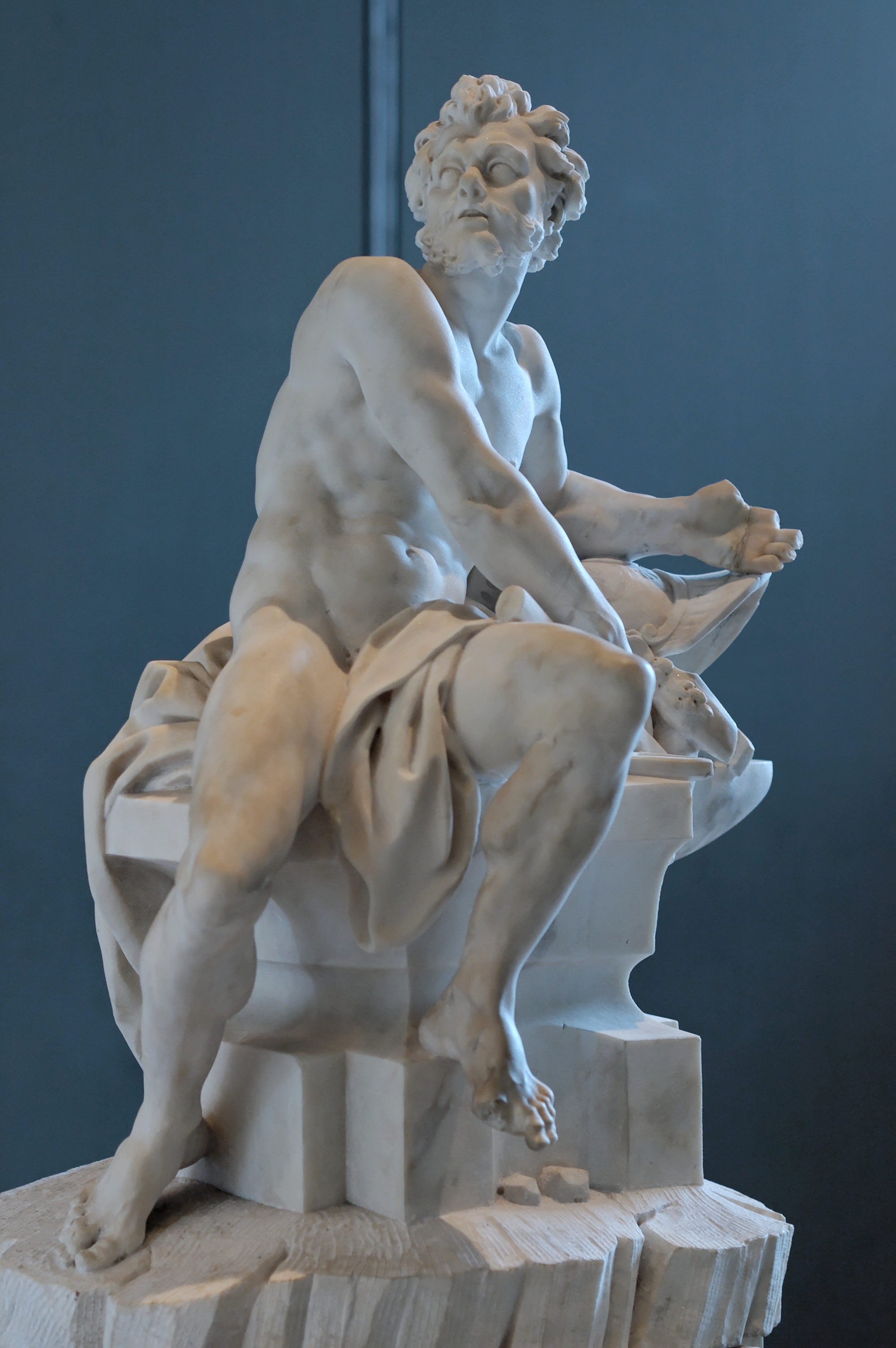
Vulcan by Coustou

Guillaume II Coustou’s “Vulcan,” Louvre Museum

Neoclassical Form and Baroque Echoes

Coustou's style is a fascinating synthesis of influences. While firmly rooted in the Neoclassical tradition – evident in the sculpture’s idealized human anatomy, precise detailing, and balanced composition – “Vulcan” retains traces of the late Baroque, particularly in its dramatic use of light and shadow (chiaroscuro). This interplay creates a powerful sense of volume and depth, emphasizing the musculature of the god's body while simultaneously hinting at his internal struggle. The pose itself—leaning heavily against a substantial barrel-like object – is reminiscent of Baroque depictions of exhausted heroes returning from battle, suggesting a parallel between Vulcan’s divine labors and the burdens faced by mortal warriors.

The sculpture was originally conceived as a *morceau de réception*, a ceremonial piece presented to patrons during an artist's return to Paris after studying abroad. This tradition demanded a work that showcased both technical skill and artistic maturity, and Coustou’s “Vulcan” undoubtedly fulfilled this requirement. It’s significant that the model was created in plaste before being cast in marble, demonstrating Coustou’s meticulous approach and his desire to refine the form before committing it to a more permanent medium.

Symbolism of Fire, Forge, and Isolation

Beyond its formal qualities, “Vulcan” is rich in symbolic meaning. The god's tools – hammers, tongs, and chisels – are meticulously rendered, underscoring his mastery over metalworking. However, the barrel-like object he leans against isn’t merely a prop; it represents the heart of his domain: the forge or cauldron where he crafts weapons for both gods and mortals. The sculpture's overall mood, however, is one of profound melancholy. Vulcan’s furrowed brow, downturned mouth, and slumped posture suggest a sense of isolation and perhaps even resentment. He is depicted as an outcast god, banished to the underworld to toil endlessly, a fate that contrasts sharply with the glory associated with other Olympian deities.

The choice of marble itself adds another layer of meaning. Marble was traditionally associated with mourning and remembrance, subtly reinforcing the theme of loss and solitude within the sculpture. Furthermore, the fact that this piece was originally intended as a reception piece – a demonstration of skill to potential patrons – highlights the inherent tension between artistic achievement and the often-unacknowledged struggles faced by artists themselves.

A Timeless Masterpiece for Interior Design

WahooArt’s hand-painted reproductions capture the essence of Coustou's “Vulcan” with exceptional fidelity. The rich tonal range, meticulously rendered textures – from the smooth surface of Vulcan’s skin to the rough grain of the barrel – and dramatic chiaroscuro lighting are faithfully reproduced, bringing this powerful image to life in a contemporary setting. Whether adorning a grand salon or a more intimate space, “Vulcan” offers a compelling conversation piece, inviting viewers to contemplate themes of labor, power, and the complexities of the human condition. Its timeless appeal makes it an ideal addition to any discerning collection.


Βιογραφικό Καλλιτέχνη

Guillaume II Coustou: Life and Legacy

Early Life and Training

  • Guillaume Coustou II was born in Paris, France, in 1716. He came from a distinguished family of sculptors – the son of Guillaume Coustou I and nephew of Nicolas Coustou.
  • His artistic training began within the family atelier, benefiting directly from the expertise of his father and uncle. This familial foundation instilled in him a strong understanding of sculptural techniques and traditions.
  • In 1736, he won the prestigious Prix de Rome, granting him the opportunity to study at the French Academy in Rome until 1739. This period was crucial for his artistic development, exposing him to classical sculpture and Italian Baroque styles.

Artistic Development and Style

  • Upon returning to Paris, Coustou seamlessly continued his father’s work, most notably completing the monumental Horse Tamers (Chevaux de Marly), a commission initially undertaken by Guillaume I but left unfinished due to illness.
  • His style evolved throughout his career, demonstrating a transition from the late Baroque exuberance of his early works to the more restrained and emotionally evocative forms of emerging Neoclassicism.
  • He skillfully blended dramatic narrative with classical ideals, creating sculptures that were both visually impressive and intellectually engaging.

Major Achievements and Notable Works

  • Horse Tamers (Chevaux de Marly): Perhaps his most famous achievement, these dynamic bronze sculptures depict horsemen controlling powerful steeds, embodying strength and mastery.
  • Monument to the Dauphin: This elaborate sculptural ensemble for Sens Cathedral was a significant commission that showcased Coustou’s ability to handle complex iconography and large-scale projects. The design's detailed imagery was developed in collaboration with Charles-Nicolas Cochin.
  • Vulcan: His morceau de réception (admission piece) for the Académie Royale de Peinture et de Sculpture, a seated Vulcan, exemplifies his Baroque sensibilities.
  • Ganymede: This sculpture demonstrates Coustou’s embrace of early Neoclassical aesthetics, drawing inspiration from Roman sculptures like those of Antinous.

Influences and Legacy

  • Coustou was profoundly influenced by his father and uncle, inheriting their technical skill and artistic sensibility. His time in Rome exposed him to the works of classical sculptors and Italian Baroque masters.
  • He, in turn, influenced a generation of younger sculptors, including Claude Dejoux, Pierre Julien, and the Danish sculptor Johannes Widewelt, who studied under him.
  • His work represents an important bridge between the Baroque and Neoclassical periods in French sculpture, contributing to the evolving artistic landscape of 18th-century Europe.

Historical Significance

  • Guillaume II Coustou played a vital role in shaping the aesthetic direction of French sculpture during a period of significant artistic change.
  • His ability to adapt his style and embrace new influences allowed him to maintain a successful career under different patronage systems.
  • His sculptures continue to be admired for their technical virtuosity, dramatic power, and historical significance, solidifying his place as a notable figure in the history of French art.
guillaume ii coustou

guillaume ii coustou

1716 - 1777 , France

Γρήγορα στοιχεία

  • Birth Date: 1716
  • Birth Place: Paris, France
  • Death Date: 1777
  • Influenced By:
    • Guillaume Coustou I
    • Nicolas Coustou
  • Movement:
    • Baroque
    • Neoclassicism
  • Name: Guillaume II Coustou
  • Nationality: French
  • Notable Works:
    • Horse Tamers (Chevaux de Marly)
    • Monument to the Dauphin
    • Vulcan
    • Ganymede