Δείτε σε πραγματικό χώροΔείτε σε πραγματικό χώρο Προεπισκόπηση σε ARΠροεπισκόπηση σε AR Μετάβαση σε Εκτυπωση Μετάβαση σε ΕκτυπωσηΜετάβαση σε Ψηφιακή Εικόνα Μετάβαση σε Ψηφιακή Εικόνα ΑποστολήΑποστολή
ΛεπτομέρειεςΛεπτομέρειες Προσθήκη στα αγαπημένα Προσθήκη στα αγαπημένα ΛήψηΛήψη Παρόμοια αντικείμενα συλλογήςΠαρόμοια αντικείμενα συλλογής ΑκτινογραφίαΑκτινογραφία ΠαρουσίασηΠαρουσίαση ΣτατιστικάΣτατιστικά

Vulcan

Witness the power of Roman mythology! Guillaume Coustou II's neoclassical sculpture 'Vulcan' captures the god of fire and metalworking with dramatic chiaroscuro lighting and intricate detail. A timeless masterpiece.

Guillaume Coustou II (1716-1777): French sculptor bridging Baroque & Neoclassical styles. Known for 'Horse Tamers' & the Monument to the Dauphin, his dramatic works influenced 18th-century art.

Χειροποίητη Αναπαραγωγή σε Έλαιο

Χειροποίητη oil painting σε καμβά στο δικό σας μέγεθος και πλαίσιο, κατά παραγγελία από τους καλλιτέχνες μας. (Μετάβαση σε Εκτυπωση Μετάβαση σε ΕκτυπωσηΜετάβαση σε Ψηφιακή Εικόνα Μετάβαση σε Ψηφιακή Εικόνα)

P118B $10
P118H $10
P118W $10
P438Z $10
P508JH $12
P508YH $12
P805H $10
P805Z $10
P919BZ $10
P919G $10
P919XJ $10
P959ZH $10
P968JZ $12
W106C $8
W218G $10
W218JH $8
W218Y $10
W307PJ $10
W316G $10
W316PJ $8
W316Y $10
W398PJ $8
W4111J $10
W500HY $15
W500JH $15
W692G $12
W849H $8
W940BG $15
W953PJ $8

Πρότυπο μέγεθος
κατόπιν παραγγελίας
CM
INCH

Επιλέξτε από τις προκαθορισμένες διαστάσεις μας που διατηρούν τις αρχικές αναλογίες του έργου τέχνης.

πλάτος
ύψος

Μπορείτε να ορίσετε δικές σας διαστάσεις ώστε το έργο να ταιριάζει σε ένα συγκεκριμένο πλαίσιο ή χώρο. Εάν το επιλεγμένο μέγεθος δεν συμπίπτει με τις αναλογίες της αρχικής εικόνας, θα περικοψούμε το έργο ή θα επεκτείνουμε τη ζωγραφιά με πρόσθετα χειρόγραφα στοιχεία. Ένα ψηφιακό προσχέδιο θα σας αποσταλεί για έγκριση πριν την έναρξη της παραγωγής.
Παρακαλούμε σημειώστε ότι η προεπισκόπηση στην οθόνη δεν αντικατοπτρίζει την πραγματική περικοπή ή επέκταση. Μόνο το προσχέδιο θα δείξει με ακρίβεια την τελική σύνθεση.
Παρόλο που είναι διαθέσιμα προσαρμοσμένα μεγέθη, συνιστούμε να επιλέξετε μια διάσταση από τη λίστα των προκαθορισμένων μεγεθών για τη διατήρηση των αρχικών αναλογιών.

Παραδείγματα αλλαγών: Αντικατάσταση προσώπου με φωτογραφία του πελάτη· Προσθήκη κατοικίδιου (π.χ., αντικατάσταση γάτας με σκύλο)· Ενσωμάτωση κρυφού μηνύματος στο φόντο· Αλλαγή τοπίου ή στοιχείων του φόντου.
Μετά την παραγγελία, η ομάδα του WahooArt.com θα στείλει email στον πελάτη με οδηγίες και θα παρέχει μια προεπισκόπηση προσχεδίου

Παγκόσμια Αποστολή () σε 3-4 εβδομάδες αντί για τις συνήθεις 5 εβδομάδες. (12 Σεπτέμβριος). Χωρίς συμβιβασμούς στην ποιότητα.

why_choose_icon
Δωρεάν γρήγορη διεθνής αποστολή
why_choose_icon
Κάμβας από Λινό Υψηλής Ποιότητας
why_choose_icon
Πλήρης ασφάλιση μεταφοράς
why_choose_icon
Εγγύηση Επιστροφής Δασμών και Φόρων
why_choose_icon
Εγγύηση Απόλυτης Ομοιότητας Χρωμάτων
why_choose_icon
Πολιτική Επιστροφής 100 Ημερών (Μόνο σε περίπτωση ελαττωμάτων)
why_choose_icon
Εγγύηση επιστροφής 100% των χρημάτων
why_choose_icon
Προσφορά για μαζικές παραγγελίες

Συνολική Τιμή

$ 272

reproduction

Vulcan

Μέσο Αναπαραγωγής

Διαστάσεις Αναπαραγωγής

-

Συνολική Τιμή

$ 272

Γρήγορα στοιχεία

  • Dimensions: 69 cm x 50 cm x 41 cm
  • Location: Louvre Museum, Paris
  • Year: 1742
  • Influences: Van Clève's Polyphemus
  • Title: Vulcan
  • Movement: Neoclassicism
  • Subject or theme: Roman God Vulcan

ΚВИΖ Τέχνης

Για κάθε ερώτηση υπάρχει μόνο μία σωστή απάντηση.

Ερώτηση 1:
What is the primary subject depicted in Guillaume II Coustou’s sculpture, ‘Vulcan’?
Ερώτηση 2:
Based on the image description, what is a prominent feature of Vulcan’s pose?
Ερώτηση 3:
What artistic style is most evident in Guillaume II Coustou’s sculpture, ‘Vulcan’?
Ερώτηση 4:
The photograph utilizes dramatic chiaroscuro lighting. What effect does this primarily create?
Ερώτηση 5:
Considering the historical context provided, what role did Guillaume Coustou II play in the artistic landscape of his time?

The Sculptor’s Gaze: Guillaume Coustou's "Vulcan"

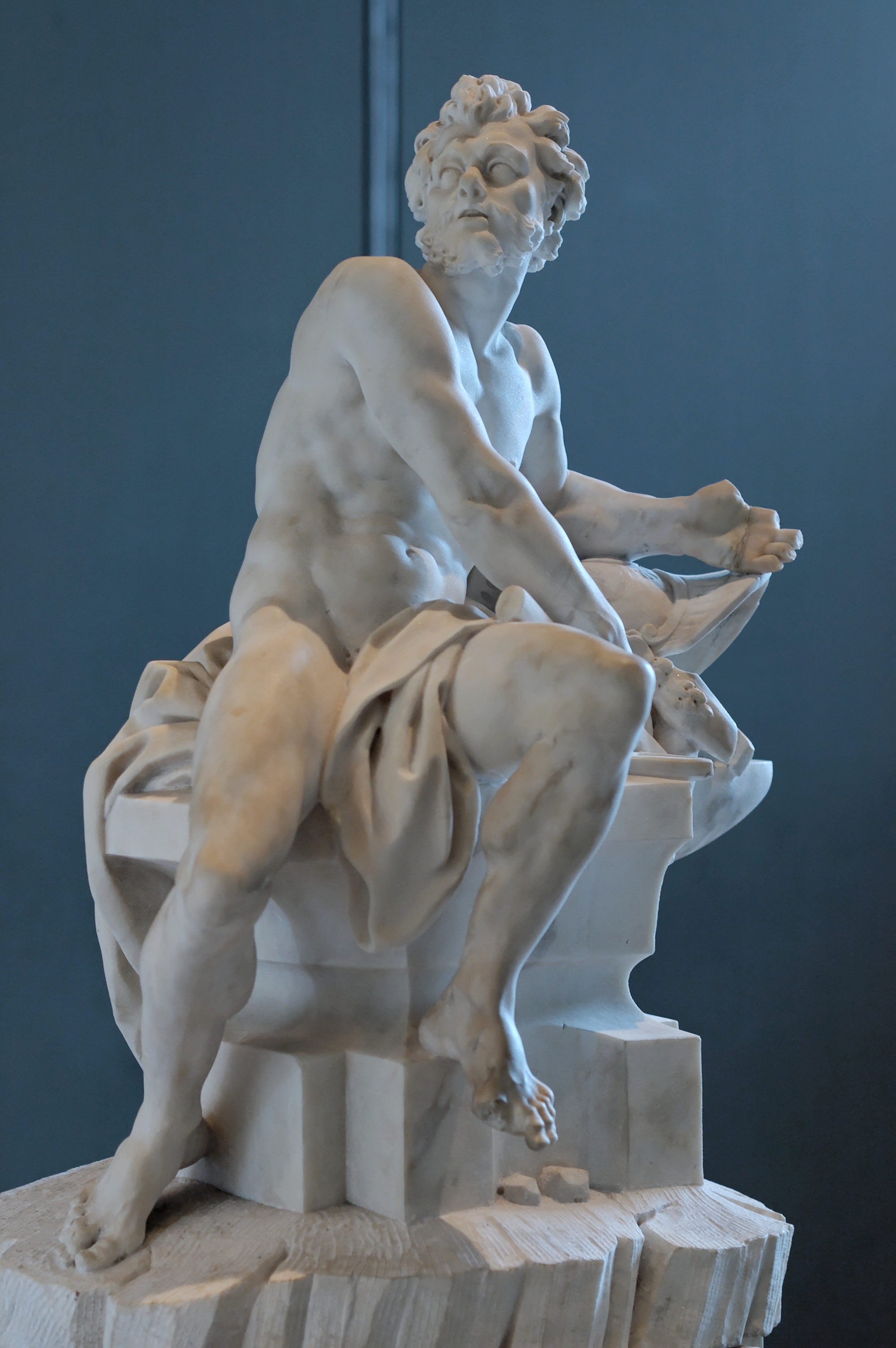
Guillaume II Coustou’s “Vulcan,” a remarkable marble sculpture from 1742, isn’t merely a depiction of the Roman god of fire and metalworking; it’s a poignant meditation on labor, isolation, and the weight of divine responsibility. Created during a pivotal period in French art history – bridging the Baroque’s dramatic flourishes with the burgeoning Neoclassicism – this work offers a rare glimpse into the emotional landscape of a mythological figure. Coustou, trained within a distinguished family lineage of sculptors, masterfully captures not just Vulcan's physical form but also an underlying sense of weariness and quiet contemplation that elevates the piece beyond simple portraiture.
Vulcan by Coustou

Guillaume II Coustou’s “Vulcan,” Louvre Museum

Neoclassical Form and Baroque Echoes

Coustou's style is a fascinating synthesis of influences. While firmly rooted in the Neoclassical tradition – evident in the sculpture’s idealized human anatomy, precise detailing, and balanced composition – “Vulcan” retains traces of the late Baroque, particularly in its dramatic use of light and shadow (chiaroscuro). This interplay creates a powerful sense of volume and depth, emphasizing the musculature of the god's body while simultaneously hinting at his internal struggle. The pose itself—leaning heavily against a substantial barrel-like object – is reminiscent of Baroque depictions of exhausted heroes returning from battle, suggesting a parallel between Vulcan’s divine labors and the burdens faced by mortal warriors.

The sculpture was originally conceived as a *morceau de réception*, a ceremonial piece presented to patrons during an artist's return to Paris after studying abroad. This tradition demanded a work that showcased both technical skill and artistic maturity, and Coustou’s “Vulcan” undoubtedly fulfilled this requirement. It’s significant that the model was created in plaste before being cast in marble, demonstrating Coustou’s meticulous approach and his desire to refine the form before committing it to a more permanent medium.

Symbolism of Fire, Forge, and Isolation

Beyond its formal qualities, “Vulcan” is rich in symbolic meaning. The god's tools – hammers, tongs, and chisels – are meticulously rendered, underscoring his mastery over metalworking. However, the barrel-like object he leans against isn’t merely a prop; it represents the heart of his domain: the forge or cauldron where he crafts weapons for both gods and mortals. The sculpture's overall mood, however, is one of profound melancholy. Vulcan’s furrowed brow, downturned mouth, and slumped posture suggest a sense of isolation and perhaps even resentment. He is depicted as an outcast god, banished to the underworld to toil endlessly, a fate that contrasts sharply with the glory associated with other Olympian deities.

The choice of marble itself adds another layer of meaning. Marble was traditionally associated with mourning and remembrance, subtly reinforcing the theme of loss and solitude within the sculpture. Furthermore, the fact that this piece was originally intended as a reception piece – a demonstration of skill to potential patrons – highlights the inherent tension between artistic achievement and the often-unacknowledged struggles faced by artists themselves.

A Timeless Masterpiece for Interior Design

WahooArt’s hand-painted reproductions capture the essence of Coustou's “Vulcan” with exceptional fidelity. The rich tonal range, meticulously rendered textures – from the smooth surface of Vulcan’s skin to the rough grain of the barrel – and dramatic chiaroscuro lighting are faithfully reproduced, bringing this powerful image to life in a contemporary setting. Whether adorning a grand salon or a more intimate space, “Vulcan” offers a compelling conversation piece, inviting viewers to contemplate themes of labor, power, and the complexities of the human condition. Its timeless appeal makes it an ideal addition to any discerning collection.


Βιογραφία Καλλιτέχνη

Guillaume II Coustou: Life and Legacy

Early Life and Training

  • Guillaume Coustou II was born in Paris, France, in 1716. He came from a distinguished family of sculptors – the son of Guillaume Coustou I and nephew of Nicolas Coustou.
  • His artistic training began within the family atelier, benefiting directly from the expertise of his father and uncle. This familial foundation instilled in him a strong understanding of sculptural techniques and traditions.
  • In 1736, he won the prestigious Prix de Rome, granting him the opportunity to study at the French Academy in Rome until 1739. This period was crucial for his artistic development, exposing him to classical sculpture and Italian Baroque styles.

Artistic Development and Style

  • Upon returning to Paris, Coustou seamlessly continued his father’s work, most notably completing the monumental Horse Tamers (Chevaux de Marly), a commission initially undertaken by Guillaume I but left unfinished due to illness.
  • His style evolved throughout his career, demonstrating a transition from the late Baroque exuberance of his early works to the more restrained and emotionally evocative forms of emerging Neoclassicism.
  • He skillfully blended dramatic narrative with classical ideals, creating sculptures that were both visually impressive and intellectually engaging.

Major Achievements and Notable Works

  • Horse Tamers (Chevaux de Marly): Perhaps his most famous achievement, these dynamic bronze sculptures depict horsemen controlling powerful steeds, embodying strength and mastery.
  • Monument to the Dauphin: This elaborate sculptural ensemble for Sens Cathedral was a significant commission that showcased Coustou’s ability to handle complex iconography and large-scale projects. The design's detailed imagery was developed in collaboration with Charles-Nicolas Cochin.
  • Vulcan: His morceau de réception (admission piece) for the Académie Royale de Peinture et de Sculpture, a seated Vulcan, exemplifies his Baroque sensibilities.
  • Ganymede: This sculpture demonstrates Coustou’s embrace of early Neoclassical aesthetics, drawing inspiration from Roman sculptures like those of Antinous.

Influences and Legacy

  • Coustou was profoundly influenced by his father and uncle, inheriting their technical skill and artistic sensibility. His time in Rome exposed him to the works of classical sculptors and Italian Baroque masters.
  • He, in turn, influenced a generation of younger sculptors, including Claude Dejoux, Pierre Julien, and the Danish sculptor Johannes Widewelt, who studied under him.
  • His work represents an important bridge between the Baroque and Neoclassical periods in French sculpture, contributing to the evolving artistic landscape of 18th-century Europe.

Historical Significance

  • Guillaume II Coustou played a vital role in shaping the aesthetic direction of French sculpture during a period of significant artistic change.
  • His ability to adapt his style and embrace new influences allowed him to maintain a successful career under different patronage systems.
  • His sculptures continue to be admired for their technical virtuosity, dramatic power, and historical significance, solidifying his place as a notable figure in the history of French art.
guillaume ii coustou

guillaume ii coustou

1716 - 1777 , France

Γρήγορα στοιχεία

  • Birth Date: 1716
  • Birth Place: Paris, France
  • Death Date: 1777
  • Influenced By:
    • Guillaume Coustou I
    • Nicolas Coustou
  • Movement:
    • Baroque
    • Neoclassicism
  • Name: Guillaume II Coustou
  • Nationality: French
  • Notable Works:
    • Horse Tamers (Chevaux de Marly)
    • Monument to the Dauphin
    • Vulcan
    • Ganymede
Εξερευνήστε έργα τέχνης ταξινομημένα ανά θέμα, στυλ και χαρακτηριστικά.