Raphael’s Self Portrait: A Window Into Renaissance Genius
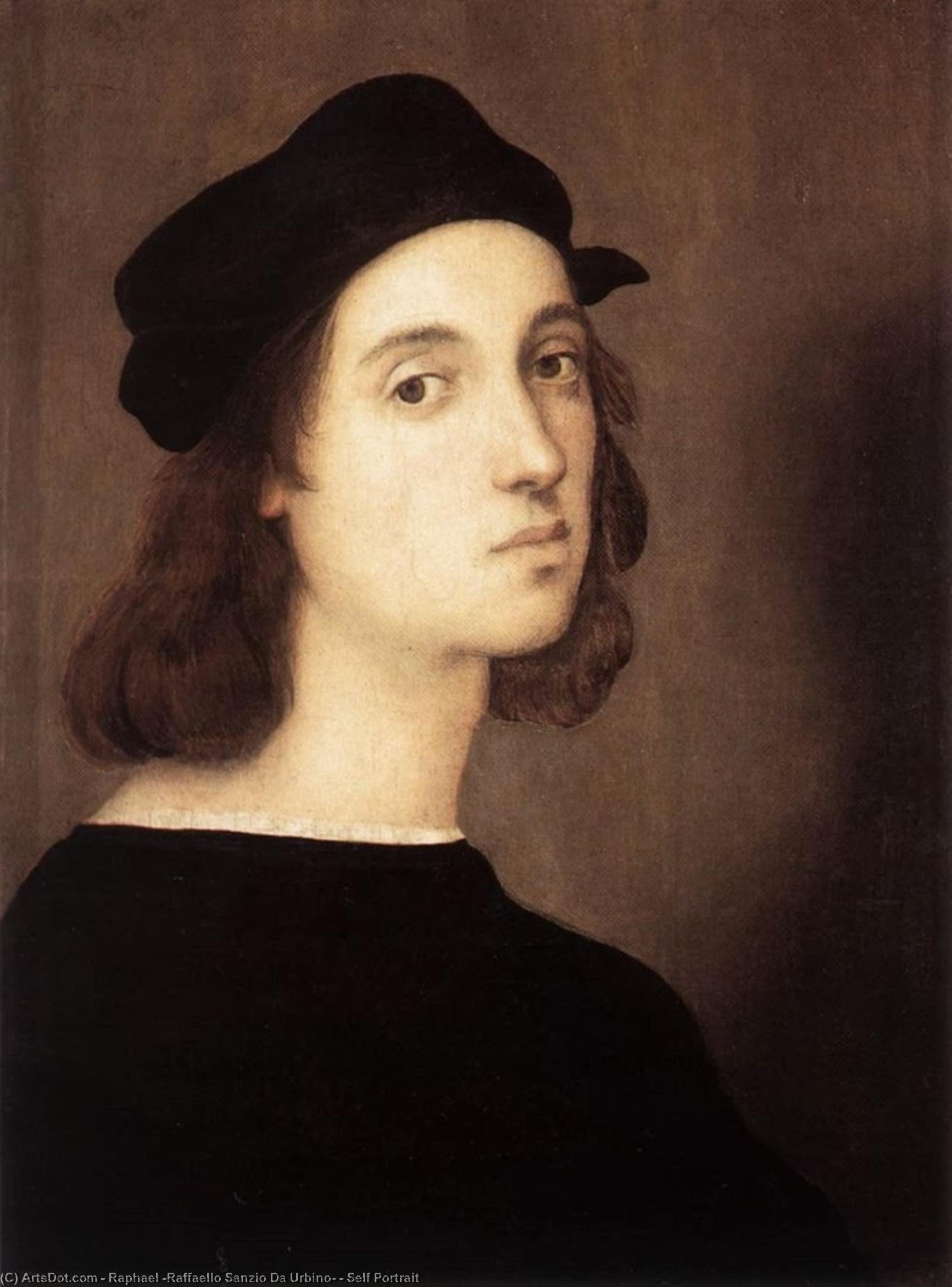
Raphael Sanzio da Urbino (1483 – 1520), arguably the most celebrated artist of the High Renaissance, bequeathed to posterity an extraordinary legacy—a body of work that continues to inspire awe and admiration centuries later. Among his numerous masterpieces, Raphael’s Self Portrait (1506), housed in the Galleria degli Uffizi in Florence, stands as a singularly poignant emblem of his artistic vision and intellectual curiosity. This oil-on-panel painting transcends mere representation; it's an intimate glimpse into the mind of one of history’s greatest innovators.
Executed during a pivotal moment in Raphael’s career—a period marked by ambitious commissions for papal patrons and burgeoning fame—the portrait reveals a remarkable self-awareness. Unlike many portraits of his time, which prioritized idealized beauty and status, Raphael eschewed conventional conventions to capture not just his physical appearance but also the contemplative gaze that characterized his artistic temperament. The painting’s subtle nuances speak volumes about Raphael's understanding of human psychology and his desire to portray himself as a man of intellect and virtue.
Detailed Analysis: Composition and Technique
Measuring 45 x 33 cm, the canvas is dominated by a carefully balanced pyramidal composition—a hallmark of Raphael’s stylistic approach. The artist meticulously rendered every detail, utilizing sfumato—a technique pioneered by Leonardo da Vinci—to soften contours and create an ethereal luminescence that imbues the portrait with an unparalleled sense of depth and atmosphere. Raphael skillfully blended pigments using thin glazes, layering translucent washes of color to achieve a velvety texture and capturing the subtle variations in tonal value with astonishing precision.
The artist’s attention to anatomical accuracy is equally impressive. Raphael meticulously studied human anatomy—drawing inspiration from classical sculpture—to faithfully depict the musculature of his torso and limbs. The pose itself—slightly turned towards the viewer—suggests a quiet confidence and invites contemplation, mirroring the artist's own introspective nature.
Historical Context: Renaissance Humanism and Artistic Ideal
Raphael’s Self Portrait emerged from the fertile intellectual landscape of Florence during the High Renaissance—a period characterized by fervent interest in classical antiquity and a humanist belief in the inherent dignity of human beings. Influenced by thinkers like Pico della Mirandola and Erasmus, Raphael embraced the ideals of balance, harmony, and proportion that underpinned Renaissance art. This painting reflects the broader cultural preoccupation with exploring the complexities of human experience—a departure from medieval artistic conventions that prioritized religious symbolism over naturalistic representation.
Alongside Michelangelo and Leonardo da Vinci, Raphael formed the triumvirate of artistic giants who reshaped European culture. His influence extended far beyond his own lifetime, inspiring generations of artists and shaping the aesthetic sensibilities of subsequent eras. The Self Portrait serves as a testament to Raphael’s enduring legacy—a symbol of artistic excellence and intellectual curiosity that continues to captivate audiences worldwide.
Symbolism: Beyond Appearance
Beyond its meticulous depiction of physical features, Raphael's Self Portrait is laden with symbolic significance. The black hat adorned with gold trim represents nobility and prestige—reflecting Raphael’s elevated social standing within Urbino’s court. Similarly, the well-groomed beard and mustache symbolize wisdom and erudition—underscoring Raphael’s commitment to intellectual pursuits. Most importantly, however, the artist's gaze—directed outwards towards the viewer—suggests a profound awareness of his own role as an observer and interpreter of the world around him.
For those seeking to appreciate the sublime beauty of Renaissance art and delve into the mind of one of history’s most brilliant thinkers, /art/list/?Filter=8YDTSG-Raphael-(Raffaello-Sanzio-Da-Urbino)-Self-Portrait offers a stunning reproduction of this iconic masterpiece—a timeless testament to Raphael’s artistic genius and the enduring power of humanist ideals.
https://en.wikipedia.org/wiki/List_of_paintings_by_Raphael provides further insight into Raphael’s broader artistic oeuvre and his contribution to the Renaissance.
Fragen & Antworten
In welchem Alter schuf Raffael „Selbstbildnis"?
Raffael schuf „Selbstbildnis“ im Alter von 23. Der Künstler wurde 1483 geboren, und das Werk datiert auf 1506.
Wie verbinden sich Medium und Bewegung in "Selbstbildnis"?
"Selbstbildnis" ist in Öl auf Leinwand im Stil der The painting exemplifies the Renaissance's blend o-Epoche gefertigt.
Darf die Abbildung von "Selbstbildnis" von Raffael frei reproduziert werden?
"Selbstbildnis" von Raffael ist gemeinfrei – das Urheberrecht ist abgelaufen. Dieser Status bestimmt, wie das Bild des Werkes vervielfältigt werden darf.


 In echtem Maßstab anzeigen
 Zum Druck wechseln
 Versenden als Grußkarte
 Teilen
 Details anzeigen
 Leitfaden öffnen

 Herunterladen
 Ähnliche Objekte
 Röntgenaufnahme
 Diashow
 Besucherstatistiken


 Mehr anzeigen






































 Die Glasoption ist nur für Größen unter 110 cm verfügbar.