A Symphony of Color on Crimson Ground
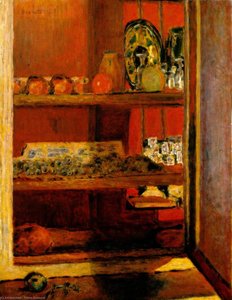
To stand before Pierre Bonnard’s "Fruit on the red carpet" is to step into a moment suspended in luminous color. This still life, dating from 1943, is far more than a mere arrangement of objects; it is an intimate study in light, texture, and the sheer pleasure of domestic abundance. The eye is immediately drawn down to the rich expanse of the red carpet, a vibrant stage upon which nature’s bounty has been artfully scattered. Bonnard masterfully uses this crimson ground not just as a backdrop, but as an active participant in the composition, amplifying the jewel tones of the fruit and the subtle greens of the surrounding accents.
The Allure of Still Life and Domestic Intimacy
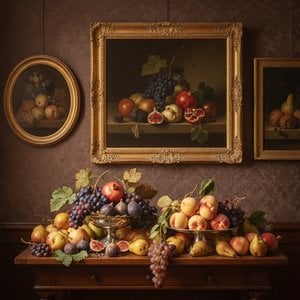
Bonnard’s genius often lay in elevating the mundane to the magnificent. In this piece, the scattered apples, nestled beside a central bowl and anchored by a solitary chair on the left, speak to a quiet, lived-in elegance. The subject matter—fruit and household items—is characteristic of his deep fascination with interior life. It suggests moments paused: perhaps after a gathering, or simply during a leisurely afternoon contemplation. This sense of captured domesticity gives the painting an immediate warmth, making it feel both timelessly classical and startlingly personal.
Technique and Bonnard's Luminous Palette
Examining the technique reveals the hallmark of Bonnard’s post-Impressionist sensibility. While the subject is grounded in tangible objects, the execution is anything but literal. His brushwork, though perhaps appearing loose from a distance, possesses an underlying structure that captures the way light refracts off polished skin and waxy fruit peels. The colors are applied with an almost intoxicating vibrancy; they do not merely sit on the canvas but seem to glow from within, suggesting the dappled sunlight filtering into a sunlit room in Fontenay-aux-Roses.
Symbolism of Abundance and Light
The overflowing nature of the fruit carries traditional symbolic weight—a universal emblem of harvest, fertility, and sensory pleasure. Yet, Bonnard imbues this abundance with something more ephemeral. The interplay between the deep reds, the bright yellows, and the cool greens creates a visual rhythm that speaks to the passage of seasons and the enduring beauty found in simple pleasures. For the collector or designer, this piece offers not just decoration, but an infusion of optimistic, vibrant energy into any space.
Bringing Bonnard Home
Reproducing such a complex interplay of color requires sensitivity, which is why acquiring a high-quality reproduction allows one to bring this captured moment of light and life into your own home. Imagine the effect: the rich depth of the red carpet echoing in an entryway, or the vibrant fruit arrangement gracing a dining room mantelpiece. It is an artwork that invites close looking, rewarding the viewer with new discoveries of color harmony every time they gaze upon it.



 Vorschau anzeigen
 Handgemalte Reproduktion bestellen
 Versenden
 Teilen
 Details anzeigen

 Herunterladen
 Ähnliche Objekte
 Röntgenaufnahme
 Diashow
 Statistiken


 Weiterlesen






































 Die Glasoption ist nur für Größen unter 110 cm verfügbar.