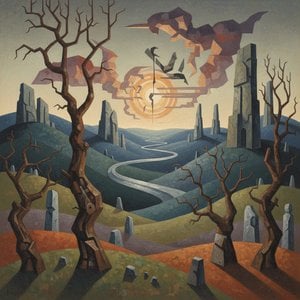
Druid Landscape (1938) von Paul Nash, handgemaltes Ölgemälde-Replikat eines Meisterkünstlers
Vorschau anzeigen In AR ansehen Zum Druck wechseln Zum digitalen Bild wechseln Versenden
Details anzeigen Leitfaden Zu Favoriten hinzufügen Herunterladen Ähnliche Objekte Röntgenaufnahme Diashow Fragen & Antworten Statistiken

Druid Landscape Handgemalte Ölmalerei-Reproduktion

Abmessungen
59.0 x 41.0 cm

Discover 'Druid Landscape' by Paul Nash (1938). A surrealist masterpiece blending mythology, British landscapes & modernism. Explore its mystical symbolism and artistic inspiration.

Entdecken Sie die eindringlichen Landschaften & ergreifende Kriegsdarstellungen von Paul Nash (1889-1946), Schlüsselfigur des britischen Modernismus! Kunst bei WahooArt.

Handgefertigte Ölreproduktion

Handgemaltes Ölgemälde auf Leinwand in Ihrer Wunschgröße und mit Rahmen, auf Bestellung von unseren Künstlern angefertigt. ( Zum Druck wechseln Zum digitalen Bild wechseln)

Corner sample of the P118B picture frame: formgepresstes Polystyrol, 5 cm wide and 3 cm thick
P118B €10
Corner sample of the P118H picture frame: formgepresstes Polystyrol, 5 cm wide and 3 cm thick
P118H €10
Corner sample of the P118W picture frame: formgepresstes Polystyrol, 5 cm wide and 3 cm thick
P118W €10
Corner sample of the P438Z picture frame: formgepresstes Polystyrol, 5.5 cm wide and 3.5 cm thick
P438Z €10
Corner sample of the P508JH picture frame: formgepresstes Polystyrol, 7 cm wide and 3.5 cm thick
P508JH €12
Corner sample of the P508YH picture frame: formgepresstes Polystyrol, 7 cm wide and 3.5 cm thick
P508YH €12
Corner sample of the P805H picture frame: formgepresstes Polystyrol, 5 cm wide and 3.5 cm thick
P805H €10
Corner sample of the P805Z picture frame: formgepresstes Polystyrol, 5 cm wide and 3.5 cm thick
P805Z €10
Corner sample of the P919BZ picture frame: formgepresstes Polystyrol, 7 cm wide and 3.5 cm thick
P919BZ €10
Corner sample of the P919G picture frame: formgepresstes Polystyrol, 7 cm wide and 3.5 cm thick
P919G €10
Corner sample of the P919XJ picture frame: formgepresstes Polystyrol, 7 cm wide and 3.5 cm thick
P919XJ €10
Corner sample of the P959ZH picture frame: formgepresstes Polystyrol, 5 cm wide and 3 cm thick
P959ZH €10
Corner sample of the P968JZ picture frame: formgepresstes Polystyrol, 6 cm wide and 4 cm thick
P968JZ €12
Corner sample of the W106C picture frame: Massivholz, 5 cm wide and 3 cm thick
W106C €8
Corner sample of the W218G picture frame: Massivholz, 5 cm wide and 3 cm thick
W218G €10
Corner sample of the W218JH picture frame: Massivholz, 5 cm wide and 3 cm thick
W218JH €8
Corner sample of the W218Y picture frame: Massivholz, 5 cm wide and 3 cm thick
W218Y €10
Corner sample of the W307PJ picture frame: Massivholz, 6 cm wide and 3 cm thick
W307PJ €10
Corner sample of the W316G picture frame: Massivholz, 6 cm wide and 3 cm thick
W316G €10
Corner sample of the W316PJ picture frame: Massivholz, 6 cm wide and 3 cm thick
W316PJ €8
Corner sample of the W316Y picture frame: Massivholz, 6 cm wide and 3 cm thick
W316Y €10
Corner sample of the W398PJ picture frame: Massivholz, 5 cm wide and 3 cm thick
W398PJ €8
Corner sample of the W4111J picture frame: Massivholz, 6.5 cm wide and 3.5 cm thick
W4111J €10
Corner sample of the W500HY picture frame: Massivholz, 7 cm wide and 5 cm thick
W500HY €15
Corner sample of the W500JH picture frame: Massivholz, 7 cm wide and 5 cm thick
W500JH €15
Corner sample of the W692G picture frame: Massivholz, 8 cm wide and 4 cm thick
W692G €12
Corner sample of the W849H picture frame: Massivholz, 5 cm wide and 3 cm thick
W849H €8
Corner sample of the W940BG picture frame: Massivholz, 7.5 cm wide and 4.5 cm thick
W940BG €15
Corner sample of the W953PJ picture frame: Massivholz, 6 cm wide and 3.5 cm thick
W953PJ €8

Standardformat
individuell anpassbar
CM
INCH

Wählen Sie aus unseren vordefinierten Formaten, die den ursprünglichen Proportionen des Kunstwerks entsprechen.

Breite
Höhe

Geben Sie die Breite und die Höhe an, die Sie für Ihren Rahmen oder Ihre Wand benötigen. Da dieses Werk handgemalt ist, kann der Künstler bei einer anderen Form etwas mehr um das Bild herum malen oder etwas abschneiden – Sie entscheiden. Wir senden Ihnen ein digitales Mockup zur Freigabe, bevor mit dem Malen begonnen wird. Das auf dieser Seite gezeigte Bild stellt nicht das tatsächliche Ergebnis dar – dies tut nur das Mockup.

Beispiele für Anpassungsmöglichkeiten: Gesicht durch Kundenfoto ersetzen; Haustier hinzufügen (z. B. Katze durch Hund ersetzen); eine versteckte Nachricht im Hintergrund einfügen; Hintergrundlandschaft oder -elemente ändern.
Nach der Bestellung wird das WahooArt.com-Team dem Kunden Anweisungen per E-Mail zusenden und eine Mockup-Vorschau bereitstellen.

Weltweiter Versand () in nur 3 bis 4 Wochen statt der üblichen 5 Wochen. (3 November). Keine Kompromisse bei der Qualität.

Kostenloser weltweiter Expressversand
Hochwertige Leinenleinwand
Umfassender Versicherungsschutz beim Versand
Zollgebühren-Rückerstattungsgarantie
Garantie für exakte Farbtreue
100 Tage Rückgaberecht (nur bei Mängeln)
100% Geld-zurück-Garantie
Mengenrabatt verfügbar

Gesamtpreis

€ 243

Druid Landscape

Art der Reproduktion

Format der Reproduktion

-

Endpreis

€ 243

Eckdaten

  • Artistic style: Surrealism, Abstract
  • Title: Druid Landscape
  • Influences:
    • Blake
    • Turner
  • Year: 1938
  • Dimensions: 59 x 41 cm
  • Medium: Oil on canvas

Kunst-Quiz

Jede Frage hat nur eine richtige Antwort.

Frage 1:
What is the primary artistic movement associated with Paul Nash’s ‘Druid Landscape’?
Frage 2:
In ‘Druid Landscape’, what prominent historical element is depicted, drawing inspiration from Nash’s childhood?
Frage 3:
What year was ‘Druid Landscape’ painted by Paul Nash?
Frage 4:
The painting utilizes bold colors and geometric shapes. What effect does this create?
Frage 5:
‘Druid Landscape’ is part of which prestigious collection?

A Vision of the British Soul

Paul Nash’s Druid Landscape, painted in 1938, isn't merely a depiction of a landscape; it’s an immersion into a carefully constructed dreamscape. Created during a period of profound social and political upheaval – just before the outbreak of World War II – the painting offers a poignant reflection on Britain’s past, its relationship with nature, and the anxieties of a rapidly changing world. Nash, deeply influenced by the Romantic movement and particularly by the visionary works of William Blake, sought to capture not simply what he saw, but what he *felt* about the land itself. The canvas pulsates with an almost unsettling stillness, drawing the viewer into a realm where ancient symbols and modern anxieties intertwine.

  • Subject Matter: The painting presents a stylized landscape dominated by a monumental stone circle, reminiscent of Stonehenge, set within a brooding, atmospheric valley. A solitary figure, seemingly lost in contemplation, stands before the stones, adding an element of human presence to this primordial scene.
  • Style & Technique: Nash employs a distinctive blend of Surrealism and abstraction. Geometric shapes – circles, triangles, and angular lines – are layered over a subtly textured surface, creating a sense of depth and disorientation. The color palette is deliberately muted, dominated by blues, greens, and browns, evoking a mood of melancholy and mystery.

Echoes of the Past: Myth and Ritual

The title itself – Druid Landscape – immediately connects the painting to the ancient Celtic tradition of Druidism. While Nash wasn’t a practicing Druid, he was fascinated by the mythology and symbolism associated with these enigmatic figures. The stone circle, a recurring motif in his work, represents a connection to the past, a gateway to the spiritual realm, and a locus of power. It's easy to imagine the Druids performing rituals within this very space, seeking guidance from the spirits of nature. The solitary figure before the stones can be interpreted as an individual searching for meaning or confronting their own mortality – a timeless theme explored throughout art history.

Historical Context:

Painted in 1938, the work reflects the growing anxieties surrounding impending war and the loss of traditional values. Nash’s use of ancient symbols served as a way to grapple with these uncertainties, suggesting that Britain's strength lay not in its military might, but in its connection to its roots.

Decoding the Symbols: Geometry and Emotion

Beyond the obvious references to Stonehenge, Druid Landscape is rich in symbolic detail. The geometric shapes – particularly the circles – are not merely decorative; they represent cycles of time, the interconnectedness of all things, and the underlying order of the universe. The muted color palette contributes to the painting’s overall sense of unease and introspection. Notice how the blues evoke a feeling of melancholy and distance, while the browns ground the scene in the earth. The placement of the figure is crucial; positioned slightly off-center, he seems both lost and strangely at peace within this otherworldly landscape.

  • Circles: Represent cycles, unity, and spiritual connection.
  • Angular Lines: Suggest tension, disruption, and the anxieties of the modern world.
  • Color Palette: Evokes a mood of melancholy, mystery, and introspection.

A Timeless Masterpiece

Druid Landscape is more than just a painting; it’s an experience. It invites the viewer to step into a world where myth and reality blur, where ancient symbols resonate with contemporary concerns. Paul Nash's ability to capture both the beauty and the unsettling aspects of the British landscape—and the human condition—makes this work a truly remarkable achievement. Today, reproductions of Druid Landscape continue to captivate audiences, offering a glimpse into the mind of one of Britain’s most visionary artists.

Fragen & Antworten

Ist die Abbildung von "Druid Landscape" von Paul Nash gemeinfrei?

"Druid Landscape" von Paul Nash ist gemeinfrei – das Urheberrecht ist abgelaufen. Dieser Status bestimmt, wie das Bild des Werkes vervielfältigt werden darf.

Welche Farbe dominiert in "Druid Landscape" von Paul Nash?

Die Farbe, die in „Druid Landscape“ am stärksten hervorsticht, ist Driftwood (#b0915b). Die dominante Farbe ist hilfreich, um ein Kunstwerk auf eine Inneneinrichtung abzustimmen.

Wer ist der Urheber von "Druid Landscape" und aus welchem Jahr stammt das Werk?

Paul Nash schuf „Druid Landscape“ im Jahr 1938.


Künstlerbiografie

Frühes Leben und Einflüsse

  • Geboren: Kensington, Vereinigtes Königreich (1889)
  • Gestorben: 1946
  • Paul Nash wurde am 11. Mai 1889 in London geboren. Sein Vater, William Harry Nash, war Rechtsanwalt, und seine Mutter, Caroline Maude, zeigte von früher Kindheit an Anzeichen einer psychischen Erkrankung. Die Familie zog nach Iver Heath, Buckinghamshire, als Paul jung war, ein Umzug, der darauf abzielte, die Gesundheit seiner Mutter zu verbessern.
  • Ausbildung: Er besuchte die Parsons School of Art und später die Slade School of Fine Art. Obwohl er in der Landschaftsmalerei kompetent war, hatte er Schwierigkeiten mit dem Aktzeichnen.
  • Frühe Einflüsse: Nash wurde stark von William Blake und J.M.W. Turner beeinflusst, was sich in seinen frühen Werken widerspiegelt. Er ließ sich auch von Landschaften mit alten historischen Elementen wie Hügelgräbern und Steingräberfeldern inspirieren.

Künstlerischer Stil und Entwicklung

  • Stil: Paul Nashs Stil vereinte Modernismus mit traditionellen Techniken. Er verwendete kräftige Farben, geometrische Formen und abstrakte Elemente, was ihn von seinen Zeitgenossen unterschied.
  • Surrealistische Tendenzen: Obwohl er kein strikter Surrealist war, wurde Nash von der Bewegung beeinflusst, insbesondere nachdem er 1928 eine Ausstellung von Giorgio de Chirico gesehen hatte. Seine Arbeit enthielt symbolische Landschaften mit Alltagsgegenständen.
  • Kriegskunst: Während des Ersten und Zweiten Weltkriegs diente Nash als offizieller Kriegskünstler. Seine Darstellungen von Schlachtfeldern waren bemerkenswert für ihre gespenstische Schönheit und die Erkundung der Auswirkungen des Konflikts auf die Landschaft. Bemerkenswerte Werke sind "The Menin Road".
  • "Aerial Creatures": Eine Serie, die während des Zweiten Weltkriegs entstand und anthropomorphe Darstellungen von abgestürzten Flugzeugen in Landschaften zeigt, demonstriert seinen sich entwickelnden Stil und seine Symbolik.

Wichtige Errungenschaften und Anerkennung

  • Pionier des britischen Modernismus: Nash spielte eine entscheidende Rolle bei der Gestaltung der britischen modernen Kunst und verband traditionelle Landschaftsmalerei mit modernistischer Ästhetik.
  • Kriegskunst-Erbe: Seine Kriegsbilder gelten als ikonische Darstellungen der Auswirkungen des Konflikts sowohl auf Soldaten als auch auf die Umwelt.
  • Unit One Group: Er gründete 1933 zusammen mit Ben Nicholson und Barbara Hepworth die Unit One, eine bedeutende Gruppe innerhalb der britischen Kunstszene.
  • Schriftsteller und Designer: Abgesehen vom Malen war Nash auch ein angesehener Autor über Kunst und entwarf angewandte Künste wie Theaterdekorationen, Stoffe und Plakate.

Einflüsse und Vermächtnis

  • Einfluss auf nachfolgende Künstler: Nashs einzigartiger Stil und seine Farbgebung beeinflussten Generationen von Künstlern, die ihm folgten.
  • Verbindung zum Romantik: Seine Arbeit wird oft mit der englischen Romantik in Verbindung gebracht, insbesondere durch seine Verbindung zu William Blake und J.M.W. Turner.
  • Erforschung des Verhältnisses Mensch-Natur: Ein wiederkehrendes Thema in Nashs späteren Werken war das Verhältnis zwischen Menschheit und Natur, erforscht durch symbolische Bildsprache.
  • Fortwährende Relevanz: Seine Gemälde werden weiterhin für ihre Schönheit, Symbolik und historische Bedeutung gefeiert und bleiben ein zeitgenössisches Publikum relevant.

Ausstellungen und Sammlungen

  • Ruskin Gallery: Nashs Werk wurde in der Ruskin Gallery im Vereinigten Königreich ausgestellt.
  • Tate Britain: Seine Werke befinden sich in der Sammlung der Tate Britain.
  • Imperial War Museum: Mehrere seiner Kriegsbilder sind im Imperial War Museum zu sehen.
  • York Art Gallery: Seine Arbeit ist auch Teil der Sammlung der York Art Gallery.
  • Government Art Collection: Eine Auswahl von Nashs Kunstwerken wird in der Government Art Collection ausgestellt.
Paul Nash

Paul Nash

1889 - 1946 , Vereinigtes Königreich

Kurzinfos

  • Beeinflusste Künstler:
    • William Blake
    • J.M.W. Turner
  • Bemerkenswerte Werke: ['The Menin Road']
  • Geburtsdatum: 11. Mai 1889
  • Geburtsort: Kensington, Vereinigtes Königreich
  • Kunstbewegung: Modernismus, Surrealismus
  • Nationalität: Britisch
  • Todatum: 11. Juli 1946
  • Vollständiger Name: Paul Nash
  • Von Künstlern Beeinflusst: ['Wolfgang Lettl']
Entdecken Sie Kunstwerke, die nach Themen, Stilen und Merkmalen sortiert sind.