Kostenlose Kunstberatung

x
Gemälde kaufen Gemälde kaufenBild kaufen Bild kaufen VersendenVersenden
DetailsDetails Zu Favoriten hinzufügen Zu Favoriten hinzufügen HerunterladenHerunterladen Ähnliche ObjekteÄhnliche Objekte RöntgenaufnahmeRöntgenaufnahme Diashow anzeigenDiashow anzeigen

Die Pietà

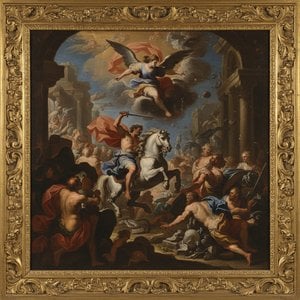
Ein Meisterwerk des französischen Klassizismus von Nicolas Poussin (1627). Diese beeindruckende Öl auf Leinwand Darstellung zeigt Marias Pietà und wird im Weimarer Klassik Museum gezeigt.

Erkunden Sie die Meisterwerke von Nicolas Poussin (1594-1665), einem führenden französischen Barockmaler. Entdecken Sie seine klassischen Kompositionen, historische und mythologische Szenen sowie ruhige Landschaften – welche Künstler wie David & Cézanne beeinflussten. #Poussin #Barockkunst #

Giclée / Kunstdruck

Giclée- oder Leinwanddruck in Museumsqualität mit schneller Produktion und flexiblen Veredelungsoptionen.

Standard
custom
CM
INCH

Wählen Sie aus unseren vordefinierten Größen, die den ursprünglichen Proportionen des Kunstwerks entsprechen.

Breite
Höhe

Sie können Ihre eigenen Maße eingeben, um ein bestimmtes Format oder einen speziellen Platz einzupassen. Wenn das von Ihnen gewählte Format nicht den Proportionen des Originalbildes entspricht, werden wir das Kunstwerk entweder beschneiden oder das Bild mit einem gespiegelten oder einfarbigen Rand erweitern. Ein digitaler Entwurf wird Ihnen zur Genehmigung zugesandt, bevor die Produktion beginnt.
Bitte beachten Sie, dass die Vorschau auf dem Bildschirm nicht den tatsächlichen Zuschnitt oder die Erweiterung widerspiegelt. Nur der Entwurf zeigt die endgültige Komposition präzise an.
Obwohl Sondermaße verfügbar sind, empfehlen wir die Auswahl eines Maßes aus der vordefinierten Liste, um die ursprünglichen Proportionen zu bewahren.

Weltweiter Versand () innerhalb von 2 Wochen statt der üblichen 4/5 Wochen. (3 Juli)

why_choose_icon
Kostenloser weltweiter Expressversand
why_choose_icon
Hochwertige Leinenleinwand
why_choose_icon
Umfassender Versicherungsschutz beim Versand
why_choose_icon
Zollsteuer-Rückerstattungsgarantie
why_choose_icon
Garantie für echte Farbtreue
why_choose_icon
60-Tage-Rückgaberecht (nur bei Mängeln)
why_choose_icon
100% Geld-zurück-Garantie
why_choose_icon
Mengenrabatt verfügbar

Gesamtpreis

-

reproduction

Die Pietà

Giclée / Kunstdruck

Größe der Reproduktion

-

Endpreis aller Optionen

-

Eckdaten auf einen Blick

  • Year: 1627
  • Artist: Nicolas Poussin
  • Medium: Oil on Canvas
  • Influences: Gian Lorenzo Bernini
  • Location: The Museum Stiftung Weimarer Klassik (Germany)
  • Movement: Classicism
  • Notable elements or techniques: Chiaroscuro, Composition

Kunst-Quiz

Jede Frage hat nur eine richtige Antwort.

Frage 1:
What artistic style is Nicolas Poussin’s Pieta primarily associated with?
Frage 2:
Where is the Pieta currently housed?
Frage 3:
What technique did Poussin employ to create dramatic lighting and depth in the Pieta?
Frage 4:
The red dress worn by Mary symbolizes:
Frage 5:
Which artist is credited with influencing the Baroque style of sculpture due to his admiration for Poussin’s Pieta?

Beschreibung des Sammlerstücks

A Testament to Sorrow and Divine Grace: Exploring Nicolas Poussin’s Pieta

Nicolas Poussin, a name synonymous with the grandeur of French Baroque painting, was nonetheless a soul deeply rooted in Italian soil for much of his artistic life. Born in Le Havre, Normandy, in June 1594, his early years remain somewhat veiled in mystery, yet they undoubtedly laid the foundation for a career that would become pivotal in shaping the classical tradition within French art. Though he briefly studied in Paris during the early 1610s, absorbing influences from lesser-known artists of the time, it was his journey to Rome in 1624 that truly ignited his artistic destiny. This wasn’t merely a geographical relocation; it was an immersion into the heart of antiquity, a pilgrimage to the very source of inspiration that would define his aesthetic vision. Poussin's initial forays into painting were marked by a sensuous quality reminiscent of Venetian masters like Titian, yet even in these early works, a nascent sense of order and intellectual rigour began to emerge—a characteristic that would become indelibly imprinted upon his oeuvre.

Composition and Technique: Mastering Chiaroscuro’s Embrace

Poussin's Pieta exemplifies the pinnacle of Classicism, prioritizing balance, harmony, and meticulous observation of nature. Measuring 57 x 48 cm, this monumental canvas showcases a masterful command of chiaroscuro—the dramatic interplay between light and dark—a technique perfected by artists like Caravaggio but elevated to an unprecedented level of sophistication by Poussin himself. The artist meticulously sculpted the scene with tonal gradations, creating a palpable sense of depth and conveying profound emotional resonance. Notice how the soft luminescence illuminates Mary’s face and draped garments, contrasting sharply with the shadowed recesses of the tomb, drawing the viewer's gaze inwards towards the central figures. This deliberate manipulation of light isn’t merely decorative; it serves as a conduit for spiritual contemplation, mirroring the solemnity of the subject matter.

Symbolism: Grief, Sacrifice, and Eternal Hope

The Pieta transcends mere depiction; it speaks volumes about theological concepts. Mary Magdalene cradles the lifeless body of Jesus Christ—a poignant representation of grief and maternal compassion. The positioning of their bodies is deliberately calculated to evoke a sense of repose amidst sorrow, reflecting the idealized beauty found in classical sculpture. The drapery folds are rendered with painstaking detail, mirroring the flowing robes of Roman statues and reinforcing the painting’s connection to antiquity. Furthermore, the subtle inclusion of architectural elements—the stone wall behind Mary—symbolizes stability and permanence, hinting at the promise of resurrection and divine redemption. The small object positioned near the top-left corner – often interpreted as a lily – represents purity and spiritual enlightenment, adding another layer of symbolic significance to the composition.

Influence Beyond Canvas: Bernini’s Legacy

Poussin's Pieta stands as a cornerstone in art history, profoundly impacting subsequent generations of artists. Its influence can be discerned most notably in the work of Gian Lorenzo Bernini, whose sculptures at St Peter’s Basilica – particularly Ecstasy of Saint Teresa – adopted similar principles of dramatic lighting and idealized form. Bernini consciously sought to emulate Poussin's masterful use of chiaroscuro and compositional balance, demonstrating the enduring power of classical aesthetics to inspire artistic innovation. This connection underscores how Poussin’s Pieta wasn’t simply a painting; it was a catalyst for stylistic evolution, shaping the trajectory of Baroque sculpture and cementing its place as an icon of Western art.

A Timeless Reflection on Suffering and Redemption

Ultimately, Nicolas Poussin's Pieta remains a breathtaking achievement—a testament to artistic skill and spiritual contemplation. Its enduring appeal lies in its ability to evoke empathy for human suffering while simultaneously conveying the unwavering belief in divine grace and eternal hope. Reproductions of this masterpiece offer an opportunity to experience firsthand the profound beauty and intellectual depth that characterize Classicism, enriching any interior space with a visual reminder of humanity’s capacity for compassion and faith.

Biografie des Künstlers

frühes Leben und Ausbildung

Nikos Poussin, geboren im Juni 1594, war die Quintessenz der französischen Barockmalerei des Klassikers. Obwohl er den Großteil seiner Karriere in Rom verbrachte, blieb er tief in den französischen künstlerischen Traditionen verwurzelt. Seine frühen Tage als Maler waren von Unsicherheit umhüllt, aber bereits im Jahr 1612 hatte er formale Studien in Paris begonnen und sich von weniger bekannten Künstlern beeinflussen lassen, bevor er 1624 nach Rom zog.

Künstlerischer Stil und Einflüsse

Poussins Ästhetik, die für ihre kohärente Komposition und Priorisierung der Linearität bekannt ist, legte einen Präzedenzfall fest, der Meister wie Jacques-Louis David und Paul Cézanne noch bis ins 20. Jahrhundert beeinflusste. Sein unverwechselbarer Stil kristallisierte sich in herausragenden Werken wie Der Tod des Germanikers und seiner einflussreichen Sieben Sakramente-Serie.

Bekannte Werke und Museen

Vermächtnis und Einfluss

Poussins Loyalität blieb Rom, wo er schließlich darauf konzentrierte sich, weitreichende Landschaften in seine Kunst zu integrieren. Seine Reife als Künstler wird in Werken wie Orion, der von der Sonne geblendet sucht und Die Jahreszeiten verkörpert, die eine Ära strenger Komposition einleitet, die von der ruhigen Schönheit der Natur durchdrungen ist.

Erfahren Sie mehr mit WahooArt.com

Entdecken Sie die Meisterwerke des Musée France und tauchen Sie ein in die Welt der französischen Barockmalerei mit Musée Picasso, Musée des Beaux-Arts de Carcassonne und anderen bemerkenswerten Museen. Besuchen Sie Nikos Poussins Seite auf WahooArt.com, um mehr über seine Werke zu erfahren und den Kontext, in dem sie entstanden sind.

Referenzen

Nikolaus Poussin

Nikolaus Poussin

1594 - 1665 , Frankreich

Kurzinfos

  • Bemerkenswerte Werke:
    • Der Tod des Germanicus
    • Die Sieben Sakramente
    • Eine römische Straße
    • Orion auf der Suche nach der Sonne
    • Die Jahreszeiten
  • Geburtsdatum: Juni 1594
  • Geburtsort: Le Havre, Frankreich
  • Künstler, Die Ihn Beeinflussten:
    • Raphael
    • Titian
  • Künstlerische Bewegung: Barock
  • Nationalität: Französisch
  • Todatum: 1665
  • Vollständiger Name: Nicolas Poussin
  • Von Ihm Beeinflusste Künstler:
    • Jacques-Louis David
    • Paul Cézanne
Entdecken Sie Kunstwerke, die nach Themen, Stilen und Merkmalen sortiert sind.