x
Handgemalte Reproduktion bestellen Handgemalte Reproduktion bestellenBild kaufen Bild kaufen VersendenVersenden
Details anzeigenDetails anzeigen Zu Favoriten hinzufügen Zu Favoriten hinzufügen HerunterladenHerunterladen Ähnliche ObjekteÄhnliche Objekte DiashowDiashow

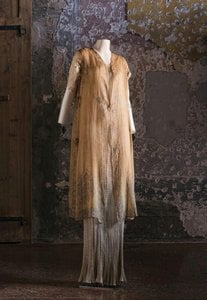
Cape

Mariano Fortuny’s ‘Cape,’ created in 1930, exemplifies his groundbreaking approach to fashion and stage lighting. This photograph captures a mannequin draped in a luxurious velvet coat adorned with delicate lace—a testament to Fortuny's revival of historical motifs and pioneering techniques.

Mariano Fortuny (1871-1949) war ein spanischer Modeschöpfer & Künstler bekannt für innovative Textilien, Delphos Kleider und beeindruckende Bühnenbilder. Entdecken Sie seinen orientalistischen Einfluss und sein Vermächtnis in der Kunstgeschichte.

Giclée / Kunstdruck

Giclée- oder Leinwanddruck in Museumsqualität mit schneller Produktion und flexiblen Veredelungsoptionen. (Handgemalte Reproduktion bestellen Handgemalte Reproduktion bestellenBild kaufen Bild kaufen)

Standardformat
individuell anpassbar
CM
INCH

Wählen Sie aus unseren vordefinierten Formaten, die den ursprünglichen Proportionen des Kunstwerks entsprechen.

Breite
Höhe

Sie können Ihre eigenen Maße eingeben, um ein bestimmtes Format oder einen speziellen Platz einzupassen. Wenn das von Ihnen gewählte Format nicht den Proportionen des Originalbildes entspricht, werden wir das Kunstwerk entweder beschneiden oder das Bild mit einem gespiegelten oder einfarbigen Rand erweitern. Ein digitaler Entwurf wird Ihnen zur Genehmigung zugesandt, bevor die Produktion beginnt.
Bitte beachten Sie, dass die Vorschau auf dem Bildschirm nicht den tatsächlichen Zuschnitt oder die Erweiterung widerspiegelt. Nur der Entwurf zeigt die endgültige Komposition präzise an.
Obwohl Sondermaße verfügbar sind, empfehlen wir die Auswahl eines Maßes aus der vordefinierten Liste, um die ursprünglichen Proportionen zu bewahren.

Weltweiter Versand () innerhalb von 2 Wochen statt der üblichen 4/5 Wochen. (4 September)

why_choose_icon
Kostenloser weltweiter Expressversand
why_choose_icon
Hochwertige Leinenleinwand
why_choose_icon
Umfassender Versicherungsschutz beim Versand
why_choose_icon
Zollgebühren-Rückerstattungsgarantie
why_choose_icon
Garantie für exakte Farbtreue
why_choose_icon
60 Tage Rückgaberecht (nur bei Mängeln)
why_choose_icon
100% Geld-zurück-Garantie
why_choose_icon
Mengenrabatt verfügbar

Gesamtpreis

$ 68

reproduction

Cape

Giclée / Kunstdruck

Format der Reproduktion

-

Gesamtpreis

$ 68

Eckdaten

  • Title: Cape
  • Influences: Historical Sources"; "Non-Western Traditions
  • Medium: Textile
  • Artist: Mariano Fortuny
  • Location: Palazzo Fortuny, Venice
  • Subject or theme: Fashion Design; Artistic Presentation
  • Movement: Decorative Arts

Kunst-Quiz

Jede Frage hat nur eine richtige Antwort.

Frage 1:
What is the primary subject matter of Mariano Fortuny’s ‘Cape’?
Frage 2:
The photograph showcases Fortuny’s ‘Cape’ within what type of setting?
Frage 3:
What technique is Fortuny credited with pioneering in theater design?
Frage 4:
The photograph highlights the textures of both the garment and its background. What is a prominent textural element in the image?
Frage 5:
Fortuny’s artistic inspiration drew heavily from historical and non-Western sources. What is a key characteristic of his creative approach?

A Vision of Elegance: The Timeless Allure of Mariano Fortuny’s ‘Cape’

In the realm of textile art, few pieces command the same reverence as Mariano Fortuny’s 1930 masterpiece, ‘Cape.’ This is not merely a garment; it is a profound reimagining of theatrical presentation and a masterful fusion of historical inspiration with avant-garde technique. To behold this work is to witness a moment where fashion transcends utility to become pure sculpture. The piece embodies a sophisticated dialogue between the weight of history and the lightness of innovation, making it an essential inspiration for collectors and designers who seek to infuse their spaces with a sense of storied grandeur.

The soul of the ‘Cape’ lies in its ability to reinterpret antiquity through a modern lens. Fortuny, a true polymath, drew deep inspiration from Greco-Roman mythology, specifically evoking the dramatic drapery associated with Zeus during the siege of Mount Olympus. By translating these epic narratives into fabric, he transformed a mannequin into a conduit for mythological grandeur. The garment serves as a visual spectacle where the heavy, luxurious velvet of the collar and hood meets the ethereal, delicate patterns of a lace-like overlay. This deliberate juxtaposition creates a captivating interplay of surfaces, inviting the eye to wander through layers of texture and light.

Mastery of Texture and the Art of Light

Technique is the heartbeat of this work. Fortuny was as much an inventor as he was a designer, and his mastery over material is evident in every fold of the ‘Cape.’ The way the dark, sumptuous velvet absorbs light stands in stark contrast to the translucent, patterned overlay that allows glimpses of the form beneath to emerge like a half-remembered dream. This interplay mirrors Fortuny’s revolutionary work with the cyclorama dome, where he used reflected light to create seamless, immersive environments in theater. In this piece, the fabric itself acts as a stage, performing a silent drama of shadow and brilliance.

For the interior designer or art enthusiast, the ‘Cape’ offers a rich palette of textures that can elevate any setting. The verticality of the pleated skirt provides a rhythmic stability, while the organic, flowing lines of the draped coat introduce a sense of movement. It is a study in balance—the heavy against the light, the structured against the fluid. This complexity makes a high-quality reproduction of such a work an extraordinary focal point, capable of anchoring a room with its profound sense of craftsmanship and historical weight.

An Emotional Legacy for the Modern Collector

Beyond its physical attributes, the ‘Cape’ carries an emotional resonance that speaks to the enduring human desire for beauty and transcendence. It evokes a sense of timelessness, bridging the gap between the ancient world and the modern era. There is a certain mystery held within its folds, a whisper of the aristocratic intrigue and theatrical magic that defined Fortuny’s life in Venice. To possess or display an homage to this work is to celebrate the spirit of the alchemist of aesthetics—an artist who refused to see boundaries between fashion, stagecraft, and fine art.

Whether integrated into a curated gallery collection or used as a sophisticated element in high-end decor, the ‘Cape’ remains a symbol of refined beauty. It invites viewers to contemplate the intersection of memory and innovation, making it a timeless investment for those who appreciate art that does not merely decorate a space, but breathes life and narrative into it.


Über den Künstler

Frühe Jahre und Inspiration

Mariano Fortuny, ein spanischer Modeschöpfer, wurde am 11. Mai 1871 in Granada, Spanien, geboren. Sein Vater, Mariano Fortuny y Marsal, war ein Maler des Genrebildes, der verstarb, als Mariano erst drei Jahre alt war. Dieses tragische Ereignis führte dazu, dass die Familie nach Paris, Frankreich, zog, wo die Mutter von Mariano ihn mit verschiedensten Textilien und Stoffen vertraut machte, die später seine schöpferische Kraft maßgeblich beeinflussen sollten.

Künstlerische Talente und Erfindungen

Schon in jungen Jahren offenbarte Mariano Fortuny sein außergewöhnliches künstlerisches Talent und bewies meisterhafte Fähigkeiten in der Malerei, Fotografie, Bildhauerei, Architektur, Radierung sowie in der theatralischen Bühnenbeleuchtung. Seine Erfindungen, darunter über zwanzig Patente, die zwischen 1901 und 1934 angemeldet wurden, revolutionierten die Welt des Bühnendesigns grundlegend.
  • Er entwickelte das Fortuny-Cyclorama-Dome, eine halbkuppelförmige Struktur aus Gips oder Stoff, die indirektes Licht nutzte, um einen nahtlosen Übergang zwischen den Szenen zu schaffen.
  • In seiner Abhandlung „Eclairage Scénique“ (1904) beschrieb er seine Entdeckung, wie Licht von verschiedenen Oberflächen reflektiert werden kann, wodurch sich dessen Farbe, Intensität und Eigenschaften verändern lassen.

Bemerkenswerte Beiträge und Kollaborationen

Die Arbeit von Mariano Fortuny erlangte in den 1920er Jahren weltweite Anerkennung. Er arbeitete mit bedeutenden Persönlichkeiten zusammen, darunter:
  • Richard Wagner, ein deutscher Komponist, dessen Opern Mariano dazu inspirierten, ganze Szenen zu malen.
  • Das berühmte Opernhaus La Scala in Mailand, in dem er seine Kuppel installierte, wobei er sie für das größere Theater anpasste und einen Saugventilator erfand, um die straffe Struktur aufrechtzuerhalten.

Vermächtnis und spätes Leben

Mariano Fortuny verstarb am 3. Mai 1949 in Venedig, Italien. Sein Werk inspirierte den französischen Schriftsteller Marcel Proust, und sein Leben fand in Pere Gimferrer's Roman „Fortuny“ Niederschlag. Das Erbe von Mariano beeinflusst die Welt des Bühnendesigns bis heute nachhaltig.

Ausgewählte Gemälde von Mariano Fortuny und anderen Künstlern

Entdecken Sie mehr über Mariano Fortuny und andere Künstler in der umfangreichen Sammlung von WahooArt, die vom 12. bis zum 20. Jahrhundert reicht.
Mariano Fortuny

Mariano Fortuny

1871 - 1949 , Spanien

Kurzinfos

  • Artistic Movement Or Style: Orientalism art
  • Artists Or Movements Influenced By This Artist: ['Marcel Proust']
  • Artists Who Influenced This Artist: ['Richard Wagner']
  • Date Of Birth: 11. Juni 1838
  • Date Of Death: 21. November 1949
  • Full Name: Mariano Fortuny y Marsal
  • Nationality: Spanisch
  • Notable Artworks:
    • Teagown
    • Portrait of Henriette Fortuny
  • Place Of Birth: Granada, Spanien
Entdecken Sie Kunstwerke, die nach Themen, Stilen und Merkmalen sortiert sind.