Kostenlose Kunstberatung

x
Gemälde kaufen Gemälde kaufenBild kaufen Bild kaufen VersendenVersenden
Details anzeigenDetails anzeigen Zu Favoriten hinzufügen Zu Favoriten hinzufügen HerunterladenHerunterladen Ähnliche ObjekteÄhnliche Objekte RöntgenaufnahmeRöntgenaufnahme Diashow anzeigenDiashow anzeigen

Boar Hunt

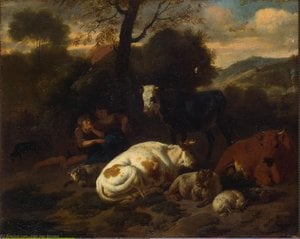
Witness the dramatic 'Boar Hunt' by Jan Weenix! This Baroque masterpiece captures a thrilling hunt scene with detailed animal figures and masterful lighting, showcasing Dutch realism at its finest.

Jan Weenix (1641-1719): Niederländischer Barockmeister der reichhaltig detaillierten Jagdszenenstillleben, Wildschilder und Landschaften. Bewundert für Realismus und lebendige Farben.

Giclée / Kunstdruck

Giclée- oder Leinwanddruck in Museumsqualität mit schneller Produktion und flexiblen Veredelungsoptionen.

P118B $10
P118H $10
P118W $10
P438Z $10
P508JH $12
P508YH $12
P805H $10
P805Z $10
P919BZ $10
P919G $10
P919XJ $10
P959ZH $10
P968JZ $12
W106C $8
W218G $10
W218JH $8
W218Y $10
W307PJ $10
W316G $10
W316PJ $8
W316Y $10
W398PJ $8
W4111J $10
W500HY $15
W500JH $15
W692G $12
W849H $8
W940BG $15
W953PJ $8

Standard
custom
CM
INCH

Wählen Sie aus unseren vordefinierten Größen, die den ursprünglichen Proportionen des Kunstwerks entsprechen.

Breite
Höhe

Sie können Ihre eigenen Maße eingeben, um ein bestimmtes Format oder einen speziellen Platz einzupassen. Wenn das von Ihnen gewählte Format nicht den Proportionen des Originalbildes entspricht, werden wir das Kunstwerk entweder beschneiden oder das Bild mit einem gespiegelten oder einfarbigen Rand erweitern. Ein digitaler Entwurf wird Ihnen zur Genehmigung zugesandt, bevor die Produktion beginnt.
Bitte beachten Sie, dass die Vorschau auf dem Bildschirm nicht den tatsächlichen Zuschnitt oder die Erweiterung widerspiegelt. Nur der Entwurf zeigt die endgültige Komposition präzise an.
Obwohl Sondermaße verfügbar sind, empfehlen wir die Auswahl eines Maßes aus der vordefinierten Liste, um die ursprünglichen Proportionen zu bewahren.

Weltweiter Versand () innerhalb von 2 Wochen statt der üblichen 4/5 Wochen. (5 Juli)

why_choose_icon
Kostenloser weltweiter Expressversand
why_choose_icon
Hochwertige Leinenleinwand
why_choose_icon
Umfassender Versicherungsschutz beim Versand
why_choose_icon
Zollsteuer-Rückerstattungsgarantie
why_choose_icon
Garantie für echte Farbtreue
why_choose_icon
60-Tage-Rückgaberecht (nur bei Mängeln)
why_choose_icon
100% Geld-zurück-Garantie
why_choose_icon
Mengenrabatt verfügbar

Gesamtpreis

-

reproduction

Boar Hunt

Giclée / Kunstdruck

Größe der Reproduktion

-

Endpreis aller Optionen

-

Eckdaten auf einen Blick

  • Medium: Oil on panel
  • Subject or theme: Hunting boar
  • Movement: Baroque
  • Influences: Dutch Masters
  • Title: Boar Hunt
  • Artist: Jan Weenix
  • Year: 1703

Kunst-Quiz

Jede Frage hat nur eine richtige Antwort.

Frage 1:
What is the primary subject depicted in Jan Weenix’s ‘Boar Hunt’?
Frage 2:
The painting ‘Boar Hunt’ is primarily associated with which artistic movement?
Frage 3:
According to the description, what year was ‘Boar Hunt’ painted?
Frage 4:
The lighting and detailed rendering in ‘Boar Hunt’ are characteristic of which artistic style?
Frage 5:
What does the presence of a museum setting suggest about the painting’s historical context?

Beschreibung des Sammlerstücks

A Hunt Frozen in Time: Jan Weenix’s “Boar Hunt”

Jan Weenix's "Boar Hunt," painted around 1703, isn’t merely a depiction of a hunt; it’s a meticulously crafted tableau of primal instinct, stoic heroism, and the fleeting beauty of a dramatic moment. This remarkable work, housed within the walls of a museum setting – subtly suggested by the diffused lighting and reflective glass – transports us to a world where man and beast engage in a timeless dance of pursuit and consequence. Weenix, a master of Dutch Baroque realism, elevates the commonplace subject of hunting into an exercise in profound observation and emotional resonance.

The scene unfolds with startling clarity. A magnificent boar, sprawled on its back in a posture of defeated grandeur, dominates the right side of the composition. Its thick hide, rendered with astonishing detail – each bristling hair meticulously captured – speaks to both its formidable power and its imminent demise. Beside it lies a smaller animal, likely a hare or rabbit, adding a layer of poignant vulnerability to the tableau. To the left, a hunting dog, a breed known for its keen tracking abilities, stands poised, either actively pursuing or having just completed its task. The dog’s posture is one of focused intensity, mirroring the boar's own struggle. The background landscape—rolling hills and scattered trees—provides a sense of depth and reinforces the feeling that this event unfolds within a vast, untamed wilderness.

The Language of Baroque Realism

Weenix’s mastery lies in his ability to fuse meticulous realism with an underlying sense of drama. He employs a technique deeply rooted in the Dutch Golden Age, characterized by its careful observation of light and shadow – *chiaroscuro*—to sculpt form and create a palpable atmosphere. Notice how the light catches on the boar's hide, highlighting its texture and musculature, while simultaneously casting deep shadows that emphasize its vulnerability. The artist’s use of color is restrained yet effective; earthy tones dominate, punctuated by the rich browns and reds of the animal’s fur and the subtle greens of the landscape. This palette contributes to a sense of groundedness and authenticity.

The composition itself is carefully balanced, drawing the eye across the scene with a deliberate rhythm. The placement of the animals—the dominant boar on one side, the pursuing dog on the other—creates a dynamic tension that mirrors the hunt’s inherent drama. Furthermore, Weenix's attention to detail extends beyond mere representation; he captures not just the physical appearance of the animals but also their expressions – the boar’s defiant stance, the dog’s focused gaze – imbuing them with a sense of life and personality.

A Symbolism of Mortality and Triumph

The “Boar Hunt” is rich in symbolic meaning. The hunt itself represents the human desire for mastery over nature, a theme that resonated deeply within the context of 17th-century Europe. However, Weenix doesn’t glorify this pursuit; instead, he presents it with a sobering awareness of mortality and consequence. The fallen boar, lying vulnerable on its back, serves as a potent reminder of the inevitability of death. The dog's role highlights the relationship between hunter and prey, emphasizing the cycle of life and death that governs the natural world.

Moreover, the scene can be interpreted as an allegory for human ambition and the pursuit of glory. The hunters, driven by a desire to prove their skill and courage, engage in a dangerous undertaking with uncertain outcomes. The success of the hunt—represented by the fallen boar—is ultimately tempered by the knowledge that it comes at a cost.

Capturing the Essence: Reproduction and Display

Reproductions of “Boar Hunt” offer a remarkable opportunity to bring this masterpiece into any setting, from a grand salon to a more intimate space. The meticulous detail and evocative atmosphere of the original are faithfully reproduced, allowing viewers to appreciate Weenix’s artistic skill and his profound understanding of human nature. When displayed, consider framing the artwork in a manner that complements its rich colors and dramatic composition. The subdued lighting suggested by the museum setting can be replicated through strategic use of ambient light or accent lighting, further enhancing the work's impact.

Ultimately, “Boar Hunt” is more than just a painting; it’s a window into a bygone era—a testament to the enduring power of art to capture both the beauty and the brutality of the natural world. It invites contemplation on themes of mortality, ambition, and the complex relationship between humanity and its environment.

Ähnliche Kunstwerke


Biografie des Künstlers

Jan Weenix: Leben und Erbe

Jan Weenix (1641-1719) war ein bedeutender niederländischer Maler des Barock, der für seine reichhaltig detaillierten Darstellungen von Jagdstillebensszenen, Wildpartys und Landschaften bekannt ist. Sein Werk verkörperte den künstlerischen Geist der Goldenen Ära und zeigte sowohl technische Meisterschaft als auch eine scharfe Beobachtung der natürlichen Welt.

Frühes Leben und künstlerische Entwicklung

Geboren in Amsterdam, Niederlande, im Jahr 1641, folgte Jan Weenix dem Fußabdruck seines Vaters als Künstler. Sein Vater, Jan Baptist Weenix, war ebenfalls ein angesehener Maler, der sich auf ähnliche Themen spezialisierte. Dieser familiäre Einfluss erwies sich als entscheidend für die frühe künstlerische Entwicklung von Jan. Er arbeitete zunächst unter der Anleitung seines Vaters und lernte die Techniken der Stilllebenmalerei und der Tierdarstellung.

Einflüsse und künstlerischer Stil

Jan Weenix’s Stil spiegelt die Einflüsse mehrerer wichtiger Künstler seiner Zeit wider. Sein Vater vermittelte ihm eine Liebe für detaillierte Realismus und lebendige Farbpaletten. Er war auch von Malern wie Hendrick Cornelisz Vroom, bekannt für Seemaler, und möglicherweise anderen, die sich auf Tierdarstellungen spezialisiert hatten, wie Melchior de Hondecoeter und Gillis Claesz d'Hondecoeter, beeinflusst.

Weenix’s künstlerischer Stil ist durch folgende Merkmale gekennzeichnet:

  • Präzise Darstellung von Texturen – Fell, Federn und Blätter werden mit bemerkenswerter Genauigkeit dargestellt.
  • Dramatische Verwendung von Licht und Schatten (Chiaroscuro) zur Schaffung von Tiefe und visuellen Interesse.
  • Eine lebendige Farbpalette, die seine Motive zum Leben erweckt.
  • Kompositionsgeschick bei der Anordnung von Elementen im Bilderraum.

Wichtige Werke und Leistungen

Während seiner Karriere produzierte Jan Weenix einen beträchtlichen Bestand an Werken. Einige seiner bekanntesten Gemälde sind:

  • Jagd und Obst-Stillleben neben einem Gartenvasen (1714) – Eine komplexe Komposition, die Wild, Früchte und architektonische Elemente zeigt.
  • Stillleben mit Hase und anderem Wild (1697) – Demonstriert seine Meisterschaft bei der Darstellung der Tieranatomie und -textur.
  • Ein sitzender Affe (vor 1685) – Zeigt seine Fähigkeit, Persönlichkeit in Tierporträts einzufangen.
  • Der weiße Pfau – Eine beeindruckende Darstellung eines majestätischen Vogels, die Weenixs Geschick mit Farbe und Detail hervorhebt.

Er erhielt auch Aufträge von angesehenen Mäzenen, darunter eine Einladung in den Hof des Johann Wilhelm, Kurfürsten von Pfalz, wo er neben anderen renommierten Künstlern arbeitete.

Historische Bedeutung

Jan Weenix spielte eine bedeutende Rolle bei der Popularisierung von Jagdstillebensszenen und Wildpartymalereien während der Barockzeit. Seine Werke wurden von Sammlern sehr begehrt und trugen zur Entwicklung niederländischer künstlerischer Traditionen bei. Er half, diese Genres über bloße Dekoration hinaus zu heben und ihnen ein Gefühl von Realismus, Drama und ästhetischer Schönheit verlieh.

Seine Tochter, Maria Weenix, setzte die Familientradition als geschickte Blumenmalerin fort und festigte damit den Namen Weenix in den Annalen der niederländischen Kunstgeschichte. Jan Weenix’s Erbe inspiriert weiterhin Künstler und fesselt das Publikum mit seinen meisterhaften Darstellungen der natürlichen Welt.

Jan Weenix

Jan Weenix

1641 - 1719 , Netherlands

Kurzinfos

  • Artistic Movement Or Style: Barockkunst
  • Artists Who Influenced This Artist:
    • Jan Baptist Weenix
    • Hendrick Cornelisz Vroom
  • Date Of Birth: 1642 Amsterdam Niederlande
  • Date Of Death: 1719 Utrecht Niederlande
  • Full Name: Jan Weenix
  • Nationality: Niederländisch
  • Notable Artworks:
    • Jagd und Obst-Stillleben neben einem Gartenvasen
    • Still Life mit einem Hasen
    • Ein Sitzender Affe
  • Place Of Birth: Amsterdam Niederlande
Entdecken Sie Kunstwerke, die nach Themen, Stilen und Merkmalen sortiert sind.