Frühes Leben, Familie und Ausbildung
Die Geschichte von Paul Jackson Pollock beginnt in der rauen Landschaft von Cody, Wyoming, wo er am 28. Januar 1912 geboren wurde. Er war der jüngste von fünf Brüdern, geboren von Stella May McClure und LeRoy Pollock. Sein Vater arbeitete als Landvermesser, ein Beruf, der ständige Bewegung durch den weiten amerikanischen Westen erforderte. Diese nomadische Existenz bedeutete, dass die frühen Jahre des jungen Jungen von häufigen Ortswechseln geprägt waren – eine Rastlosigkeit, die die sich ständig verändernden Horizonte der Arbeit seines Vaters widerzuspiegeln schien. Diese frühen Reisen durch den Westen ermöglichten ihm eine direkte, unmittelbare Begegnung mit der Natur und der spirituellen Resonanz der Kunst der amerikanischen Ureinwohner; Eindrücke, die sich schon lange bevor er jemals einen Pinsel in der Hand hielt, still in sein Unterbewusstsein einbrannten.
Mit zunehmendem Alter führte ihn die Suche nach einem Ort der Zugehörigkeit zur urbanen Energie der Küste. Er schrieb sich an der Manual Arts High School in Los Angeles ein, um seinen aufkeimenden Impulsen eine formale Struktur zu geben. Die wahre Formung seines künstlerischen Ausdrucks vollzog sich jedoch erst viel später, als er nach New York City zog. Dort, an der Art Students League, begann eine lange und transformative Studienzeit. Von 1929 bis 1942 arbeitete er unter der Anleitung von Thomas Hart Benton. Während Benton den Schwerpunkt auf rhythmische Kompositionen und das narrative Gewicht des amerikanischen Lebens legte, begann der junge Schüler bereits, sich seinen eigenen, abstrakteren, inneren Wahrheiten zuzuwenden.
Die Entwicklung einer einzigartigen Technik
Bis zum Jahr 1947 hatte sich eine tiefgreifende Veränderung in der Art und Weise vollzogen, wie er sich der Leinwand näherte. Er wandte sich von der traditionellen Staffelei ab und entschied sich stattdessen dafür, seine Leinwände direkt auf den Boden zu legen. Dieser Wandel ermöglichte es ihm, über seinem Werk zu stehen und so ein integraler Bestandteil des schöpferischen Aktes selbst zu werden. Er trug die Farbe nicht einfach nur auf; er ließ sie von oben herabtropfen, spritzte und schleuderte sie, wobei die Flüssigkeit in unvorhersehbaren Mustern fiel. Diese Methode verwandelte den Akt des Malens in eine physische Performance, bei der die Schwerkraft und die Geste die endgültige Form diktierten.
Seine Werkzeuge waren ebenso unkonventionell wie seine Methoden. Er griff zu Stöcken, Messern und sogar Spritzen, um das flüssige Medium zu manipulieren. Manchmal verwendete er Spachtel oder flüssige Farbe, um spezifische Texturen zu erzielen. Oft kratzte er in die Oberfläche oder nutzte fremdartige Objekte, um eine dicke Farbschicht aufzubauen, was dem Werk eine taktile, skulpturale Qualität verlieh. Bei diesem Prozess ging es weniger um kontrollierte Pinselführung als vielmehr um eine rhythmische, fast urwüchsige Entladung von Energie auf die Oberfläche.
Hauptwerke und künstlerische Ausdrucksformen
Als er sich von den Fesseln der Staffelei löste, begannen seine Leinwände, eine weitaus viszeralere Auseinandersetzung mit dem Medium widerzuspiegeln. Im Jahr 1943 schuf er Mural, ein monumentales Werk mit den Maßen 2,4 mal 6,1 m, das seine Fähigkeit demonstrierte, eine gewaltige Fläche zu beherrschen. In dieser Zeit führten seine Erkundungen des Unterbewusstseins und der Akt des Malens selbst zu Werken wie Eyes in the Heat, die um 1946 entstanden. Diese Stücke waren nicht bloß Bilder, sondern Zeugnisse einer physischen Präsenz, in denen die Bewegung seines gesamten Körpers die Platzierung jedes Farbspritzers und jedes Farbfleckens diktierte.
Die folgenden Jahre waren geprägt von der Perfektionierung jener rhythmischen All-over-Kompositionen, die seinen Ruf begründen sollten. Er suchte danach, ein Gefühl von grenzenlosem Raum zu erschaffen, in dem kein einzelner Punkt die Oberhand über das Ganze behielt. Dieser Ansatz zeigt sich deutlich in Number 1, 1949, einem Werk, das einen rohen Ausbruch von Energie einfängt, sowie in Lavender Mist, Number 1, 1950, das ein bedeutendes Werk seines Schaffens bleibt. In diesen Arbeiten erzeugt das Zusammenspiel von Kontrolle und Zufall ein delikates Gleichgewicht, als ob die Farbe eher entfesselt als aufgetragen worden wäre.
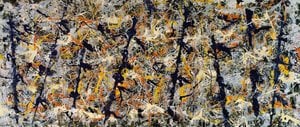
Seine späteren Experimente verschoben kontinuierlich die Grenzen dessen, wie Farbe auf einer horizontalen Fläche manipuliert werden kann. Er nutzte oft Stöcke, Messer oder sogar die Farbdosen selbst, um Pigmente zu schleudern, was zu komplexen Netzwerken aus Linien führte. Diese Methode wird in Blue Poles, Number 11, 1952 und in dem energetischen Werk Convergence deutlich sichtbar. Durch diese Arbeiten erreichte er einen Zustand, in dem das Gemälde ein Eigenleben zu besitzen schien, hervorgegangen aus einem tiefen Eintauchen in seine eigene Vorstellungskraft.
Mäzene, Atelier und Aufträge
Der Weg seiner Karriere wurde sowohl durch gesellschaftliche Notwendigkeiten als auch durch die Großzügigkeit einiger lebenswichtiger Unterstützer geformt. Zwischen 1938 und 1942 fand er eine stetige Beschäftigung als Maler für das WPA Federal Art Project, eine Zeit, die seiner sich entwickelnden Praxis einen notwendigen Rhythmus verlieh. Diese Stabilität wich einer persönlicheren und transformativen Allianz, als Peggy Guggenheim ihm im Juli 1943 einen Galerievertrag anbot. Ihre Unterstützung erwies sich als weit mehr als nur professioneller Natur; im Jahr 1945 leistete sie eine Anzahlung von 2.000 Dollar, um ihm den Erwerb eines Eigenheims zu ermöglichen – eine Geste, die sein Privatleben untrennbar mit seinem künstlerischen Überleben verwebte.
Sein kreatives Leben fand schließlich sein Zentrum in East Hampton, New York. Dort, im Pollock-Krasner House and Studio, lebte und arbeitete er an der Seite seiner Frau, Lee Krasner. Das Atelier war ein Ort intensiver körperlicher Bewegung, an dem die Grenzen zwischen dem Künstler und der Leinwand verschwammen. Er wandte sich oft von der traditionellen Staffelei ab und zog es vor, seine Leinwände auf den Boden zu legen, um sich der Farbe von allen Seiten entgegenzusetzen. Dieser Arbeitsplatz war nicht bloß ein Raum der Produktion, sondern ein Ort von tiefer, rastloser Energie, an dem seine radikalsten Experimente stattfanden.
Späte Jahre und Tod
Das Privatleben des Künstlers war untrennbar mit seinen kreativen Kämpfen verwoben. Im Jahr 1945 heiratete er die Künstlerin Lee Krasner, eine Verbindung, die in seinen transformativsten Jahren eine prägende Rolle in seinem Leben spielte. Doch unter der Oberfläche seines beruflichen Aufstiegs blieb ein beständiger Schatten zurück. Er kämpfte zeit seines Lebens mit einer Alkoholsucht – ein Kampf, der seine Existenz oft erschwerte und seine Fähigkeit beeinträchtigte, mit dem enormen Druck seines wachsenden Ruhms umzugehen.
Diese inneren und äußeren Turbulenzen fanden in East Hampton, New York, USA, ein tragisches Ende. Am 11. August 1956 wurde sein Leben im Alter von 44 Jahren durch einen plötzlichen, gewaltsamen Unfall jäh unterbrochen. Beim Autofahren kam er durch Alkoholeinfluss in einen Unfall mit einem einzelnen Fahrzeug. Der Crash erwies sich als tödlich und hinterließ ein Vermächtnis, das ebenso tumultuös war wie die Farbe, die er über seine Leinwände schleuderte.
Vermächtnis und Einfluss auf die moderne Kunst
Die Wellenbewegungen seiner radikalen Methoden reichten weit über die Atelierwände von East Hampton hinaus. Indem er die traditionelle Verbindung zwischen Pinsel und Staffelei aufbrach, wurde er zu einer zentralen Figur der Abstrakten Expressionismus-Bewegung – ein Wandel, der die Flugbahn der amerikanischen Kreativität grundlegend veränderte. Seine Präsenz trug dazu bei, die Position von New York City als globales Zentrum der modernen Kunst zu festigen, wodurch das Herz der Avantgarde von der europäischen Dominanz weggerückt wurde. Er gehörte zu den ersten amerikanischen Malern, die als ebenbürtig zu den großen europäischen Meistern des 20. Jahrhunderts anerkannt wurden, und bewies damit, dass eine neue, viszerale Sprache aus dem Boden der Vereinigten Staaten hervorgehen konnte.
Sein Einfluss wirkte wie ein Katalysator für viele nachfolgende Kunstbewegungen, die in seinen Fußstapfen traten. Die Art und Weise, wie er sich mit der Leinwand auseinandersetzte – indem er sie als Arena für physische Aktion betrachtete und nicht bloß als Oberfläche für eine Darstellung – öffnete Türen für viele, die danach strebten, das Unterbewusste durch die Geste auszudrücken. Diese Betonung des Schöpfungsprozesses selbst hinterließ eine bleibende Spur in der Geschichte der modernen Kunst und stellte sicher, dass das Spontane und das Ungeplante für immer einen festen Platz im Werkzeugkasten des Künstlers behalten würden.
Wo man seine Werke heute erleben kann
Um die physischen Spuren seiner Bewegung Zeuge zu werden, muss man die großen Institutionen aufsuchen, die seine radikale Energie bewahrt haben. In New York City beherbergt das Museum of Modern Art mehrere seiner Leinwände und ermöglicht es den Betrachtern, vor jenen weitläufigen, unzentrierten Kompositionen zu stehen, die seine Ära definierten. Auch die National Gallery of Art in Washington D.C. bewahrt seine Werke und bietet einen Raum, um die komplexen Netzwerke aus Farbe zu beobachten, die er durch seine einzigartigen Methoden erschuf. Über den Atlantik hinweg hält die Tate Gallery in London seine Präsenz in ihren Sammlungen lebendig und stellt sicher, dass sein Einfluss weit über die amerikanischen Ufer hinausreicht.
Für jene, die eine intimere Verbindung zu seinem Schaffen suchen, bietet das Pollock-Krasner House and Studio in East Hampton ein tiefes Gefühl des Ortes. Dieser Ort, ein National Historic Landmark, war der Raum, in dem er und seine Frau Lee Krasner lebten und arbeiteten. Das Anwesen bleibt ein lebenswichtiges Bindeglied zu seinem Leben und bewahrt die Umgebung, die seinen Übergang von traditionellen Formen zu den spontanen, auf dem Boden ausgeführten Methoden ermöglichte, welche den Kurs der modernen Malerei veränderten. Ein Spaziergang durch diese Räumlichkeiten vermittelt ein Gefühl für das Ausmaß und die physische Realität seines kreativen Kampfes.
- Number 1, 1949
- Blue Poles: Number 11, 1952
- Mural (1943)
- Convergence


 Vorschau anzeigen
 Versenden
 Teilen
 Details anzeigen
 Leitfaden

 Herunterladen
 Ähnliche Objekte
 Röntgenaufnahme
 Diashow
 Fragen & Antworten
 Statistiken

 Weiterlesen
 Zum Druck wechseln





































 Die Glasoption ist nur für Größen unter 110 cm verfügbar.