**frühes Leben und Ausbildung**
Georges Braque, ein prominenter französischer Maler, Kollagist, Bleistrichzeichner, Grafiker und Bildhauer, wurde am 13. Mai 1882 in Argenteuil, Val-d'oise, geboren. Er wuchs in Le Havre auf und erhielt zunächst eine Ausbildung als Hausmaler und Dekorateur wie sein Vater und Großvater. Braques künstlerische Neigungen führten ihn jedoch dazu, von 1897 bis 1899 an der École des Beaux-Arts in Le Havre Malerei zu studieren.
**Künstlerische Entwicklung und Fauvisme**
Im Jahr 1902, nachdem er seine Lehre bei einem Dekorateur in Paris abgeschlossen hatte, besuchte Braque bis 1904 die Académie Humbert. Dieser Zeitraum markierte seine Einführung ins Fauvismus, einen Stil, der durch lebendige Farben und emotionale Reaktionen gekennzeichnet ist. Beeinflusst von den Werken von
Henri Matisse und
André Derain, übernahm Braque einen fauvistischen Ansatz, wie in seinem Gemälde
The Patience (
Fauvismus, Öl auf Leinwand).
**Beitrag zum Kubismus**
Braques Zusammenarbeit mit
Pablo Picasso von 1908 bis 1912 führte zur Entwicklung des Kubismus. Ihre analytischen kubistischen Werke, wie z.B.
Georges Braque: The Patience und
Pablo Picasso: Clarinet(
analytischer Kubismus, Öl auf Leinwand), gelten heute als Meilensteine der Kunstgeschichte.
**Erbe und bemerkenswerte Werke**
*
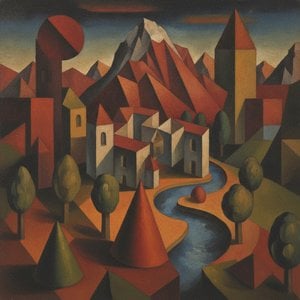
Houses at L'Estaques: Ein Zeugnis für Braques innovatives Einsatz von Geometrie und simultaner Perspektive. *
The Patience(
Fauvismus, Öl auf Leinwand): Demonstriert Braques fauvistischen Stil. * Clarinet(
analytischer Kubismus, Öl auf Leinwand): Eine kollaborative kubistische Arbeit mit Picasso.
**Museen und Sammlungen**
*
Musée d'Orsay: Bietet eine umfangreiche Sammlung impressionistischer und postimpressionistischer Kunst, darunter Werke von Braque. *
Musée de l'Orangerie: Zeigt eine breite Palette von Kunstwerken, darunter Werke von Braque und anderen bedeutenden Künstlern.
- Erfahren Sie mehr über Georges Braques Leben und Werk auf WahooArt.com
- Entdecken Sie die Sammlung des Musée d'Orsay, die Werke von Braque und anderen Künstlern umfasst, unter Musée d'Orsay - Wikipedia
- Erfahren Sie mehr über den Fauvismus und seinen Einfluss auf die Entwicklung des Kubismus mit Fauvismus Kunstbewegung auf WahooArt.com
**Georges Braques innovative Stil und seine Zusammenarbeit mit Pablo Picasso inspirieren weiterhin Künstler und Kunstliebhaber.**



 Vorschau anzeigen
 Handgemalte Reproduktion bestellen
 Versenden
 Teilen
 Details anzeigen

 Herunterladen
 Ähnliche Objekte
 Röntgenaufnahme
 Diashow
 Stats
Stats

 Weiterlesen






































 Die Glasoption ist nur für Größen unter 110 cm verfügbar.