x
Vorschau anzeigenVorschau anzeigen In AR erlebenIn AR erleben Handgemalte Reproduktion bestellen Handgemalte Reproduktion bestellenBild kaufen Bild kaufen VersendenVersenden
Details anzeigenDetails anzeigen Zu Favoriten hinzufügen Zu Favoriten hinzufügen HerunterladenHerunterladen Ähnliche ObjekteÄhnliche Objekte RöntgenaufnahmeRöntgenaufnahme DiashowDiashow

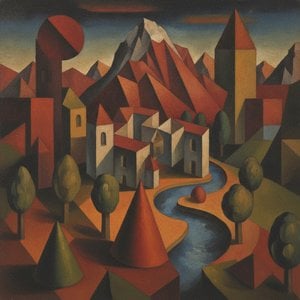
Landscape in Estaque

Georges Braque’s ‘Landscape in Estaque’ presents a vibrant cubist landscape of mountains and water, showcasing the artist's innovative style from the early 20th century. Explore this captivating artwork and bring its unique beauty into your space.

Erkunden Sie das Leben und Werk von Georges Braque (1882-1963), eine Schlüsselgestalt der Malerei des 20. Jahrhunderts. Pionier des Kubismus an der Seite Picassos, bekannt für Fauvismus, Collagen und innovative geometrische Formen. Entdecken Sie sein Erbe bei WahooArt!

Giclée / Kunstdruck

Giclée- oder Leinwanddruck in Museumsqualität mit schneller Produktion und flexiblen Veredelungsoptionen. (Handgemalte Reproduktion bestellen Handgemalte Reproduktion bestellenBild kaufen Bild kaufen)

P118B $10
P118H $10
P118W $10
P438Z $10
P508JH $12
P508YH $12
P805H $10
P805Z $10
P919BZ $10
P919G $10
P919XJ $10
P959ZH $10
P968JZ $12
W106C $8
W218G $10
W218JH $8
W218Y $10
W307PJ $10
W316G $10
W316PJ $8
W316Y $10
W398PJ $8
W4111J $10
W500HY $15
W500JH $15
W692G $12
W849H $8
W940BG $15
W953PJ $8

Standardformat
individuell anpassbar
CM
INCH

Wählen Sie aus unseren vordefinierten Formaten, die den ursprünglichen Proportionen des Kunstwerks entsprechen.

Breite
Höhe

Sie können Ihre eigenen Maße eingeben, um ein bestimmtes Format oder einen speziellen Platz einzupassen. Wenn das von Ihnen gewählte Format nicht den Proportionen des Originalbildes entspricht, werden wir das Kunstwerk entweder beschneiden oder das Bild mit einem gespiegelten oder einfarbigen Rand erweitern. Ein digitaler Entwurf wird Ihnen zur Genehmigung zugesandt, bevor die Produktion beginnt.
Bitte beachten Sie, dass die Vorschau auf dem Bildschirm nicht den tatsächlichen Zuschnitt oder die Erweiterung widerspiegelt. Nur der Entwurf zeigt die endgültige Komposition präzise an.
Obwohl Sondermaße verfügbar sind, empfehlen wir die Auswahl eines Maßes aus der vordefinierten Liste, um die ursprünglichen Proportionen zu bewahren.

Weltweiter Versand () innerhalb von 2 Wochen statt der üblichen 4/5 Wochen. (2 September)

why_choose_icon
Kostenloser weltweiter Expressversand
why_choose_icon
Hochwertige Leinenleinwand
why_choose_icon
Umfassender Versicherungsschutz beim Versand
why_choose_icon
Zollgebühren-Rückerstattungsgarantie
why_choose_icon
Garantie für exakte Farbtreue
why_choose_icon
60 Tage Rückgaberecht (nur bei Mängeln)
why_choose_icon
100% Geld-zurück-Garantie
why_choose_icon
Mengenrabatt verfügbar

Gesamtpreis

$ 68

reproduction

Landscape in Estaque

Giclée / Kunstdruck

Format der Reproduktion

-

Gesamtpreis

$ 68

Eckdaten

  • Medium: Oil on canvas
  • Title: Landscape in Estaque
  • Year: 1906-1907
  • Movement: Cubism
  • Artistic style: Cubist
  • Notable elements: Fragmented forms

Georges Braque's *Landscape in Estaque*: A Cubist Revelation

Georges Braque’s *Landscape in Estaque*, painted circa 1906, stands as a pivotal work not just within the artist’s oeuvre but also as a foundational piece of early Cubism. This evocative depiction of a Provençal landscape – specifically, the village of Estaque near Marseille – transcends mere topographical representation; it's an intensely analytical exploration of form and space, anticipating the radical shifts that would redefine 20th-century art. The painting’s power resides in its ability to simultaneously capture a recognizable scene while dismantling it into fragmented geometric components, inviting the viewer to actively participate in reconstructing the image.

  • Subject Matter: A rugged coastal landscape dominated by mountains and a shimmering body of water.
  • Composition: The arrangement is deliberately fractured, with multiple viewpoints presented simultaneously, creating a sense of disorientation and challenging traditional notions of perspective.
  • Color Palette: Braque employs a restrained yet vibrant palette – ochres, blues, greens, and browns – that emphasizes the materiality of the landscape rather than idealized beauty.

The Birth of Cubism

*Landscape in Estaque* emerged during a period of intense experimentation within Parisian artistic circles. Braque’s collaboration with Pablo Picasso is inextricably linked to the development of Cubism, and this painting represents a crucial step in that process. Prior to this work, Braque was influenced by Paul Cézanne's emphasis on geometric forms and his exploration of multiple viewpoints within a single composition. However, unlike Cézanne’s more lyrical approach, Braque pushed these ideas to their logical extreme, reducing objects to their essential shapes and presenting them from various angles concurrently. This technique, initially dubbed ‘Analytical Cubism,’ aimed to depict the subject's three-dimensionality by analyzing it into its constituent parts.

Technique and Materiality

Braque’s meticulous brushwork and careful layering of paint contribute significantly to the painting’s impact. He utilized a technique known as *empasse*, meaning “encounter,” where he would rapidly apply layers of oil paint, often scraping them away before they dried completely. This process created a textured surface, rich with visual information and hinting at the underlying structure of the landscape. The use of muted colors and broken planes further emphasizes the materiality of the pigments themselves, reflecting Braque’s interest in exploring the properties of paint as a medium.

Symbolic Resonance and Emotional Impact

*Landscape in Estaque* is more than just a representation of a place; it's imbued with a sense of melancholy and contemplation. The fragmented composition mirrors the artist's own intellectual and emotional state during this period of profound artistic transformation. The painting’s ambiguity invites viewers to project their own interpretations onto the scene, fostering a deeply personal connection with the artwork. It speaks to the inherent instability of perception and the challenges of representing reality through art – themes that would continue to resonate throughout Braque's career and influence generations of artists.


Über den Künstler

**frühes Leben und Ausbildung**

Georges Braque, ein prominenter französischer Maler, Kollagist, Bleistrichzeichner, Grafiker und Bildhauer, wurde am 13. Mai 1882 in Argenteuil, Val-d'oise, geboren. Er wuchs in Le Havre auf und erhielt zunächst eine Ausbildung als Hausmaler und Dekorateur wie sein Vater und Großvater. Braques künstlerische Neigungen führten ihn jedoch dazu, von 1897 bis 1899 an der École des Beaux-Arts in Le Havre Malerei zu studieren.

**Künstlerische Entwicklung und Fauvisme**

Im Jahr 1902, nachdem er seine Lehre bei einem Dekorateur in Paris abgeschlossen hatte, besuchte Braque bis 1904 die Académie Humbert. Dieser Zeitraum markierte seine Einführung ins Fauvismus, einen Stil, der durch lebendige Farben und emotionale Reaktionen gekennzeichnet ist. Beeinflusst von den Werken von Henri Matisse und André Derain, übernahm Braque einen fauvistischen Ansatz, wie in seinem Gemälde The Patience (Fauvismus, Öl auf Leinwand).

**Beitrag zum Kubismus**

Braques Zusammenarbeit mit Pablo Picasso von 1908 bis 1912 führte zur Entwicklung des Kubismus. Ihre analytischen kubistischen Werke, wie z.B. Georges Braque: The Patience und Pablo Picasso: Clarinet(analytischer Kubismus, Öl auf Leinwand), gelten heute als Meilensteine der Kunstgeschichte.

**Erbe und bemerkenswerte Werke**

* Houses at L'Estaques: Ein Zeugnis für Braques innovatives Einsatz von Geometrie und simultaner Perspektive. * The Patience(Fauvismus, Öl auf Leinwand): Demonstriert Braques fauvistischen Stil. * Clarinet(analytischer Kubismus, Öl auf Leinwand): Eine kollaborative kubistische Arbeit mit Picasso.

**Museen und Sammlungen**

* Musée d'Orsay: Bietet eine umfangreiche Sammlung impressionistischer und postimpressionistischer Kunst, darunter Werke von Braque. * Musée de l'Orangerie: Zeigt eine breite Palette von Kunstwerken, darunter Werke von Braque und anderen bedeutenden Künstlern.
  • Erfahren Sie mehr über Georges Braques Leben und Werk auf WahooArt.com
  • Entdecken Sie die Sammlung des Musée d'Orsay, die Werke von Braque und anderen Künstlern umfasst, unter Musée d'Orsay - Wikipedia
  • Erfahren Sie mehr über den Fauvismus und seinen Einfluss auf die Entwicklung des Kubismus mit Fauvismus Kunstbewegung auf WahooArt.com
**Georges Braques innovative Stil und seine Zusammenarbeit mit Pablo Picasso inspirieren weiterhin Künstler und Kunstliebhaber.**
Georges Braque

Georges Braque

1882 - 1963 , Frankreich

Kurzinfos

  • Beeinflusste Künstler: ['Pablo Picasso']
  • Bemerkenswerte Werke:
    • Häuser in L'Estaque
    • Die Geduld (Fauvismus)
    • Stillleben mit Pfeife
    • Mandola
  • Einflussreiche Künstler:
    • Henri Matisse
    • André Derain
    • Paul Cézanne
  • Geburtsdatum: 13. Mai 1882
  • Geburtsort: Argenteuil, Frankreich
  • Künstlerischer Stil: Kubismus, Fauvismus
  • Nationalität: Französisch
  • Sterbedatum: 1963
  • Vollständiger Name: Georges Braque
Entdecken Sie Kunstwerke, die nach Themen, Stilen und Merkmalen sortiert sind.