In echtem Maßstab anzeigen In AR an der Wand sehen Handgemalte Reproduktion kaufen Zum digitalen Bild wechseln Versenden als Grußkarte
Details anzeigen Leitfaden öffnen Zu Favoriten hinzufügen Herunterladen Ähnliche Objekte Röntgenaufnahme Diashow Besucherstatistiken

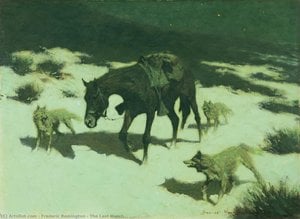
The Grass Fire

Explore Frederic Remington’s ‘The Grass Fire,’ a dramatic 1908 oil painting capturing the American West's spirit. Dynamic brushwork & symbolism await! #Remington #AmericanArt

Frederic Remington (1861-1909): US-amerikanischer Maler des Wilden Westens! Entdecken Sie Cowboys, Native Americans & Kavallerie in dynamischen Gemälden – ein Meister seines Fachs!

Giclée / Kunstdruck

Giclée- oder Leinwanddruck in Museumsqualität mit schneller Produktion und flexiblen Veredelungsoptionen. ( Handgemalte Reproduktion kaufen Zum digitalen Bild wechseln)

Corner sample of the P118B picture frame: formgepresstes Polystyrol, 5 cm wide and 3 cm thick
P118B €10
Corner sample of the P118H picture frame: formgepresstes Polystyrol, 5 cm wide and 3 cm thick
P118H €10
Corner sample of the P118W picture frame: formgepresstes Polystyrol, 5 cm wide and 3 cm thick
P118W €10
Corner sample of the P438Z picture frame: formgepresstes Polystyrol, 5.5 cm wide and 3.5 cm thick
P438Z €10
Corner sample of the P508JH picture frame: formgepresstes Polystyrol, 7 cm wide and 3.5 cm thick
P508JH €12
Corner sample of the P508YH picture frame: formgepresstes Polystyrol, 7 cm wide and 3.5 cm thick
P508YH €12
Corner sample of the P805H picture frame: formgepresstes Polystyrol, 5 cm wide and 3.5 cm thick
P805H €10
Corner sample of the P805Z picture frame: formgepresstes Polystyrol, 5 cm wide and 3.5 cm thick
P805Z €10
Corner sample of the P919BZ picture frame: formgepresstes Polystyrol, 7 cm wide and 3.5 cm thick
P919BZ €10
Corner sample of the P919G picture frame: formgepresstes Polystyrol, 7 cm wide and 3.5 cm thick
P919G €10
Corner sample of the P919XJ picture frame: formgepresstes Polystyrol, 7 cm wide and 3.5 cm thick
P919XJ €10
Corner sample of the P959ZH picture frame: formgepresstes Polystyrol, 5 cm wide and 3 cm thick
P959ZH €10
Corner sample of the P968JZ picture frame: formgepresstes Polystyrol, 6 cm wide and 4 cm thick
P968JZ €12
Corner sample of the W106C picture frame: Massivholz, 5 cm wide and 3 cm thick
W106C €8
Corner sample of the W218G picture frame: Massivholz, 5 cm wide and 3 cm thick
W218G €10
Corner sample of the W218JH picture frame: Massivholz, 5 cm wide and 3 cm thick
W218JH €8
Corner sample of the W218Y picture frame: Massivholz, 5 cm wide and 3 cm thick
W218Y €10
Corner sample of the W307PJ picture frame: Massivholz, 6 cm wide and 3 cm thick
W307PJ €10
Corner sample of the W316G picture frame: Massivholz, 6 cm wide and 3 cm thick
W316G €10
Corner sample of the W316PJ picture frame: Massivholz, 6 cm wide and 3 cm thick
W316PJ €8
Corner sample of the W316Y picture frame: Massivholz, 6 cm wide and 3 cm thick
W316Y €10
Corner sample of the W398PJ picture frame: Massivholz, 5 cm wide and 3 cm thick
W398PJ €8
Corner sample of the W4111J picture frame: Massivholz, 6.5 cm wide and 3.5 cm thick
W4111J €10
Corner sample of the W500HY picture frame: Massivholz, 7 cm wide and 5 cm thick
W500HY €15
Corner sample of the W500JH picture frame: Massivholz, 7 cm wide and 5 cm thick
W500JH €15
Corner sample of the W692G picture frame: Massivholz, 8 cm wide and 4 cm thick
W692G €12
Corner sample of the W849H picture frame: Massivholz, 5 cm wide and 3 cm thick
W849H €8
Corner sample of the W940BG picture frame: Massivholz, 7.5 cm wide and 4.5 cm thick
W940BG €15
Corner sample of the W953PJ picture frame: Massivholz, 6 cm wide and 3.5 cm thick
W953PJ €8

Standardformat
individuell anpassbar
CM
INCH

Wählen Sie aus unseren vordefinierten Formaten, die den ursprünglichen Proportionen des Kunstwerks entsprechen.

Breite
Höhe

Geben Sie die Breite und die Höhe an, die Sie benötigen, damit der Druck perfekt in Ihren Rahmen oder an Ihre Wand passt. Ein Druck kann nur beschnitten werden und niemals größer als das Originalbild gemacht werden; daher verliert ein Format mit einer anderen Proportion einen Teil des Bildes. Wir senden Ihnen ein digitales Mockup zur Freigabe, bevor wir den Druck ausführen. Das auf dieser Seite gezeigte Bild zeigt nicht den tatsächlichen Beschnitt – dies ist nur im Mockup ersichtlich.

Weltweiter Versand () innerhalb von 2 Wochen statt der üblichen 4/5 Wochen. (25 Oktober)

Kostenloser weltweiter Expressversand
Hochwertige Leinenleinwand
Vollständiger Versicherungsschutz beim Versand
Zollgebühren-Rückerstattungsgarantie
Garantie für exakte Farbtreue
100-tägiges Rückgaberecht (nur bei Mängeln)
100% Geld-zurück-Garantie
Angebot für Mengenrabatt

Gesamtpreis

€ 60

The Grass Fire

Giclée / Kunstdruck

Format der Reproduktion

-

Gesamtpreis

€ 60

Kurzübersicht

  • Title: The Grass Fire
  • Movement: American Impressionism
  • Year: 1908
  • Medium: Oil on Canvas
  • Influences: Hudson River School

Kunst-Quiz

Jede Frage hat nur eine richtige Antwort.

Frage 1:
What is the primary subject matter depicted in Frederic Remington’s ‘The Grass Fire’?
Frage 2:
Which artistic technique is prominently employed by Remington in ‘The Grass Fire’ to convey movement and dynamism?
Frage 3:
‘The Grass Fire’ reflects Remington's fascination with what significant historical period?
Frage 4:
What is the symbolic significance of the campfire in ‘The Grass Fire’?
Frage 5:
Where is Frederic Remington’s ‘The Grass Fire’ currently housed?

A Symphony of Embers and Shadows

In the quiet depths of the American frontier, where the boundary between civilization and the wild once blurred, Frederic Remington captured a moment of profound intensity in his 1908 masterpiece, The Grass Fire. This evocative work is far more than a mere depiction of a landscape; it is a visceral encounter with the raw energy of a vanishing era. As night descends upon the plains, the canvas comes alive with the flickering glow of a ritualistic gathering, where Native American figures are silhouetted against the encroaching darkness. The painting serves as a poignant window into a world defined by communal resilience and the elemental forces of nature, inviting the viewer to witness a ceremony that feels both ancient and urgently present.

Remington, an artist who functioned as a vital conduit for the soul of the American West, employs a masterful blend of realism and impressionistic flair to heighten the scene's emotional resonance. Rather than pursuing photographic precision, he utilizes loose, expressive brushstrokes that imbue the composition with a sense of kinetic movement. The eye is immediately drawn to the dramatic interplay of light and shadow; the central fire acts as a luminous heart, casting long, dancing shadows and illuminating the textures of horse hides, weathered clothing, and the organic forms of the surrounding foliage. This technique creates a palpable atmosphere of mystery, where the deep greens, earthy browns, and obsidian blacks of the night palette suggest a world shrouded in both sanctity and tension.

Symbolism and the Spirit of the Frontier

Beyond its visual splendor, The Grass Fire is rich with symbolic layers that resonate deeply with collectors and historians alike. The fire itself serves as a multifaceted metaphor—representing not only the warmth and communal bond of the indigenous people gathered around it but also the destructive and regenerative power of the wild frontier. The horses, rendered with a sense of muscular grace, symbolize the strength and mobility essential to life on the plains, while the vertical plumes of the warriors’ headdresses provide a striking structural contrast to the horizontal expanse of the earth. Every element is meticulously placed to guide the viewer through a narrative of survival and spiritual connection.

For the discerning interior designer or art enthusiast, this piece offers an unparalleled sense of drama and historical gravity. The artwork possesses a unique ability to anchor a room, providing a focal point that evokes a sense of adventure and contemplative solemnity. Whether placed in a sophisticated study or a contemporary living space, a high-quality reproduction of Remington’s work brings with it the weight of American history and the untamed spirit of the West. It is an invitation to reflect on the beauty of the ephemeral and the enduring strength of those who navigated the edge of the known world.

Fragen & Antworten

In welchem Jahr wurde "The Grass Fire" geschaffen?

"The Grass Fire" stammt aus dem Jahr 1908. Dieses Datum ordnet das Werk in die Schaffensperiode von Frederic Remington sowie in dessen Epoche ein.

Welche emotionale Stimmung begleitet den Stil der American Regionalism-Epoche in „The Grass Fire“?

Die Mysterious Emotion von „The Grass Fire“ begleitet seinen American Regionalism-Stil.

Für welchen Ort und welchen Zweck wird "The Grass Fire" empfohlen?

"The Grass Fire" von Frederic Remington wird für Accent empfohlen, idealerweise in einem Living Room. Verwendung und Raumgestaltung geben gemeinsam Aufschluss darüber, wo eine Reproduktion am besten zur Geltung kommt.


Biografie des Künstlers

Frühe Jahre und Ausbildung

  • Geburt und Familie: Frederic Sackrider Remington wurde am 4. Oktober 1861 in Canton, New York, geboren. Seine Familie hatte französisch-baskische Wurzeln.
  • Militärische Prägung: Sein Vater, Colonel Seth Pierrepont Remington, ein Hardwarehändler und Bürgerkriegsveteran, beeinflusste sein frühes Leben maßgeblich. Die Exposition gegenüber militärischen Themen sollte später seine Kunst prägen.
  • Frühe Ausbildung: Er besuchte das Vermont Episcopal Institute, eine Militärschule, wo er mit dem Zeichnen begann. Später wechselte er an eine andere Militärakademie, verfolgte aber schließlich aufgrund mangelnder Konzentration die Kunst statt einer militärischen Karriere.

Künstlerische Laufbahn und Stil

  • Frühe Illustrationen: Remingtons erste veröffentlichte Illustration war eine Karikatur für das Yale Courant, die ein frühes Talent für die Darstellung von Actionszenen demonstrierte.
  • Fokus auf den Westen: Eine entscheidende Reise nach Montana im Jahr 1881 weckte seine Faszination für den amerikanischen Westen, der zum zentralen Thema seiner künstlerischen Karriere wurde.
  • Themenwahl: Seine Werke zeigten prominent Cowboys, Native Americans und die US Cavalry und fingen den Geist und die Herausforderungen des Frontier-Lebens ein.
  • Künstlerischer Stil: Remington entwickelte einen unverwechselbaren Stil, der sich durch dynamische Kompositionen, energiegeladene Pinselstriche und einen Fokus auf Realismus gepaart mit dramatischem Flair auszeichnete. Er nutzte oft schnelle Skizzen, um Bewegung und Emotion einzufangen.

Wichtige Werke und Errungenschaften

  • Bemerkenswerte Gemälde: Mehrere Werke stechen als bedeutende Beispiele seines Talents hervor:
    • My Ranch – Zeigt Remingtons einzigartige Perspektive auf den Westen.
    • Waiting in the Moonlight – Demonstriert seine Fähigkeit, das Wesen des amerikanischen Westens durch eindringliche Bilder einzufangen.
    • Ridden Down (1905) - Eine kraftvolle Darstellung eines Kavallerieangriffs.
    • The Long-Horn Cattle Sign (1908) – Fängt die Lebendigkeit des Cowboy-Lebens ein.
  • Illustrationen und Skulpturen: Neben der Malerei war Remington auch ein produktiver Illustrator für Zeitschriften wie Harper’s Weekly und Collier’s. Er schuf auch Skulpturen, die seine künstlerische Vielseitigkeit weiter demonstrierten.
  • Anerkennung: Seine Arbeit erlangte zu Lebzeiten weite Anerkennung und etablierte ihn als führende Figur in der Kunst des amerikanischen Westens.

Vermächtnis und Einfluss

  • Einfluss auf die Western-Kunst: Frederic Remingtons Beiträge zur Darstellung des amerikanischen Westens sind unbestreitbar. Er half, das Genre zu definieren und Bilder von Cowboys, Native Americans und Frontier-Leben populär zu machen.
  • Einfluss auf andere Künstler: Seine Arbeit inspirierte zahlreiche Künstler, darunter N.C. Wyeth und Zane Grey.
  • Frederic Remington Art Museum: Das Frederic Remington Art Museum in Ogdensburg, New York, bewahrt sein Erbe durch eine umfangreiche Sammlung von Gemälden, Skizzen und Skulpturen.
  • Historische Bedeutung: Remingtons Kunst bietet wertvolle Einblicke in die Geschichte, Kultur und Mythologie des amerikanischen Westens während einer Zeit bedeutender Veränderungen und Konflikte. Seine Darstellungen bieten einen Einblick in eine entscheidende Ära der amerikanischen Geschichte, auch wenn sie manchmal romantisiert sind.

Späte Jahre und Tod

  • Fortsetzung der künstlerischen Produktion: Remington produzierte bis zu seinem Tod weiterhin produktiv Kunstwerke.
  • Gesundheitsverschlechterung: Im Jahr 1909 litt er an Blinddarmentzündung, während er sich auf einer Mission in Florida befand.
  • Tod: Frederic Remington starb am 26. Oktober 1909 in Bronxville, New York, im Alter von 48 Jahren. Sein Erbe als bedeutender amerikanischer Künstler inspiriert und fesselt das Publikum bis heute.
Frederic Remington

Frederic Remington

1861 - 1909 , Vereinigte Staaten von Amerika

Eckdaten zum Künstler

  • Beeinflusste Künstler:
    • N. C. Wyeth
    • Zane Grey
  • Bemerkenswerte Werke:
    • My Ranch
    • Waiting in the Moonlight
    • Ridden Down
    • The Long-Horn Cattle Sign
    • The Trooper
    • The Smoke Signal
  • Geburtsdatum: 4. Oktober 1861
  • Geburtsort: Canton, Vereinigte Staaten
  • Künstlerische Richtung: Realismus Malerei
  • Nationalität: Amerikanisch
  • Todatum: 26. Dezember 1909
  • Vollständiger Name: Frederic Sackrider Remington
Entdecken Sie Kunstwerke, die nach Themen, Stilen und Merkmalen sortiert sind.