In echtem Maßstab anzeigen In AR an der Wand sehen Handgemalte Reproduktion kaufen Zum digitalen Bild wechseln Versenden als Grußkarte
Details anzeigen Leitfaden Zu Favoriten hinzufügen Herunterladen Ähnliche Objekte Röntgenaufnahme Diashow Besucherstatistiken

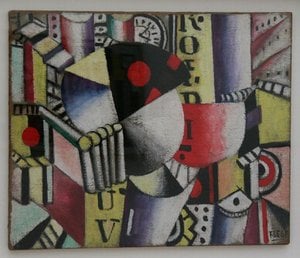
Still life with plaster mask

Explore Fernand Léger's 'Still Life with Plaster Mask,' a Cubist masterpiece capturing the machine age through striking forms and bold colors. A unique WahooArt reproduction.

Erkunden Sie die Kunst von Fernand Léger (1881-1955), einem Pionier des Kubismus und der 'Tubism'. Entdecken Sie seine mutigen, figurativen Gemälde, die das moderne Leben, Maschinen und die menschliche Form feiern. Ein Vorläufer des Pop Art!

Giclée / Kunstdruck

Giclée- oder Leinwanddruck in Museumsqualität mit schneller Produktion und flexiblen Veredelungsoptionen. ( Handgemalte Reproduktion kaufen Zum digitalen Bild wechseln)

P118B $10
P118H $10
P118W $10
P438Z $10
P508JH $12
P508YH $12
P805H $10
P805Z $10
P919BZ $10
P919G $10
P919XJ $10
P959ZH $10
P968JZ $12
W106C $8
W218G $10
W218JH $8
W218Y $10
W307PJ $10
W316G $10
W316PJ $8
W316Y $10
W398PJ $8
W4111J $10
W500HY $15
W500JH $15
W692G $12
W849H $8
W940BG $15
W953PJ $8

Standardformat
individuell anpassbar
CM
INCH

Wählen Sie aus unseren vordefinierten Formaten, die den ursprünglichen Proportionen des Kunstwerks entsprechen.

Breite
Höhe

Sie können Ihre eigenen Maße eingeben, um ein bestimmtes Format oder einen speziellen Platz einzupassen. Wenn das von Ihnen gewählte Format nicht den Proportionen des Originalbildes entspricht, werden wir das Kunstwerk entweder beschneiden oder das Bild mit einem gespiegelten oder einfarbigen Rand erweitern. Ein digitaler Entwurf wird Ihnen zur Genehmigung zugesandt, bevor die Produktion beginnt.
Bitte beachten Sie, dass die Vorschau auf dem Bildschirm nicht den tatsächlichen Zuschnitt oder die Erweiterung widerspiegelt. Nur der Entwurf zeigt die endgültige Komposition präzise an.
Obwohl Sondermaße verfügbar sind, empfehlen wir die Auswahl eines Maßes aus der vordefinierten Liste, um die ursprünglichen Proportionen zu bewahren.

Weltweiter Versand () innerhalb von 2 Wochen statt der üblichen 4/5 Wochen. (24 September)

why_choose_icon
Kostenloser weltweiter Expressversand
why_choose_icon
Hochwertige Leinenleinwand
why_choose_icon
Vollständiger Versicherungsschutz beim Versand
why_choose_icon
Zollgebühren-Rückerstattungsgarantie
why_choose_icon
Garantie für exakte Farbtreue
why_choose_icon
100-tägiges Rückgaberecht (nur bei Mängeln)
why_choose_icon
100% Geld-zurück-Garantie
why_choose_icon
Angebot für Mengenrabatt

Gesamtpreis

$ 68

reproduction

Still life with plaster mask

Giclée / Kunstdruck

Format der Reproduktion

-

Gesamtpreis

$ 68

Kurzübersicht

  • Subject or theme: Still life, mask
  • Notable elements or techniques: Tubist style, cylindrical forms
  • Title: Still life with plaster mask
  • Medium: Oil on canvas
  • Movement: Cubism
  • Artist: Fernand Léger

Kunst-Quiz

Jede Frage hat nur eine richtige Antwort.

Frage 1:
What is the primary subject of Fernand Léger’s ‘Still Life with a Plaster Mask’?
Frage 2:
Which artistic movement is most closely associated with Fernand Léger’s style, as evidenced by this painting?
Frage 3:
The presence of an umbrella in the composition suggests what about the artwork’s setting?
Frage 4:
Considering the historical context of Fernand Léger’s work, what does the plaster mask likely symbolize?
Frage 5:
Based on the description, what can be inferred about Léger’s approach to representing objects in this painting?

The Enigmatic Presence of the Mask

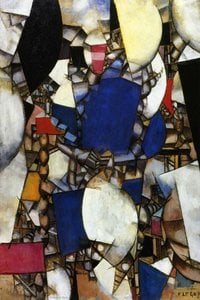
Fernand Léger’s “Still Life with Plaster Mask” is not merely a depiction of objects arranged on a surface; it's an invitation into a world where form, geometry, and the echoes of industrialization converge. Painted around 1914, during a pivotal period in Léger’s artistic evolution – a time when he moved away from the rigid constraints of Cubism towards a more expressive, almost populist style – this work embodies his fascination with the machine age while retaining a distinctly human sensibility. The central figure, a plaster mask, immediately commands attention. It's not a realistic representation but rather an abstracted form, hinting at anonymity and perhaps even a veiled identity. Léger’s deliberate simplification of shapes—the cylindrical forms reminiscent of pipes and gears, characteristic of his “Tubism”—suggests a world increasingly dominated by mechanical processes, yet the mask itself retains a certain theatricality, recalling ancient ritual objects and the power of disguise.
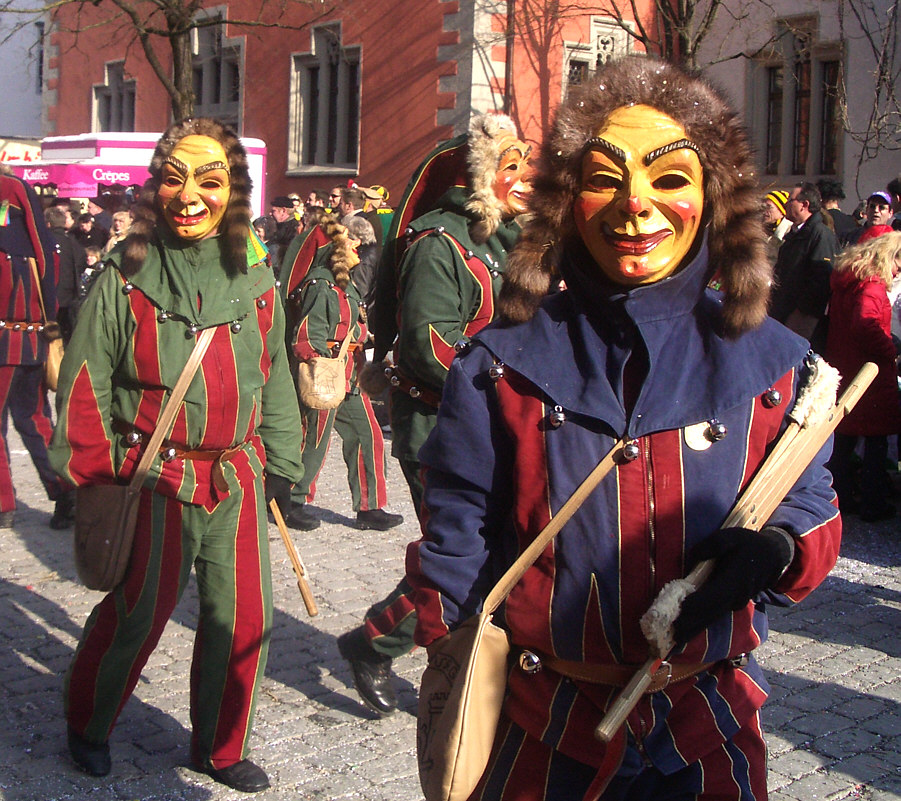
Mask Image

(Image: A traditional mask from Ravensburg Fasnet, illustrating the historical and ritual significance of masks)

A Dialogue with Cubism and Beyond

Léger’s artistic journey is inextricably linked to the development of Cubism. Initially influenced by Picasso and Braque, he developed his own distinctive approach – “Tubism” – which prioritized simplified geometric forms, particularly cylinders, cones, and cubes. This style was a direct response to the dynamism and fragmentation he observed in the burgeoning industrial landscape. However, unlike many of his contemporaries who retreated into pure abstraction, Léger sought to integrate modernity directly into his work. “Still Life with Plaster Mask” demonstrates this brilliantly; the mask itself becomes a visual embodiment of this integration – a fragmented, stylized representation that simultaneously evokes both ancient symbolism and contemporary mechanics. The surrounding objects—a cup, a bowl, an umbrella—are treated with similar geometric precision, contributing to the painting’s overall sense of ordered chaos.

The addition of the umbrella, positioned high in the composition, introduces an element of unexpected lightness and perhaps even vulnerability against the backdrop of industrial forms. It's a subtle detail that adds depth to the work, suggesting a human presence within this machine-dominated world. Interestingly, Léger’s exploration of masks during this period coincided with his own experiences in World War I, where he witnessed firsthand the dehumanizing effects of mechanized warfare. The mask, therefore, can be interpreted as a symbol of both anonymity and the loss of individual identity – themes that resonated deeply within him.

Technique and Materiality: A Celebration of Form

Executed in oil on canvas, “Still Life with Plaster Mask” showcases Léger’s masterful control of color and form. He employs a limited palette—primarily primary colors punctuated by black and white—to create a sense of clarity and visual impact. The brushstrokes are bold and decisive, emphasizing the geometric shapes and contributing to the painting's overall dynamism. The use of canvas itself is integral to the work’s aesthetic; Léger deliberately avoids illusionistic depth, instead focusing on the flat surface and the interplay of shapes and colors. This approach aligns with his desire to represent the world as it *appears* rather than as it *is*, reflecting a commitment to capturing the essence of modern experience.

Symbolism and Emotional Resonance

Beyond its formal qualities, “Still Life with Plaster Mask” carries a profound symbolic weight. The mask, as a recurring motif in Léger’s work, represents not just anonymity but also transformation, disguise, and the potential for rebirth. It speaks to our desire to conceal ourselves from the world, yet simultaneously invites us to explore hidden aspects of our own identities. The painting's overall mood is one of quiet contemplation—a subtle tension between the ordered precision of industrial forms and the inherent mystery of human existence. It’s a work that rewards repeated viewing, revealing new layers of meaning with each encounter. A high-quality reproduction allows us to appreciate Léger’s innovative approach to modern art and his enduring legacy as a pioneer of abstraction.


Biografie des Künstlers

frühes Leben und Ausbildung

Fernand Légér, ein französischer Maler, Bildhauer und Filmemacher, wurde am 4. Februar 1881 in Argentan, Orne, Niedergermanien geboren. Sein Vater züchtete Rinder, und Légér erhielt zunächst eine Ausbildung als Architekt von 1897 bis 1899. Er zog dann im Jahr 1900 nach Paris und unterstützte sich dort als Architektenzeichner.

Künstlerische Entwicklung

Légers frühe Werke wurden vom Impressionismus beeinflusst, wie in Le Jardin de ma Mère (Mein Muttergarten) (1905) zu sehen ist. Nach dem Besuch der Schule für dekorative Künste und der Académie Julian begann er ab seinem 25. Lebensjahr ernsthaft als Maler zu arbeiten. Sein Stil entwickelte sich zu einer persönlichen Form des Kubismus, der von Kritikern als "Tubism" bezeichnet wurde, da er sich auf zylindrische Formen konzentrierte.

Kubismus und die Puteaux-Gruppe

Im Jahr 1910 stellte Légér im Salon d’Automne zusammen mit Jean Metzinger und Henri Le Fauconnier aus. Er schloss sich der Puteaux-Gruppe an, auch bekannt als die Section d’Or (die Goldene Proportion), zusammen mit anderen Künstlern wie Francis Picabia und Marcel Duchamp.

Krieg und seine Auswirkungen auf Légers Werk

Légers Erfahrungen im Ersten Weltkrieg hatten einen erheblichen Einfluss auf sein Werk. Während seiner Zeit an der Front produzierte er Skizzen von Artilleriegeschützen, Flugzeugen und Soldaten. Sein Gemälde Soldat mit Pfeife (1916) spiegelt diese Zeit wider.

Spätere Werke und Vermächtnis

Légers Nachkriegszeitliche Arbeiten, die von glatten, maschinellen Formen geprägt waren, verknüpften ihn mit der Tradition der französischen figurativen Malerei. Seine "animierten Landschaften" von 1921 zeigten Figuren und Tiere in harmonischen, stromlinienförmigen Formen. Schlüsselwerke: Museen, die Légers Werk ausstellen:

Fernand Léger

Fernand Léger

1881 - 1955 , Frankreich

Eckdaten zum Künstler

  • Beeinflusste Kunstrichtungen: ['Pop Art']
  • Beeinflusste Künstler: ['Paul Cézanne']
  • Bemerkenswerte Werke:
    • Die Sitzende Frau
    • Maschinenelement
    • Der Große Umzug
    • Die Stadt
  • Geburtsdatum: 04. Februar 1881
  • Geburtsort: Argentan, Frankreich
  • Künstlerische Richtung: Kubismus, Tubismus
  • Nationalität: Französisch
  • Sterbedatum: 1955
  • Vollständiger Name: Fernand Léger
  • Von Kunstbewegungen Beeinflusst: ['Cézannismus']
  • Von Künstlern Beeinflusst: ['Impressionismus']
Entdecken Sie Kunstwerke, die nach Themen, Stilen und Merkmalen sortiert sind.