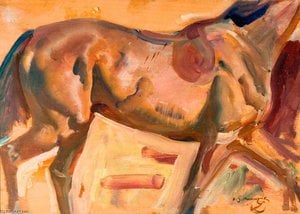
The Undefeated Asteroid (1864) von Edward Troye, handgemaltes Ölgemälde-Replikat eines Meisterkünstlers
Vorschau anzeigen In AR ansehen Zum Druck wechseln Zum digitalen Bild wechseln Versenden
Details anzeigen Leitfaden Zu Favoriten hinzufügen Herunterladen Ähnliche Objekte Röntgenaufnahme Diashow Fragen & Antworten Presentation Statistiken

The Undefeated Asteroid Handgemalte Ölmalerei-Reproduktion

Edward Troye’s "The Undefeated Asteroid" (1864) showcases astonishing anatomical detail of a bay horse meticulously groomed by enslaved men in antebellum Virginia, revealing a poignant social commentary through masterful realism and scientific observation – discover this significant equine artwork.

Edward Troye (1808-1874): Schweizer Künstler, der für genaue Pferdemalereien bekannt ist – amerikanische Great Plains und südliche Vollblüter. Autor von 'Race Horses of America'.

Handgefertigte Ölreproduktion

Handgemaltes Ölgemälde auf Leinwand in Ihrer Wunschgröße und mit Rahmen, auf Bestellung von unseren Künstlern angefertigt. ( Zum Druck wechseln Zum digitalen Bild wechseln)

Corner sample of the P118B picture frame: formgepresstes Polystyrol, 5 cm wide and 3 cm thick
P118B €10
Corner sample of the P118H picture frame: formgepresstes Polystyrol, 5 cm wide and 3 cm thick
P118H €10
Corner sample of the P118W picture frame: formgepresstes Polystyrol, 5 cm wide and 3 cm thick
P118W €10
Corner sample of the P438Z picture frame: formgepresstes Polystyrol, 5.5 cm wide and 3.5 cm thick
P438Z €10
Corner sample of the P508JH picture frame: formgepresstes Polystyrol, 7 cm wide and 3.5 cm thick
P508JH €12
Corner sample of the P508YH picture frame: formgepresstes Polystyrol, 7 cm wide and 3.5 cm thick
P508YH €12
Corner sample of the P805H picture frame: formgepresstes Polystyrol, 5 cm wide and 3.5 cm thick
P805H €10
Corner sample of the P805Z picture frame: formgepresstes Polystyrol, 5 cm wide and 3.5 cm thick
P805Z €10
Corner sample of the P919BZ picture frame: formgepresstes Polystyrol, 7 cm wide and 3.5 cm thick
P919BZ €10
Corner sample of the P919G picture frame: formgepresstes Polystyrol, 7 cm wide and 3.5 cm thick
P919G €10
Corner sample of the P919XJ picture frame: formgepresstes Polystyrol, 7 cm wide and 3.5 cm thick
P919XJ €10
Corner sample of the P959ZH picture frame: formgepresstes Polystyrol, 5 cm wide and 3 cm thick
P959ZH €10
Corner sample of the P968JZ picture frame: formgepresstes Polystyrol, 6 cm wide and 4 cm thick
P968JZ €12
Corner sample of the W106C picture frame: Massivholz, 5 cm wide and 3 cm thick
W106C €8
Corner sample of the W218G picture frame: Massivholz, 5 cm wide and 3 cm thick
W218G €10
Corner sample of the W218JH picture frame: Massivholz, 5 cm wide and 3 cm thick
W218JH €8
Corner sample of the W218Y picture frame: Massivholz, 5 cm wide and 3 cm thick
W218Y €10
Corner sample of the W307PJ picture frame: Massivholz, 6 cm wide and 3 cm thick
W307PJ €10
Corner sample of the W316G picture frame: Massivholz, 6 cm wide and 3 cm thick
W316G €10
Corner sample of the W316PJ picture frame: Massivholz, 6 cm wide and 3 cm thick
W316PJ €8
Corner sample of the W316Y picture frame: Massivholz, 6 cm wide and 3 cm thick
W316Y €10
Corner sample of the W398PJ picture frame: Massivholz, 5 cm wide and 3 cm thick
W398PJ €8
Corner sample of the W4111J picture frame: Massivholz, 6.5 cm wide and 3.5 cm thick
W4111J €10
Corner sample of the W500HY picture frame: Massivholz, 7 cm wide and 5 cm thick
W500HY €15
Corner sample of the W500JH picture frame: Massivholz, 7 cm wide and 5 cm thick
W500JH €15
Corner sample of the W692G picture frame: Massivholz, 8 cm wide and 4 cm thick
W692G €12
Corner sample of the W849H picture frame: Massivholz, 5 cm wide and 3 cm thick
W849H €8
Corner sample of the W940BG picture frame: Massivholz, 7.5 cm wide and 4.5 cm thick
W940BG €15
Corner sample of the W953PJ picture frame: Massivholz, 6 cm wide and 3.5 cm thick
W953PJ €8

Standardformat
individuell anpassbar
CM
INCH

Wählen Sie aus unseren vordefinierten Formaten, die den ursprünglichen Proportionen des Kunstwerks entsprechen.

Breite
Höhe

Geben Sie die Breite und die Höhe an, die Sie für Ihren Rahmen oder Ihre Wand benötigen. Da dieses Werk handgemalt ist, kann der Künstler bei einer anderen Form etwas mehr um das Bild herum malen oder etwas abschneiden – Sie entscheiden. Wir senden Ihnen ein digitales Mockup zur Freigabe, bevor mit dem Malen begonnen wird. Das auf dieser Seite gezeigte Bild stellt nicht das tatsächliche Ergebnis dar – dies tut nur das Mockup.

Beispiele für Anpassungsmöglichkeiten: Gesicht durch Kundenfoto ersetzen; Haustier hinzufügen (z. B. Katze durch Hund ersetzen); eine versteckte Nachricht im Hintergrund einfügen; Hintergrundlandschaft oder -elemente ändern.
Nach der Bestellung wird das WahooArt.com-Team dem Kunden Anweisungen per E-Mail zusenden und eine Mockup-Vorschau bereitstellen.

Weltweiter Versand () in nur 3 bis 4 Wochen statt der üblichen 5 Wochen. (5 November). Keine Kompromisse bei der Qualität.

Kostenloser weltweiter Expressversand
Hochwertige Leinenleinwand
Umfassender Versicherungsschutz beim Versand
Zollgebühren-Rückerstattungsgarantie
Garantie für exakte Farbtreue
100 Tage Rückgaberecht (nur bei Mängeln)
100% Geld-zurück-Garantie
Mengenrabatt verfügbar

Gesamtpreis

€ 243

The Undefeated Asteroid

Art der Reproduktion

Format der Reproduktion

-

Endpreis

€ 243

Eckdaten

  • Subject or theme: Horse Portraiture
  • Medium: Oil on Canvas
  • Influences: Genre Painting
  • Title: The Undefeated Asteroid
  • Artist: Edward Troye

The Undefeated Asteroid – A Portrait of Equestrian Dignity

Edward Troye’s “The Undefeated Asteroid,” painted in 1864, transcends mere equine representation; it embodies the spirit of a bygone era and speaks volumes about social dynamics within the American South during the antebellum period. This monumental canvas captures a pivotal moment – the meticulous grooming of a magnificent bay horse by two enslaved men—a scene meticulously rendered with unparalleled realism that continues to fascinate art historians and collectors alike.

A Masterclass in Anatomical Detail

Troye’s artistic prowess lies not just in capturing the beauty of the horse but in achieving an astonishing level of anatomical accuracy. Unlike many artists of his time who prioritized idealized forms, Troye relentlessly pursued truthfulness. He painstakingly dissected musculature, meticulously documented bone structure, and rendered every subtle nuance of equine anatomy with breathtaking precision. This dedication to scientific observation—a hallmark of animalier art—elevates “The Undefeated Asteroid” beyond a simple depiction of animals; it becomes a testament to Troye’s mastery of technique and his unwavering commitment to portraying subjects faithfully. The artist skillfully employed oil paints on canvas, layering thin glazes to build up tonal depth and creating textures that convincingly mimic the feel of horsehair and muscle fibers.

Historical Context: Racehorses and Slavery in Antebellum Virginia

The painting's significance extends far beyond its artistic merits. It exists within a complex sociohistorical framework—the burgeoning popularity of Thoroughbred racing in Virginia during the 1860s, coupled with the pervasive institution of slavery. The horse depicted is owned by John Minor Botts III, a wealthy planter and prominent figure in Richmond society. His stables employed enslaved men who cared for his horses, highlighting the intertwined roles of labor and leisure within the Southern economy. Troye’s portrayal isn't merely aesthetically pleasing; it serves as a visual record of this era—a poignant reminder of the human cost associated with economic prosperity. The inclusion of African American jockeys underscores the racial inequalities prevalent at the time, presenting them not as mere accessories to the horse but as integral participants in its care and success.

Symbolism: Resilience Amidst Oppression

“The Undefeated Asteroid” carries profound symbolic weight. The horse itself represents strength, nobility, and perseverance—qualities mirrored in the dignified postures of Botts’ attendants. Despite their subjugation under oppressive conditions, these men exhibit unwavering dedication to their craft and a palpable respect for their animal companion. Troye's deliberate framing—the stark contrast between the lush foliage surrounding the horse and the barren tree trunks—further amplifies this symbolism. It suggests that beauty and vitality can endure even in environments marked by hardship and deprivation. The gaze of Botts’ men, turned outward with thoughtful contemplation, speaks to a quiet dignity—a refusal to succumb to despair amidst adversity.

Emotional Impact: A Moment Frozen in Time

Ultimately, Troye's masterpiece evokes a powerful emotional response. It compels viewers to confront the uncomfortable realities of slavery while simultaneously appreciating the artistry and skill involved in its creation. The painting’s meticulous detail invites contemplation—encouraging us to consider not only the visual beauty but also the broader narrative it conveys about human dignity and resilience. “The Undefeated Asteroid” remains a hauntingly beautiful reminder of a specific historical moment, forever enshrined in oil paint on canvas as an enduring symbol of artistic excellence and social commentary.

Fragen & Antworten

Wie spiegeln sich Stilrichtung und Epoche in "The Undefeated Asteroid" von Edward Troye wider?

In "The Undefeated Asteroid" von Edward Troye trifft die Contemporary Realism-Strömung auf die Ära der – 19. Jahrhundert.

Ist "The Undefeated Asteroid" von Edward Troye im Hoch-, Quer- oder Quadratformat angeordnet?

"The Undefeated Asteroid" von Edward Troye hat ein Landscape-Format. Das Format beschreibt die Proportionen der Komposition.

Kann ich "The Undefeated Asteroid" von Edward Troye vor der Bestellung in einer Vorschau ansehen?

Auf der Vorschau im Raum-Seite von „The Undefeated Asteroid“ können Sie das Kunstwerk vor der Bestellung in einer Vorschau betrachten.


Künstlerbiografie

Edward Troye: Ein Leben für die Pferdekunst

Edward Troye (1808-1874) war ein in der Schweiz geborener Künstler, der für seine bemerkenswert genauen und detaillierten Darstellungen amerikanischer Pferde, insbesondere von den Prärien und südlichen Vollblütern, gefeiert wurde. Seine Werke bieten wertvolle Einblicke in die Pferdegeschichte einer Zeit vor der weit verbreiteten Fotografie.

Frühes Leben und Ursprünge

Geboren 1808 in Lannes, Schweiz, sind Details über Troyes frühe künstlerische Ausbildung spärlich. Er wanderte schließlich in die Vereinigten Staaten aus und etablierte sich dort als Künstler, der sich auf Pferde spezialisierte – ein Thema, das seine Karriere prägen sollte.

Künstlerische Entwicklung und Stil

Troyes Stil ist durch seine akribische Realismusnähe und Aufmerksamkeit für anatomisches Detail gekennzeichnet. Er war nicht daran interessiert, seine Motive zu romantisieren oder zu idealisieren; stattdessen konzentrierte er sich darauf, den wahren Charakter jedes Pferdes einzufangen – ihre Muskulatur, ihr Erscheinungsbild und ihren individuellen Charakter. Seine Gemälde dienten sowohl als künstlerische Darstellungen als auch als wertvolle Aufzeichnungen über Abstammungslinien und körperliche Merkmale.

Themen und Motive

  • Vollblüter: Troye malte häufig südamerikanische Vollblüter vor dem amerikanischen Bürgerkrieg und dokumentierte renommierte Rennpferde und ihre Linien.
  • Pferde der Prärie: Er ist ebenso bekannt für seine Darstellungen von Pferden, die den amerikanischen Prärien zu Hause sind, die ihren wilden Geist und ihre robuste Schönheit einfangen.
  • Porträts: Während er hauptsächlich ein Pferdemaler war, schuf Troye auch Porträts, oft mit Pferden in der Komposition.

Wichtige Leistungen und Wiederentdeckung

Troyes wichtigste Leistung liegt darin, ein visuelles Zeugnis der amerikanischen Pferdegeschichte aus einer entscheidenden Zeit zu schaffen. Er verfasste Race Horses of America (1867) und festigte damit sein Engagement für die Dokumentation dieser prächtigen Tiere.

Interessanterweise blieben Troyes Werke bis 1912 weitgehend außerhalb eines kleinen Kreises unbekannt. Seitdem wurden über 300 seiner Gemälde wiederentdeckt und fotografiert, wodurch der Umfang und die Tiefe seines künstlerischen Schaffens enthüllt werden.

Einflüsse

Informationen über spezifische künstlerische Einflüsse auf Troye sind begrenzt. Seine Hingabe an den Realismus deutet jedoch auf eine Wertschätzung für frühere Meister hin, die sich auf eine genaue Darstellung konzentrierten. Sein Werk spiegelt auch das wachsende Interesse an wissenschaftlicher Beobachtung im 19. Jahrhundert wider.

Historische Bedeutung

Edward Troyes Gemälde sind unschätzbare historische Dokumente. Sie bieten Forschern und Enthusiasten detaillierte visuelle Informationen über Pferderassen, Erscheinungsbild und Zuchtpraktiken des 19. Jahrhunderts. Sein Werk bietet einen einzigartigen Einblick in eine vergangene Ära und bewahrt das Erbe dieser prächtigen Tiere für zukünftige Generationen.

Spätere Jahre und Vermächtnis

Troye verbrachte seine späteren Jahre in Kentucky, in der Nähe seines Freundes Keen Richards. Er starb am 25. Juli 1874 an einer Lungenentzündung und wurde auf dem Georgetown Cemetery zusammen mit seiner Frau und seinem Enkel begraben. Heute werden seine Gemälde von Sammlern und Museen stark begehrt, wodurch sein künstlerisches Vermächtnis weiterhin gedeiht.

Edward Troye

Edward Troye

1808 - 1874 , Schweiz

Kurzinfos

  • Artistic Movement Or Style: Tierkünstler; Historische Kunst
  • Artists Or Movements Influenced By This Artist: ['']
  • Artists Who Influenced This Artist: ['']
  • Date Of Birth: 1808
  • Date Of Death: 1874
  • Full Name: Edward Troye
  • Nationality: Schweizer
  • Notable Artworks:
    • Race Horses of America
    • Porträt von John Hartwell Cocke II
  • Place Of Birth: Lannes, Schweiz