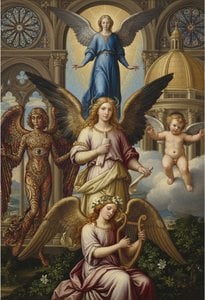
Angels Pity (1470) von Carlo Crivelli, handgemaltes Ölgemälde-Replikat eines Meisterkünstlers
Vorschau anzeigen In AR ansehen Zum Druck wechseln Zum digitalen Bild wechseln Versenden
Details anzeigen Leitfaden Zu Favoriten hinzufügen Herunterladen Ähnliche Objekte Röntgenaufnahme Diashow Fragen & Antworten Statistiken

Angels Pity Handgemalte Ölmalerei-Reproduktion

Abmessungen
72.0 x 55.0 cm

Discover Carlo Crivelli’s ‘Angels Pity’ (1470), a stunning Early Renaissance oil painting. Admire its devotional beauty, intricate details & serene composition – a timeless masterpiece.

Carlo Crivelli (1435-1495): Venezianischer Renaissance-Maler, bekannt für seinen detaillierten spätgotischen Stil, Trompe-l'oeil Techniken & religiöse Werke wie Madonnen. Entdecken Sie sein Werk!

Handgefertigte Ölreproduktion

Handgemaltes Ölgemälde auf Leinwand in Ihrer Wunschgröße und mit Rahmen, auf Bestellung von unseren Künstlern angefertigt. ( Zum Druck wechseln Zum digitalen Bild wechseln)

Corner sample of the P118B picture frame: formgepresstes Polystyrol, 5 cm wide and 3 cm thick
P118B €10
Corner sample of the P118H picture frame: formgepresstes Polystyrol, 5 cm wide and 3 cm thick
P118H €10
Corner sample of the P118W picture frame: formgepresstes Polystyrol, 5 cm wide and 3 cm thick
P118W €10
Corner sample of the P438Z picture frame: formgepresstes Polystyrol, 5.5 cm wide and 3.5 cm thick
P438Z €10
Corner sample of the P508JH picture frame: formgepresstes Polystyrol, 7 cm wide and 3.5 cm thick
P508JH €12
Corner sample of the P508YH picture frame: formgepresstes Polystyrol, 7 cm wide and 3.5 cm thick
P508YH €12
Corner sample of the P805H picture frame: formgepresstes Polystyrol, 5 cm wide and 3.5 cm thick
P805H €10
Corner sample of the P805Z picture frame: formgepresstes Polystyrol, 5 cm wide and 3.5 cm thick
P805Z €10
Corner sample of the P919BZ picture frame: formgepresstes Polystyrol, 7 cm wide and 3.5 cm thick
P919BZ €10
Corner sample of the P919G picture frame: formgepresstes Polystyrol, 7 cm wide and 3.5 cm thick
P919G €10
Corner sample of the P919XJ picture frame: formgepresstes Polystyrol, 7 cm wide and 3.5 cm thick
P919XJ €10
Corner sample of the P959ZH picture frame: formgepresstes Polystyrol, 5 cm wide and 3 cm thick
P959ZH €10
Corner sample of the P968JZ picture frame: formgepresstes Polystyrol, 6 cm wide and 4 cm thick
P968JZ €12
Corner sample of the W106C picture frame: Massivholz, 5 cm wide and 3 cm thick
W106C €8
Corner sample of the W218G picture frame: Massivholz, 5 cm wide and 3 cm thick
W218G €10
Corner sample of the W218JH picture frame: Massivholz, 5 cm wide and 3 cm thick
W218JH €8
Corner sample of the W218Y picture frame: Massivholz, 5 cm wide and 3 cm thick
W218Y €10
Corner sample of the W307PJ picture frame: Massivholz, 6 cm wide and 3 cm thick
W307PJ €10
Corner sample of the W316G picture frame: Massivholz, 6 cm wide and 3 cm thick
W316G €10
Corner sample of the W316PJ picture frame: Massivholz, 6 cm wide and 3 cm thick
W316PJ €8
Corner sample of the W316Y picture frame: Massivholz, 6 cm wide and 3 cm thick
W316Y €10
Corner sample of the W398PJ picture frame: Massivholz, 5 cm wide and 3 cm thick
W398PJ €8
Corner sample of the W4111J picture frame: Massivholz, 6.5 cm wide and 3.5 cm thick
W4111J €10
Corner sample of the W500HY picture frame: Massivholz, 7 cm wide and 5 cm thick
W500HY €15
Corner sample of the W500JH picture frame: Massivholz, 7 cm wide and 5 cm thick
W500JH €15
Corner sample of the W692G picture frame: Massivholz, 8 cm wide and 4 cm thick
W692G €12
Corner sample of the W849H picture frame: Massivholz, 5 cm wide and 3 cm thick
W849H €8
Corner sample of the W940BG picture frame: Massivholz, 7.5 cm wide and 4.5 cm thick
W940BG €15
Corner sample of the W953PJ picture frame: Massivholz, 6 cm wide and 3.5 cm thick
W953PJ €8

Standardformat
individuell anpassbar
CM
INCH

Wählen Sie aus unseren vordefinierten Formaten, die den ursprünglichen Proportionen des Kunstwerks entsprechen.

Breite
Höhe

Geben Sie die Breite und die Höhe an, die Sie für Ihren Rahmen oder Ihre Wand benötigen. Da dieses Werk handgemalt ist, kann der Künstler bei einer anderen Form etwas mehr um das Bild herum malen oder etwas abschneiden – Sie entscheiden. Wir senden Ihnen ein digitales Mockup zur Freigabe, bevor mit dem Malen begonnen wird. Das auf dieser Seite gezeigte Bild stellt nicht das tatsächliche Ergebnis dar – dies tut nur das Mockup.

Beispiele für Anpassungsmöglichkeiten: Gesicht durch Kundenfoto ersetzen; Haustier hinzufügen (z. B. Katze durch Hund ersetzen); eine versteckte Nachricht im Hintergrund einfügen; Hintergrundlandschaft oder -elemente ändern.
Nach der Bestellung wird das WahooArt.com-Team dem Kunden Anweisungen per E-Mail zusenden und eine Mockup-Vorschau bereitstellen.

Weltweiter Versand () in nur 3 bis 4 Wochen statt der üblichen 5 Wochen. (4 November). Keine Kompromisse bei der Qualität.

Kostenloser weltweiter Expressversand
Hochwertige Leinenleinwand
Umfassender Versicherungsschutz beim Versand
Zollgebühren-Rückerstattungsgarantie
Garantie für exakte Farbtreue
100 Tage Rückgaberecht (nur bei Mängeln)
100% Geld-zurück-Garantie
Mengenrabatt verfügbar

Gesamtpreis

€ 264

Angels Pity

Art der Reproduktion

Format der Reproduktion

-

Endpreis

€ 264

Eckdaten

  • Subject or theme: Jesus with children, angels, and piety
  • Medium: Oil on wood panel
  • Notable elements or techniques: Glazing, trompe l'oeil, linear quality
  • Movement: Early Renaissance
  • Artistic style: Late Gothic decorative sensibility

A Vision of Divine Compassion

In the quiet, hallowed atmosphere of the Early Renaissance, few works capture the intersection of human sorrow and divine grace as poignantly as Carlo Crivelli’s "Angels Pity." Painted in 1470, this masterpiece serves as a profound meditation on tenderness and spiritual devotion. The scene unfolds with an intimate warmth, presenting Jesus cradling two children within his arms—a gesture that transcends mere historical depiction to become a universal symbol of protection and innocence. Surrounded by a celestial assembly of angels and watchful figures, the composition draws the viewer into a sacred circle of empathy. Even the subtle presence of a solitary bird in the upper corner acts as a silent witness, lending an air of tranquility to a moment heavy with emotional significance.

The artistry of Crivelli is on full display through his masterful command of color and light. Utilizing soft, luminous hues and delicate brushstrokes, the artist creates a sense of palpable intimacy that makes the divine feel reachable. The painting is a triumph of the Early Renaissance style, where every detail is rendered with an almost obsessive realism. Crivelli’s technique involves the meticulous application of oil glazes on wood panel, building layers of color to achieve a radiant depth. This method allows light to appear as if it is emanating from within the figures themselves, highlighting the soft textures of skin and the intricate folds of drapery, thereby inviting the observer to linger on the subtle nuances of the composition.

Symbolism and the Language of Devotion

Beyond its visual splendor, "Angels Pity" is a rich tapestry of Christian iconography designed to provoke deep reflection. The arrangement of the figures within an arched niche creates a sense of sacred enclosure, separating the holy event from the mundane world. Every element serves a symbolic purpose: the tender way Jesus holds the children reflects the theological concept of divine mercy, while the surrounding angels represent the bridge between heaven and earth. Crivelli’s use of trompe l'oeil—a technique intended to trick the eye into perceiving three-dimensional reality—adds a layer of tactile presence to the work, making the spiritual themes feel grounded in a tangible, physical reality.

For the discerning collector or interior designer, this painting offers more than mere decoration; it provides an emotional anchor for any space. The somber yet serene mood makes it an ideal centerpiece for rooms dedicated to contemplation, study, or quiet luxury. Whether one is drawn to its historical significance as a product of the Venetian-influenced March of Ancona or moved by its profound expression of compassion, "Angels Pity" remains a timeless testament to the power of art to evoke the sublime. Owning a high-quality reproduction of this work allows for the preservation of this Renaissance spirit, bringing a sense of historical weight and aesthetic harmony into the modern home.

Fragen & Antworten

Kann ich "Angels Pity" von Carlo Crivelli vor dem Kauf an meiner eigenen Wand sehen?

"Angels Pity" von Carlo Crivelli kann mithilfe der AR-Vorschau-Seite des Kunstwerks mit Augmented Reality auf einem kompatiblen Gerät direkt an Ihrer eigenen Wand vorab betrachtet werden.

Wie finde ich Kunstwerke, die "Angels Pity" von Carlo Crivelli ähneln?

Ähnliche Werke zu „Angels Pity“ finden Sie auf der Seite Ähnliche Werke des Kunstwerks.

Aus welcher historischen Epoche stammt "Angels Pity" von Carlo Crivelli?

"Angels Pity" von Carlo Crivelli stammt aus der Epoche der Renaissance. Diese Zeitspanne liefert den historischen Kontext des Werkes.


Künstlerbiografie

Frühes Leben und Ausbildung

Carlo Crivelli, ein italienischer Renaissancemaler, wurde um 1430-35 in Venedig geboren. Er stammte aus einer Familie von Malern und erhielt seine künstlerische Ausbildung in Venedig und Padua. Es wird angenommen, dass Crivellis frühe Ausbildung unter Jacobello del Fiore stattfand, der noch im Jahr 1436 tätig war. Er studierte auch an der Schule Vivarini in Venedig.

Karriere und Stil

Crivelli verbrachte seine frühen Jahre im Veneto, wo er Einflüsse von Vivarini, Squarcione und Mantegna aufnahm. Bereits 1458 verließ er das Veneto und verbrachte den Großteil seiner Karriere im March of Ancona, wo er einen unverwechselbaren persönlichen Stil entwickelte, der sich von dem seines venezianischen Zeitgenossen Giovanni Bellini unterscheidet. Crivellis Werk ist durch eine konservative spätgotische dekorative Sensibilität gekennzeichnet, die sich durch eine lineare Qualität, Liebe zum Detail und den Einsatz von "Trompe-l'oeil"-Techniken auszeichnet.

Wichtige Werke und Kooperationen

  • Die Malerei von Carlo Crivelli "Madonna und Kind auf dem Thron" (106 x 55 cm, Museum der Schönen Künste, Budapest, Ungarn) ist ein Paradebeispiel für seinen Stil.
  • Er arbeitete mit seinem jüngeren Bruder Vittorio Crivelli an mehreren Projekten zusammen.
  • Pietro Alemanno, ein Maler, der aus Deutschland/Österreich in den March of Ancona immigrierte, war sein Schüler und Mitarbeiter.

Museen und Sammlungen

  • Die Pinacoteca di Brera in Mailand, Italien, beherbergt mehrere Werke von Crivelli, darunter "Pietà" (128 x 241 cm).
  • Das Museum San Giovanni in Bragora in Venedig, Italien, verfügt über eine Sammlung von Kunstwerken aus verschiedenen Perioden und Stilen, darunter einige, die Crivelli zugeschrieben werden.

Crivellis Vermächtnis

Carlo Crivellis Werk zeugt von der Bedeutung des späten Mittelalters und seiner künstlerischen Tradition. Seine Liebe zum Detail, seine meisterhafte Verwendung von Trompe-l'oeil und sein einzigartiger Stil haben ihn zu einem wichtigen Vertreter der italienischen Renaissance gemacht. Obwohl er im Vergleich zu anderen Künstlern seiner Zeit weniger bekannt ist, wird Crivelli heute zunehmend für seine außergewöhnlichen Fähigkeiten und seinen Beitrag zur Kunstgeschichte gewürdigt. Sein Werk inspiriert weiterhin Kunstliebhaber und Wissenschaftler gleichermaßen. Crivellis Vermächtnis lebt in seinen Gemälden weiter, die einen bleibenden Eindruck hinterlassen und die Schönheit und den Reichtum der italienischen Renaissance widerspiegeln.
Carlo Crivelli

Carlo Crivelli

1435 - 1495 , Italien

Kurzinfos

  • Bemerkenswerte Kunstwerke: ['Madonna und Kind auf Thron']
  • Geburtsdatum: ca. 1430-35
  • Geburtsort (Stadt, Land): Venedig, Italien
  • Künstler, Die Diesen Künstler Beeinflussten:
    • Vivarini
    • Squarcione
    • Mantegna
  • Künstlerische Bewegung/Stil: Spätgotik, Renaissance
  • Nationalität: Italienisch
  • Todatum: 1495
  • Vollständiger Name: Carlo Crivelli
Entdecken Sie Kunstwerke, die nach Themen, Stilen und Merkmalen sortiert sind.