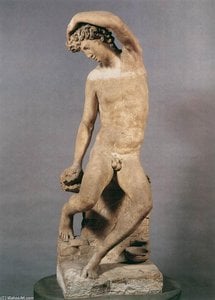
Benvenuto Cellini, 1500 – 1571

Benvenuto Cellinis malerier: De 80 mest berømte værker, rangeret

Benvenuto Cellini's mest berømte maleri er Saltkar (1540) i Kunsthistorisches Museum, Wien. Sammen med Jupiter (1545) og Crucifix (detail) (1562) udgør de de tre værker, som alle kender. Vores katalog indeholder 80 værker af Benvenuto Cellini; de 80 nedenfor er dem, som verden ser mest på, hver med årstal, det museum der opbevarer det, og hvorfor det er betydningsfuldt.

Rangordnet efter vores popularitetsscore, som kombinerer søgninger, besøg og ordrer for hvert værk. Opdateret oktober 2026. Hvert mesterværk på denne side kan bestilles som en håndmalet oliereproduktion i museumskvalitet eller som et kunsttryk i den størrelse, du vælger.

Portræt af Benvenuto Cellini
Benvenuto Cellini · 1500 – 1571
Født · død
1500 – 1571, Firenze
Bevægelse
Manierisme
Værker i vores katalog
80
Mest kendte
Saltkar (1540)
Flest værker hos
Museo Nazionale del Bargello

De 10 mest berømte Benvenuto Cellini malerier

Saltkar (1540) af Benvenuto Cellini
1

Saltkar

1540 · Guld · Kunsthistorisches Museum, Wien

Salieraen, udført i forgyldt guld, blev skabt af Benvenuto Cellini til Frans 1. af Frankrig mellem 1540 og 1543. Fra hans efterkommer Karl 9. gik den videre til ærkehertug Ferdinand 2. Dette saltkar fremviser en storslået allegori over Jorden og det evige samspil mellem land og hav. På dens højre side finder man en mand med en trefork og et skib, der symboliserende vandet, mens venstre side prydes af en…

Jupiter (1545) af Benvenuto Cellini
2

Jupiter

1545 · Bronze · Museo Nazionale del Bargello, Firenze

To stand before this magnificent depiction of Jupiter is to confront raw, untamed power rendered in the enduring majesty of bronze. This sculpture does not merely represent a god; it embodies the very force of nature—the thunderous authority that commands the skies. The figure dominates the space with an undeniable gravitas, his musculature meticulously articulated as if carved by the passing winds themselves. Observe the dynamic tension captured in his…

Crucifix (detail) (1562) af Benvenuto Cellini
3

Crucifix (detail)

1562 · Marble · Monasterio de San Lorenzo, El Escorial

Benvenuto Cellini’s 1562 marble sculpture, “Crucifix (detail),” is not merely a depiction of Christ’s suffering; it’s an immersive experience. Within the dimly lit confines of El Escorial, this intimate piece draws you into a world of profound emotion and technical mastery – a testament to Cellini's genius as both goldsmith and sculptor. The sculpture immediately commands attention with its stark realism and the palpable sense of agony radiating from the…

Morion for Francesco I de' Medici (1570) af Benvenuto Cellini
4

Morion for Francesco I de' Medici

1570 · Metalwork · Staatliche Kunstsammlungen, Dresden

In the grand tapestry of the Italian Renaissance, few objects capture the intersection of martial prestige and artistic virtuosity as profoundly as the Morion for Francesco I de' Medici. Created in 1570 by the legendary polymath Benvenuto Cellini, this is far more than a mere piece of protective headgear; it is a sculptural triumph rendered in metal. As a quintessential example of Mannerism, the Morion rejects the tranquil equilibrium of…

Danae and her Son Perseus (1545) af Benvenuto Cellini
5

Danae and her Son Perseus

1545 · Bronze · Museo Nazionale del Bargello, Firenze

The bronze sculpture Danae and her Son Perseus by Benvenuto Cellini captures a moment of divine intersection. Created between 1545 and 1553 for Cosimo I de' Medici, the work depicts the mythological event where Zeus visits Danae in the form of golden rain. This Renaissance Mannerist piece resides within the Museo Nazionale del Bargello in Florence, Italy.

Nymph of Fontainebleau (1542) af Benvenuto Cellini
6

Nymph of Fontainebleau

1542 · Bronze · Louvre, Paris

To stand before the Nymph of Fontainebleau is to step directly into the languid, sun-dappled world of the Italian Renaissance. This magnificent bronze sculpture by Benvenuto Cellini does more than merely depict a figure; it captures an ephemeral moment—a breath held between slumber and awakening. The central subject, the reclining nymph, embodies a timeless confluence of nature’s grace and mythological mystery. Her pose is one of exquisite repose, her body…

Perseus (1540) af Benvenuto Cellini
7

Perseus

1540 · Bronze · Museo Nazionale del Bargello, Firenze

In the heart of Florence’s Piazza della Signoria, amidst the architectural grandeur of the Loggia dei Lanzi, stands a masterpiece that captures the very essence of Mannerist tension and heroic triumph. Benvenuto Cellini’s Perseus is not merely a sculpture; it is a dramatic performance frozen in bronze. Created between 1545 and 1554, this monumental work depicts the legendary hero Perseus at the climactic moment of his mythic journey. He stands…

Bust of Cosimo I (detail) (1546) af Benvenuto Cellini
8

Bust of Cosimo I (detail)

1546 · Bronze · Museo Nazionale del Bargello, Firenze

In the heart of the Italian Renaissance, where the pursuit of beauty met the raw ambition of political power, Benvenuto Cellini forged a masterpiece that transcends mere portraiture. The Bust of Cosimo I is not simply a likeness of the Grand Duke of Tuscany; it is a profound meditation on authority, captured in the enduring medium of bronze. To gaze upon this work is to step into the vibrant, often…

Bust of Bindo Altoviti (1549) af Benvenuto Cellini
9

Bust of Bindo Altoviti

Benvenuto Cellini's “Bust of Bindo Altoviti,” crafted in 1549, isn’t merely a sculpted likeness; it’s a meticulously constructed window into the heart of Renaissance Florence. This bronze masterpiece, now residing within the Isabella Stewart Gardner Museum in Boston, transcends simple portraiture to become a profound meditation on wealth, power, and the very essence of human representation. The subject, Bindo Altoviti, a prominent Florentine banker and astute political player, is rendered…

Perseus (1540) af Benvenuto Cellini
10

Perseus

1540 · Bronze · Museo Nazionale del Bargello, Firenze

In the heart of Florence, amidst the architectural grandeur of the Loggia dei Lanzi, stands a masterpiece that captures the very essence of human struggle and divine victory. Benvenuto Cellini’s Perseus is not merely a sculpture; it is a breathtaking moment frozen in bronze, a dramatic climax of Greek mythology brought to life through the virtuosity of the Mannerist style. As the light dances across its aged patina, the figure…

Benvenuto Cellini, malerier 11 til 80

Crucifix (1562) af Benvenuto Cellini
#11

Crucifix

1562 · Monasterio de San Lorenzo

Benvenuto Cellini's 1562 bronze sculpture, “Crucifix,” stands as a profoundly moving testament to the Renaissance spirit—a collision of technical mastery, religious fervor, and deeply personal emotion. More than…

Nymph of Fontainebleau (detail) (1542) af Benvenuto Cellini
#12

Nymph of Fontainebleau (detail)

1542 · Louvre

To encounter a detail of Benvenuto Cellini’s Nymph of Fontainebleau is to step directly into the languid, sun-dappled world of the High Renaissance. This exquisite bronze sculpture, cast…

Minerva (1545) af Benvenuto Cellini
#13

Minerva

1545 · Museo Nazionale del Bargello

Benvenuto Cellini's "Minerva," crafted in 1545 during the twilight of the High Renaissance, isn't merely a bronze sculpture; it’s a meticulously constructed embodiment of Roman virtue and strategic…

Mercury (1545) af Benvenuto Cellini
#14

Mercury

1545 · Museo Nazionale del Bargello

In the quiet presence of this bronze, one senses the shifting tides of the sixteenth century. Completed in 1545, Benvenuto Cellini’s Mercury marks a departure from the balanced…

Nymph of Fontainebleau (detail) (1542) af Benvenuto Cellini
#15

Nymph of Fontainebleau (detail)

1542 · Louvre

The bronze surface holds a quiet tension, as if the figure might stir at any moment. In this close view, we find ourselves pressed against the smooth, cool…

Perseus (15) (1545) af Benvenuto Cellini
#16

Perseus (15)

1545 · Loggia dei Lanzi

To stand before Benvenuto Cellini's monumental bronze, Perseus with the Head of Medusa, is to be arrested by a moment of sublime, violent apotheosis. This sculpture does not…

Salt Cellar (1540) af Benvenuto Cellini
#17

Salt Cellar

1540 · Kunsthistorisches Museum

To behold Benvenuto Cellini’s Saliera is to step into the opulent heart of the Italian Renaissance, where the boundaries between functional object and profound sculpture dissolve entirely. This…

Salt Cellar (detail) (1540) af Benvenuto Cellini
#18

Salt Cellar (detail)

1540 · Kunsthistorisches Museum

In the hallowed halls of the Kunsthistorisches Museum in Vienna, there exists a treasure that transcends the boundaries of mere functional objecthood to become a profound meditation on…

Ganymede (1548) af Benvenuto Cellini
#19

Ganymede

1548 · Museo Nazionale del Bargello

To stand before Benvenuto Cellini's bronze depiction of Ganymede is to encounter a moment suspended between divine beauty and youthful vulnerability. This masterful sculpture, executed in the vibrant…

Salt Cellar (detail) (1540) af Benvenuto Cellini
#20

Salt Cellar (detail)

1540 · Kunsthistorisches Museum

In the grand tapestry of the Italian Renaissance, few objects capture the audacious spirit of Mannerism as vibrantly as Benvenuto Cellini’s Salt Cellar. Created around 1543 for the…

Bust of Cosimo I (detail) (1546) af Benvenuto Cellini
#21

Bust of Cosimo I (detail)

1546 · Museo Nazionale del Bargello

To gaze upon this detail from Benvenuto Cellini's Bust of Cosimo I is to encounter not merely a portrait, but a monumental declaration of power and Renaissance ambition.…

Juno (1540) af Benvenuto Cellini
#22

Juno

1540 · Louvre

To stand before Benvenuto Cellini's depiction of Juno is to encounter a moment suspended in the golden haze of the Renaissance. This work, executed around 1540, transcends mere…

Tag den med hjem →
Salt Cellar (1540) af Benvenuto Cellini
#23

Salt Cellar

1540 · Kunsthistorisches Museum

Benvenuto Cellini's Salt Cellar, a shimmering testament to the heights of Renaissance goldsmithing, isn’t merely a container for salt; it’s a miniature cosmos, a meticulously crafted allegory brimming…

Perseus (1545) af Benvenuto Cellini
#24

Perseus

1545 · Loggia dei Lanzi

In the heart of Florence’s sun-drenched Loggia dei Lanzi, where the shadows of history dance against classical stone, stands one of the most arresting spectacles of the Mannerist…

Medallion with Leda and the Swan (1520) af Benvenuto Cellini
#25

Medallion with Leda and the Swan

1520 · Museo Nazionale del Bargello

In the delicate, shimmering expanse of Benvenuto Cellini’s Medallion with Leda and the Swan, we find a moment suspended in the amber of the Italian Renaissance. Created around…

Cope pin (front and back) (1520) af Benvenuto Cellini
#26

Cope pin (front and back)

1520 · British Museum

Benvenuto Cellini's "Cope Pin (Front and Back)," crafted in 1520 for Pope Clement VII, transcends the boundaries of a mere decorative object. It’s a potent emblem of Renaissance…

Perseus (1545) af Benvenuto Cellini
#27

Perseus

1545 · Loggia dei Lanzi

In the heart of Florence, within the sun-drenched, open-air majesty of the Loggia dei Lanzi, stands a masterpiece that captures the very essence of human struggle and divine…

Salt Cellar (8) (1540) af Benvenuto Cellini
#28

Salt Cellar (8)

1540 · Kunsthistorisches Museum

Benvenuto Cellini's “Salt Cellar” (Saliera), completed in 1543 for King Francis I of France, isn’t merely a container for seasoning; it’s a shimmering embodiment of the Renaissance spirit—a…

Salt Cellar (detail) (16) (1540) af Benvenuto Cellini
#29

Salt Cellar (detail) (16)

1540 · Kunsthistorisches Museum

The Kunsthistorisches Museum in Vienna holds within its walls not merely a container for salt, but a miniature drama sculpted in gold and enamel—Benvenuto Cellini’s celebrated “Salt Cellar,”…

Tag den med hjem →
Apollo and Hyacinth (detail) (1540) af Benvenuto Cellini
#30

Apollo and Hyacinth (detail)

1540 · Museo Nazionale del Bargello

Benvenuto Cellini’s “Apollo and Hyacinth,” a meticulously rendered marble sculpture from the 1540s, isn’t merely a depiction of a tragic myth; it’s a profound meditation on loss, divine…

Perseus (detail) (12) (1545) af Benvenuto Cellini
#31

Perseus (detail) (12)

1545 · Loggia dei Lanzi

Benvenuto Cellini's “Perseus (detail) (12)” isn’t merely a depiction of the legendary hero; it’s a visceral embodiment of Renaissance ambition, technical prowess, and a profound engagement with classical…

Perseus (detail) (1545) af Benvenuto Cellini
#32

Perseus (detail)

1545 · Loggia dei Lanzi

In the sun-drenched, open-air majesty of Florence’s Loggia dei Lanzi, a breathtaking moment remains frozen in bronze. Benvenuto Cellini’s Perseus with the Head of Medusa is far more…

Perseus (detail) (1545) af Benvenuto Cellini
#33

Perseus (detail)

1545 · Loggia dei Lanzi

The bronze sculpture of Perseus holding aloft the severed head of Medusa, attributed to Benvenuto Cellini and crafted in 1545, stands as a monumental achievement within the Italian…

Shield (1572) af Benvenuto Cellini
#34

Shield

1572 · Louvre

Benvenuto Cellini’s “Shield,” completed in 1572, stands as a captivating emblem of the High Renaissance's waning influence and the burgeoning Mannerist style. Currently residing within the Louvre Museum’s…

Perseus (1540) af Benvenuto Cellini
#35

Perseus

1540 · Museo Nazionale del Bargello

The bronze sculpture titled Perseus was created by the artist Benvenuto Cellini. This work depicts the mythological figure Perseus holding the severed head of the Gorgon Medusa. The…

Seal of Cardinal Ippolito d'Este (1540) af Benvenuto Cellini
#36

Seal of Cardinal Ippolito d'Este

1540 · Musée des Beaux-Arts de Lyon

Commissioned in 1540 by Cardinal Ippolito d'Este, this relief sculpture embodies the stylistic shifts of the Florentine Renaissance. Moving away from the balanced ideals of the High Renaissance,…

Cope pin (profile) (1520) af Benvenuto Cellini
#37

Cope pin (profile)

1520 · British Museum

The drawing titled Cope pin (profile) was executed by the goldsmith and sculptor Benvenuto Cellini. Created around 1520, the work represents a detailed design for a liturgical accessory.…

Tag den med hjem →
Gunpowder case (1570) af Benvenuto Cellini
#38

Gunpowder case

1570 · Royal Armouries

In the grand tapestry of the Italian Renaissance, few names resonate with as much dramatic flair and technical virtuosity as Benvenuto Cellini. His Gunpowder Case, crafted around 1570,…

Portrait Bust of Cosimo I de af Benvenuto Cellini
#39

Portrait Bust of Cosimo I de

Legion of Honor

In the heart of the Italian Renaissance, where the shadows of political intrigue met the brilliance of humanistic discovery, Benvenuto Cellini breathed life into metal. His Portrait Bust…

Shield for Francesco I de' Medici (detail) (11) (1570) af Benvenuto Cellini
#40

Shield for Francesco I de' Medici (detail) (11)

1570 · Staatliche Kunstsammlungen

To gaze upon the Shield for Francesco I de' Medici is to step directly into the heart of the Italian Renaissance, where metalwork transcends utility to become high…

Shield for Francesco I de' Medici (detail) (1570) af Benvenuto Cellini
#44

Shield for Francesco I de' Medici (detail)

1570 · Staatliche Kunstsammlungen

To behold the detail of Benvenuto Cellini’s Shield for Francesco I de' Medici is to step directly into the shimmering heart of the late Renaissance. Crafted around 1570,…

Ganymede (8) (1548) af Benvenuto Cellini
#45

Ganymede (8)

1548 · Museo Nazionale del Bargello

The bronze surface catches the light in a way that mimics the warmth of skin. In this 1548 sculpture, a youth stands caught in a sudden, muscular tension.…

Project for a seal (1563) af Benvenuto Cellini
#46

Project for a seal

1563 · British Museum

In the heart of the sixteenth century, amidst the vibrant intellectual ferment of Florence, Benvenuto Cellini breathed life into a vision that would serve as a cornerstone for…

Tag den med hjem →
Shield for Francesco I de' Medici (1570) af Benvenuto Cellini
#47

Shield for Francesco I de' Medici

1570 · Staatliche Kunstsammlungen

To behold Benvenuto Cellini’s Shield for Francesco I de' Medici is to step directly into the shimmering heart of the High Renaissance. Crafted around 1570, this extraordinary metalwork…

Bust of Cosimo I (1546) af Benvenuto Cellini
#48

Bust of Cosimo I

1546 · Museo Nazionale del Bargello

Benvenuto Cellini’s “Bust of Cosimo I” is more than just a sculpted likeness; it's a meticulously crafted embodiment of power, ambition, and the very spirit of the Florentine…

Medal of Alessandro de' Medici (1530) af Benvenuto Cellini
#49

Medal of Alessandro de' Medici

1530 · Museo Nazionale del Bargello

Benvenuto Cellini’s “Medal of Alessandro de’ Medici,” a small yet profoundly resonant bronze piece from 1530, isn’t merely a commemorative coin; it’s a meticulously crafted microcosm of Renaissance…

Tag den med hjem →
The Rescue of Andromeda (detail) (1550) af Benvenuto Cellini
#50

The Rescue of Andromeda (detail)

1550 · Museo Nazionale del Bargello

Benvenuto Cellini’s “The Rescue of Andromeda” is more than just a bronze sculpture; it's a vibrant tableau of myth, heroism, and the burgeoning spirit of Mannerism that defined…

'Giulio' of Alessandro de' Medici (1530) af Benvenuto Cellini
#51

'Giulio' of Alessandro de' Medici

1530 · Museo Nazionale del Bargello

A Glimpse Into Renaissance Power: Examining Cellini’s ‘Giulio’ of Alessandro de' Medici Coin The coin before us—a diminutive yet powerfully resonant testament to the Florentine Renaissance—represents more than…

Salt Cellar (detail) (1540) af Benvenuto Cellini
#52

Salt Cellar (detail)

1540 · Kunsthistorisches Museum

The Kunsthistorisches Museum in Vienna holds within its walls an object that transcends mere tableware – it is a miniature world, a shimmering testament to the ambition and…

Bestil en håndmalet kopi →
Francis I, King of France (1537) af Benvenuto Cellini
#53

Francis I, King of France

1537 · Fitzwilliam-museet

In the delicate interplay of light and shadow upon a polished bronze surface, one encounters more than just a portrait; one meets the very essence of Renaissance sovereignty.…

Medal of Clement VII (obverse) (1534) af Benvenuto Cellini
#54

Medal of Clement VII (obverse)

1534 · Museo Nazionale del Bargello

In the delicate, shimmering expanse of a mere four centimeters, Benvenuto Cellini managed to capture the weight of an entire era. The Medal of Clement VII is not…

Shield for Francesco I de' Medici (detail) (1570) af Benvenuto Cellini
#58

Shield for Francesco I de' Medici (detail)

1570 · Staatliche Kunstsammlungen

The Shield for Francesco I de' Medici (detail), created around 1570, stands as a mesmerizing testament to the extraordinary skill of Benvenuto Cellini. This intricately crafted metalwork piece…

Bust of Cosimo I (detail) (1546) af Benvenuto Cellini
#59

Bust of Cosimo I (detail)

1546 · Museo Nazionale del Bargello

The bronze figure of Cosimo I de' Medici, ruler of Florence and Tuscany, stands as more than just a portrait; it is a meticulously crafted embodiment of Renaissance…

Tag den med hjem →
Shield for Francesco I de' Medici (detail) (10) (1570) af Benvenuto Cellini
#60

Shield for Francesco I de' Medici (detail) (10)

1570 · Staatliche Kunstsammlungen

In the heart of the late Renaissance, where the boundaries between craftsmanship and fine art dissolved into pure brilliance, Benvenuto Cellini forged a legacy that transcends mere metalwork.…

Salt Cellar (detail) (1540) af Benvenuto Cellini
#61

Salt Cellar (detail)

1540 · Kunsthistorisches Museum

The Salt Cellar of Francis I, crafted by the Florentine master Benvenuto Cellini between 1540 and 1543, is more than just a container for salt and pepper; it's…

Tag den med hjem →
Apollo and Hyacinth (1540) af Benvenuto Cellini
#62

Apollo and Hyacinth

1540 · Museo Nazionale del Bargello

In the hallowed halls of the Galleria Nazionale di Palazzo Barberini in Rome, there exists a profound meditation on loss and divine grace captured in stone. Benvenuto Cellini’s…

Salt Cellar (detail) (1540) af Benvenuto Cellini
#63

Salt Cellar (detail)

1540 · Kunsthistorisches Museum

Within the hallowed halls of the Kunsthistorisches Museum in Vienna resides a treasure that transcends its humble function as a salt cellar – Benvenuto Cellini’s 1543 masterpiece, “Salt…

Bestil en håndmalet kopi →
Study for a seal (1560) af Benvenuto Cellini
#64

Study for a seal

1560 · Louvre

The world of 16th-century Florence pulsed with artistic fervor, a crucible where innovation and tradition intertwined to forge masterpieces that continue to captivate us centuries later. Among the…

Tag den med hjem →
The Rescue of Andromeda (detail) (1550) af Benvenuto Cellini
#66

The Rescue of Andromeda (detail)

1550 · Museo Nazionale del Bargello

Benvenuto Cellini's "The Rescue of Andromeda" – specifically this exquisite detail depicting the confrontation between Perseus and Medusa – is more than just a bronze sculpture; it’s a…

Helmet (1570) af Benvenuto Cellini
#67

Helmet

1570 · Louvre

Benvenuto Cellini’s “Helmet,” created around 1570, stands as a testament to the zenith of Renaissance artistry and the flamboyant spirit of Mannerism. More than just armor—though exquisitely crafted—it…

Bestil en reproduktion →
Perseus (13) (1540) af Benvenuto Cellini
#68

Perseus (13)

1540 · Museo Nazionale del Bargello

Benvenuto Cellini's bronze sculpture of Perseus with the Head of Medusa, completed around 1545-1554 for Duke Cosimo I de’ Medici in Florence, is far more than a mere…

Bestil en reproduktion →
The Rescue of Andromeda (1550) af Benvenuto Cellini
#69

The Rescue of Andromeda

1550 · Museo Nazionale del Bargello

Benvenuto Cellini's "The Rescue of Andromeda," completed around 1550, is more than just a bronze sculpture; it’s a vibrant distillation of Renaissance mythology, a testament to the artist’s…

Ganymede (1540) af Benvenuto Cellini
#71

Ganymede

1540 · Museo Nazionale del Bargello

Benvenuto Cellini’s sculpture of Ganymede stands as a testament to the artistic fervor of the Mannerist period, capturing a moment of profound beauty and spiritual contemplation. Executed in…

Medal of François I (1540) af Benvenuto Cellini
#72

Medal of François I

1540 · Museo Nazionale del Bargello

Benvenuto Cellini’s *Medal of François I*, created in 1543 for the French King, stands as a pinnacle of Renaissance sculpture and embodies the stylistic fervor of Mannerism. More…

Narcissus (1540) af Benvenuto Cellini
#73

Narcissus

1540 · Museo Nazionale del Bargello

Narcissus by CELLINI, Benvenuto Benvenuto Cellini’s “Narcissus” stands as a testament to Renaissance artistry—a sculpture embodying both meticulous craftsmanship and profound contemplation. Created in 1540 during Cellini's prolific…

Tag den med hjem →
Sakuki Greyhound af Benvenuto Cellini
#79

Sakuki Greyhound

Museo Nazionale del Bargello

In the quiet halls of the Museo Nazionale del Bargello in Florence, there exists a small yet profound masterpiece that commands attention through its sheer vitality. Benvenuto Cellini’s…

Satyr af Benvenuto Cellini
#80

Satyr

National Gallery of Art

Benvenuto Cellini’s “Satyr” stands as a captivating testament to the dynamism and sensual allure that defined the Mannerist period in Italian art. Completed around 1545, this bronze sculpture…

Tag den med hjem →

Benvenuto Cellinis malerier efter periode

De motiver Benvenuto Cellini malede mest

De fire motiver, der optræder hyppigst blandt disse mesterværker, med det fineste eksempel på hvert enkelt.

Hvor kan man se Benvenuto Cellini's malerier

De 8 museer, der rummer flest af malerierne på denne side.

Museum By Værker af Benvenuto Cellini Malerier fra denne liste
Museo Nazionale del Bargello, FirenzeMuseo Nazionale del Bargello Firenze 30 Jupiter, Danae and her Son Perseus, Perseus
Kunsthistorisches Museum, WienKunsthistorisches Museum Wien 10 Saltkar, Salt Cellar, Salt Cellar (detail)
Louvre, ParisLouvre Paris 7 Nymph of Fontainebleau, Nymph of Fontainebleau (detail), Nymph of Fontainebleau (detail)
Loggia dei Lanzi, FirenzeLoggia dei Lanzi Firenze 7 Perseus (15), Perseus, Perseus
Staatliche Kunstsammlungen, DresdenStaatliche Kunstsammlungen Dresden 6 Morion for Francesco I de' Medici, Shield for Francesco I de' Medici (detail) (11), Shield for Francesco I de' Medici (detail)
Museo Glauco Lombardi, ParmaMuseo Glauco Lombardi Parma 5 Gold and amethyst parure donated by Maria Luigia to one of her palace ladies, Detail of the gold and amethyst parure donated by Maria Luigia to one of her palace ladies, Gold and amethyst parure donated by Maria Luigia to one of her palace ladies
British Museum, LondonBritish Museum London 3 Cope pin (front and back), Cope pin (profile), Project for a seal
Monasterio de San Lorenzo, El EscorialMonasterio de San Lorenzo El Escorial 2 Crucifix (detail), Crucifix

Benvenuto Cellinis mest berømte maleri fra hvert årti

  1. 1520s
    Medallion with Leda and the Swan (1520) af Benvenuto Cellini
    Rang 25 ud af 80

    Medallion with Leda and the Swan

    Alder 20 – 29 · Museo Nazionale del Bargello

    In the delicate, shimmering expanse of Benvenuto Cellini’s Medallion with Leda and the Swan, we find a moment suspended in the amber of the Italian Renaissance. Created around…

  2. 1530s
  3. 1540s
    Saltkar (1540) af Benvenuto Cellini
    Rang 1 ud af 80

    Saltkar

    Alder 40 – 49 · Kunsthistorisches Museum

    Salieraen, udført i forgyldt guld, blev skabt af Benvenuto Cellini til Frans 1. af Frankrig mellem 1540 og 1543. Fra hans efterkommer Karl 9. gik den videre til…

  4. 1550s
    The Rescue of Andromeda (detail) (1550) af Benvenuto Cellini
    Nr. 50 ud af 80

    The Rescue of Andromeda (detail)

    Alder 50 – 59 · Museo Nazionale del Bargello

    Benvenuto Cellini’s “The Rescue of Andromeda” is more than just a bronze sculpture; it's a vibrant tableau of myth, heroism, and the burgeoning spirit of Mannerism that defined…

  5. 1560s
    Crucifix (detail) (1562) af Benvenuto Cellini
    #3 ud af 80

    Crucifix (detail)

    Alder 60 – 69 · Monasterio de San Lorenzo

    Benvenuto Cellini’s 1562 marble sculpture, “Crucifix (detail),” is not merely a depiction of Christ’s suffering; it’s an immersive experience. Within the dimly lit confines of El Escorial, this…

  6. 1570s
    Morion for Francesco I de' Medici (1570) af Benvenuto Cellini
    Nr. 4 ud af 80

    Morion for Francesco I de' Medici

    Alder 70 – 71 · Staatliche Kunstsammlungen

    In the grand tapestry of the Italian Renaissance, few objects capture the intersection of martial prestige and artistic virtuosity as profoundly as the Morion for Francesco I de'…

Spørgsmål om Benvenuto Cellinis malerier

Hvad er Benvenuto Cellinis mest berømte maleri?Vis svaret

Saltkar (1540), Kunsthistorisches Museum, Wien. Derefter følger Jupiter (1545) og Crucifix (detail) (1562).

Hvor gammel var Benvenuto Cellini, da Saltkar blev malet?Vis svaret

40 år gammel: Saltkar er fra 1540, og Benvenuto Cellini blev født i 1500.

Hvad er de 10 bedste malerier af Benvenuto Cellini?Vis svaret

Saltkar, Jupiter, Crucifix (detail), Morion for Francesco I de' Medici, Danae and her Son Perseus, Nymph of Fontainebleau, Perseus, Bust of Cosimo I (detail), Bust of Bindo Altoviti og Perseus. Ranglisten ovenfor angiver årstallet og museet for hver af dem.

Hvor mange malerier har Benvenuto Cellini lavet?Vis svaret

Vores katalog indeholder 80 værker af Benvenuto Cellini, dateret fra 1520 til 1570.

Hvor findes Benvenuto Cellinis mest berømte malerier?Vis svaret

De fleste af dem findes i Museo Nazionale del Bargello (Firenze), Kunsthistorisches Museum (Wien) og Louvre (Paris). Tabellen ovenfor lister museerne enkeltvis.

Hvornår malede Benvenuto Cellini sine mest berømte værker?Vis svaret

I 1540s: 42 af de 80 værker på denne side stammer fra denne periode, herunder Saltkar.

Hvad er Benvenuto Cellini's tidligste og seneste berømte malerier?Vis svaret

Det tidligste på denne side er Medallion with Leda and the Swan (1520), det seneste Morion for Francesco I de' Medici (1570).

Hvad malede Benvenuto Cellini oftest?Vis svaret

Renaissance (37), Mythology (34) og Sculpture (23), blandt de 80 værker på denne side.

Hvilket medie brugte Benvenuto Cellini mest?Vis svaret

Bronze: 30 ud af de 80 værker på denne side.

Hvilken kunstretning tilhører Benvenuto Cellini?Vis svaret

Manierisme, som malerierne på denne side viser.

Hvilke Benvenuto Cellini-malerier kan jeg se på Museo Nazionale del Bargello?Vis svaret

Jupiter, Danae and her Son Perseus og Perseus er blandt de 30 værker på denne side, som er i Museo Nazionale del Bargello, Firenze's samling.

Kan jeg købe en reproduktion af et maleri af Benvenuto Cellini?Vis svaret

Ja. Hvert maleri på denne side kan bestilles som en håndmalet oliereproduktion i museums kvalitet eller som et kunstprint i den størrelse, du ønsker, direkte fra maleriets egen side.

Om Benvenuto Cellini

Benvenuto Cellini: Renæssancens Mangfoldige Geni

Benvenuto Cellini, født i Firenze i 1500 og død samme sted i 1571, var mere end blot en kunstner; han var et levende udtryk for renæssancens ånd – en mand af mange talenter, der med lige stor virtuositet mestrede guldsmedekunsten, skulpturen, musikken og skriften. Hans liv, som han selv beskriver i sin berømte selvbiografi, var et dramatisk møde mellem kunstnerisk genialitet, personlig ambition og en konstant strøm af eventyr og kontroverser. Cellini indbegriber den manieristiske æstetik – en stilperiode der fulgte den høje renæssance, kendetegnet ved sin dramatiske flair, elegante kompleksitet og en vis grad af kunstnerisk frihed.

Fra Musik til Metal: En Kunstners Barndom og Lære

Cellinis familie havde stærke musikalske rødder; hans far var musiker og instrumentmager. I første omgang blev Benvenuto opfordret til at følge i faderens fodspor, men hans passion lå utvivlsomt i den visuelle kunst. Ved blot femten års alderen overbeviste han sin far om at lade ham blive lærling hos Antonio di Sandro, en anset guldsmed kendt som Marcone. Denne beslutning markerede begyndelsen på Cellinis formelle kunstneriske uddannelse, selvom den ikke altid var uden vanskeligheder. Hans ungdom var præget af et temperament, der ofte førte til konflikter – allerede i sekstenårsalderen blev han involveret i en slåskamp og måtte forlade Firenze for en tid. Oplevelserne i Siena under guldsmeden Fracastoro bidrog til hans voksende færdigheder, men det var i Rom, at Cellini virkelig begyndte at udfolde sit kunstneriske potentiale.

Mesterværker i Guld og Bronze: Cellinis Kunstneriske Geni

Cellinis navn er for mange synonymt med hans enestående guldsmedearbejde. Det mest berømte eksempel er uden tvivl Saltcellaren, et overdådigt sølvmesterværk bestilt af kong Frans I af Frankrig og nu udstillet på Kunsthistorisches Museum i Wien. Værket er et sandt vidnesbyrd om Cellinis evne til at skabe intrikate detaljer og dynamiske figurer, der tilsammen fortæller en fascinerende historie. Men hans talent strakte sig langt ud over guldsmedekunsten. Hans bronzeskulptur "Perseus med Medusas hoved" er et ikonisk eksempel på Cellinis beherskelse af form og dramatisk komposition. Skildringen af Perseus' triumf, mens han holder det afhuggede hoved af Medusa, fanger bevægelse og følelser med en imponerende kraft. Andre bemærkelsesværdige værker omfatter guldmedaljonen af Leda og svanen, der demonstrerer Cellinis evne til at kombinere klassisk mytologi med udsøgt håndværk, samt designtegninger som den for et segl, bevaret på British Museum.

En Selvbiografi som Kunstværk: Et Indblik i Renæssancens Sjæl

Ud over sine kunstneriske præstationer er Cellini også kendt for sin selvbiografi, *Vita*. Dette værk er ikke blot en beretning om hans eget liv; det er et uvurderligt dokument, der giver et unikt indblik i renæssancens kunstneriske miljø, de politiske intriger og den sociale dynamik. Skrevet med en usædvanlig åbenhed og ofte med en vis grad af selvpromovering, skildrer *Vita* Cellinis oplevelser som soldat, musiker og kunstner på en levende og underholdende måde. Selvom hans beretning kan være farvet af hans egne biases, er den et uvurderligt kildemateriale for historikere og kunsthistorikere, der søger at forstå renæssancens ånd.

Arv og Betydning: En Polymaths Varige Indflydelse

Benvenuto Cellini døde i Firenze i 1571, efterlod sig et imponerende kunstnerisk bagland og en selvbiografi, der fortsat fascinerer læsere den dag i dag. Han repræsenterer det renæssancemenneske – en person med bredde interesser og evner, drevet af ambition og en urokkelig tro på sin egen talent. Hans værker er fejret for deres skønhed, håndværksmæssige kvalitet og dramatiske kraft, hvilket cementerer hans plads som en central figur i vestlig kunsthistorie. Cellini var ikke blot en dygtig kunstner; han var en formidler af renæssancens idealer – et symbol på kreativitet, innovation og den menneskelige ånds ubegrænsede potentiale.

Alle 80 værker af Benvenuto Cellini →