Antoon van Dyck, 1599 – 1641

Antoon van Dyck: The 100 Most Famous Paintings

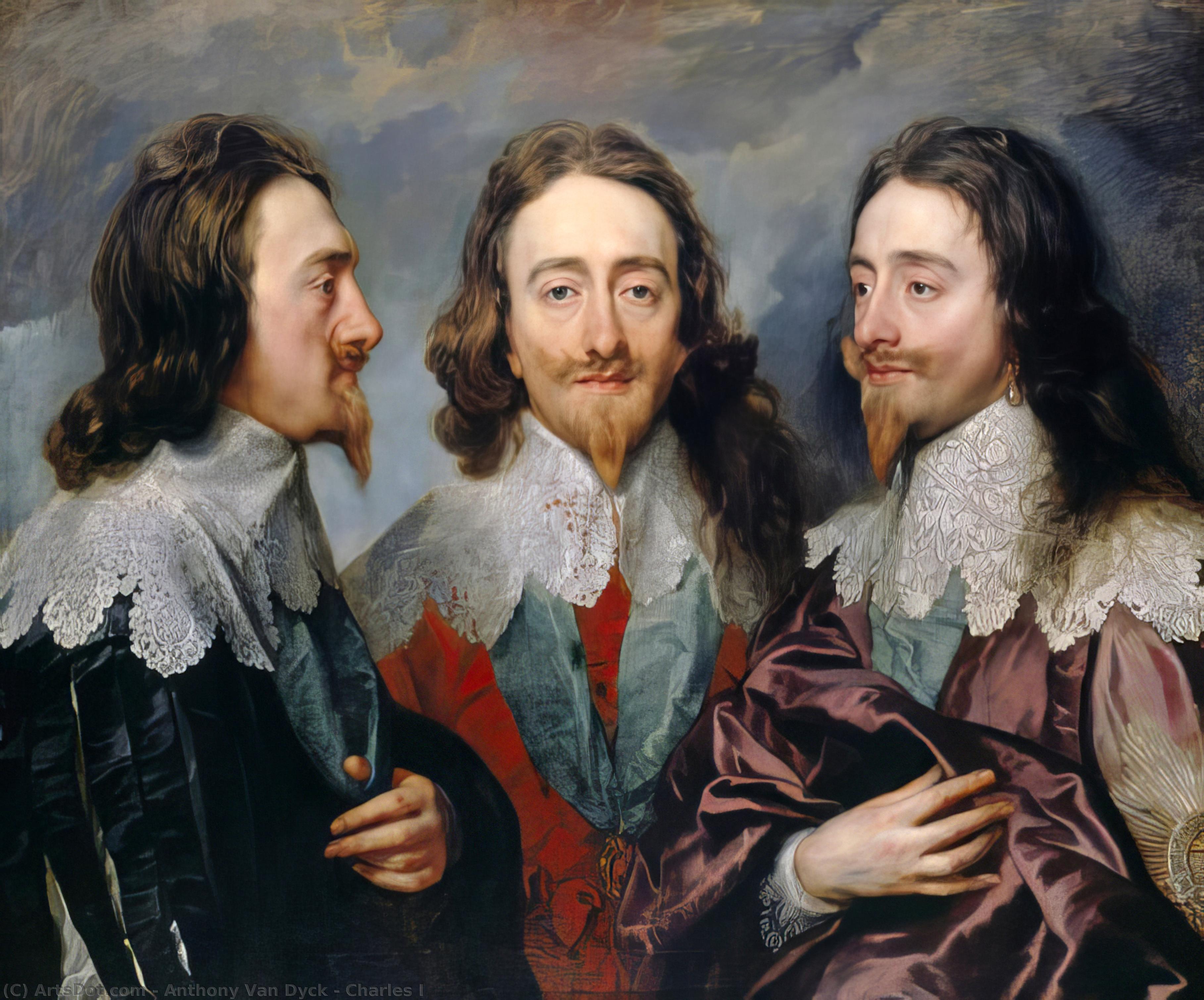
Charles I i Tre Positioner (1636) is the most famous painting by Antoon van Dyck, held by the Royal Collection in London. Family Portrait (1621) and Portrait of Isabella Clara Eugenia as Widow (1628) are the next two works the world knows best. From the 1,620 works of Antoon van Dyck in our catalogue, here are the 100 that collectors and museum visitors look at most, with the year, the museum and the story of each.

Rangordnet efter vores popularitetsscore, som kombinerer søgninger, besøg og ordrer for hvert værk. Opdateret oktober 2026. Every masterpiece on this page can be ordered as a museum-quality, hand-painted oil reproduction or a fine art print, at the size you choose.

Portræt af Antoon van Dyck
Antoon van Dyck · 1599 – 1641
Født · død
1599 – 1641, Antwerpen
Bevægelse
Baroque style
Værker i vores katalog
1.620
Mest kendte
Charles I i Tre Positioner (1636)
Flest værker hos
Bavarian State Painting Collections

Top 10: Antoon van Dyck's best-known paintings

Charles I i Tre Positioner (1636) af Antoon van Dyck
1

Charles I i Tre Positioner

1636 · Olie på lærred · Royal Collection, London

"Charles I i tre positioner" er et bemærkelsesværdigt eksempel på Sir Anthony van Dycks mesterskab inden for barokkens portrætkunst. Dette oliemaleri på lærred, malet i 1635-1636, fremviser den flamske kunstners ekstraordinære færdigheder og hans dybe indflydelse på europæisk kunst. Maleriet er en del af den prestigefyldte Royal Collection og hænger i dag i King's Drawing Room på Windsor Castle.

Family Portrait (1621) af Antoon van Dyck
2

Family Portrait

1621 · Oil On Canvas · Hermitage Museum, Sankt Petersborg

To gaze upon this magnificent family portrait is to step directly into the opulent drawing rooms of the early seventeenth century. It captures not merely three figures—a distinguished man, an elegant woman, and a cherished child—but an entire tableau of familial pride and societal standing. The composition itself speaks volumes; every fold of fabric, every carefully placed hand, contributes to a narrative of enduring connection. The rich, dramatic red background…

Portrait of Isabella Clara Eugenia as Widow (1628) af Antoon van Dyck
3

Portrait of Isabella Clara Eugenia as Widow

1628 · Oil On Canvas · Museo de Arte de Ponce, Ponce

Sir Anthony van Dyck’s “Portrait of Isabella Clara Eugenia as Widow” is more than just a depiction of a noblewoman; it's a carefully constructed tableau of power, grief, and the enduring legacy of a formidable ruler. Painted in 1628, this oil-on-canvas work transports us to the heart of the Spanish Netherlands during a period of significant political and personal upheaval. Isabella Clara Eugenia, daughter of Philip II of Spain, served…

Jacqueline van Caestre (1622) af Antoon van Dyck
4

Jacqueline van Caestre

1622 · Oil On Panel · Royal Łazienki Museum, Warszawa

The portrait of Jacqueline van Caestre, painted in 1622 by the masterful Sir Anthony van Dyck, is more than a mere likeness; it’s a carefully constructed tableau of wealth, status, and burgeoning domesticity. Within its richly layered composition lies a captivating story of a noblewoman navigating the complexities of marriage and courtly life in 17th-century Antwerp. Van Dyck, already establishing his signature style—characterized by an almost sensual realism and a…

Susanna og de ældre (1622) af Antoon van Dyck
5

Susanna og de ældre

1622 · Olie på lærred · Alte Pinakothek, München

Et Barokmesterværk: Susanna og Ældste Mænd af Anthony van Dyck Sir Anthony van Dycks “Susanna og Ældste Mænd” transcenderer ren portrætmaleri; det indkapsler barokperiodens storhed og intellektuelle glød, hvilket cementerer dets plads som en af Van Dycks mest fejrede bedrifter. Dette monumentale lærred, malet i 1622 og målt til 194 x 144 cm, findes i øjeblikket på Alte Pinakothek-museet i München, Tyskland, og giver besøgende et sjældent indblik i den…

Genoese Noblewoman (1622) af Antoon van Dyck
6

Genoese Noblewoman

1622 · Oil On Canvas · The Frick Collection, New York City

Anthony van Dyck's "Genoese Noblewoman," painted circa 1625-1627, isn’t merely a portrait; it’s a meticulously crafted window into the opulent world of early 17th-century Genoa. This captivating work, now residing within The Frick Collection in New York City, offers a rare glimpse into the refined tastes and social dynamics of a wealthy Italian city-state – a vibrant hub of commerce, art, and cultural exchange during a period of immense artistic…

Henrietta Maria (1635) af Antoon van Dyck
7

Henrietta Maria

1635 · Oil On Canvas

The gaze of Henrietta Maria meets the viewer through this commanding portrait by Anthony van Dyck. Executed in 1636, the work captures Henrietta Maria of France in a moment of poised royal dignity. She exists here as the Queen of England, a position she holds through her marriage to King Charles I. The painting functions as a visual declaration of her status and her presence within the English court.

Portrait of Queen Henrietta-Maria (1638) af Antoon van Dyck
8

Portrait of Queen Henrietta-Maria

1638 · Oil On Canvas · Hermitage Museum, Sankt Petersborg

To stand before this portrait is to encounter the quiet gravity of the seventeenth-century English court. The Queen stands slightly off-center, her figure anchored by the heavy weight of crimson drapery and a draped table. There is a certain stillness here, a moment caught between the political tensions of 1638 and the personal dignity of the sitter. Van Dyck uses light to sculpt her form, pulling her face and chest…

The healing of the paralytic (1620) af Antoon van Dyck
9

The healing of the paralytic

1620 · Oil On Canvas · Bavarian State Painting Collections, München

In this oil painting, titled The healing of the paralytic, Anthony van Dyck explores a moment of profound spiritual intervention. The work, which dates to about 1618-20, captures the immediate aftermath of a miracle. We find ourselves witnessing the precise instant of transition between infirmity and restoration. The subject matter is drawn from the New Testament, specifically the narratives found in Matthew 9:1-8 or John 5:1-15.

Portrait of Alexandre della Faille (1589-1653) (1632) af Antoon van Dyck
10

Portrait of Alexandre della Faille (1589-1653)

1632 · Oil On Canvas · De Kongelige Skønkunstmuseer i Belgien, Bruxelles

A dignified three-quarter length portrait, this work captures a middle-aged man positioned centrally against a dark, atmospheric background. The subject, Alexandre della Faille, is rendered with a sense of quiet authority and formal composure. A voluminous white ruff collar acts as the primary focal point, its crisp texture contrasting sharply against the heavy, dark fabric of his cloak. Light enters from the upper left, casting soft shadows across the right…

The rest of the Antoon van Dyck ranking, 11 to 100

The Pietà (1629) af Antoon van Dyck
#12

The Pietà

1629 · Museo del Prado

Step closer to observe the weight of this scene. In this 1629 composition, we find the Virgin Mary cradling the limp, pale body of Christ. The arrangement is…

Order a reproduction →
The Lomellini Family (1627) af Antoon van Dyck
#16

The Lomellini Family

1627

To stand before 'The Lomellini Family' is to step directly into the gilded drawing rooms of 17th-century Genoese aristocracy. Anthony van Dyck, a painter whose elegance seemed to…

Order a reproduction →
Moses and the Brazen Serpent (1530) af Antoon van Dyck
#19

Moses and the Brazen Serpent

1530

Moses and the Brazen Serpent by Anthony van Dyck captures a moment of divine intervention from the Book of Numbers. The oil painting on canvas depicts the biblical…

Samson and Delilah (1630) af Antoon van Dyck
#24

Samson and Delilah

1630 · Kunsthistorisches Museum

In the grand tapestry of the Flemish Baroque, few moments capture the tension between divine strength and human frailty as poignantly as Sir Anthony van Dyck’s Samson and…

Bring it home →
Charles I (1600-49) on Horseback (1635) af Antoon van Dyck
#26

Charles I (1600-49) on Horseback

1635 · Hampton Court Palace

The scene unfolds with the commanding presence of Charles I (1600-49) on Horseback, a work by the artist Anthony van Dyck. Created in 1635, the portrait captures the…

Bring it home →
Cupid and Psyche (1640) af Antoon van Dyck
#27

Cupid and Psyche

1640 · Royal Collection

Anthony van Dyck's "Cupid and Psyche," painted in 1640, is more than just a depiction of a mythological romance; it’s a distillation of the Baroque spirit – a…

Bring it home →
Queen Henrietta Maria of England (1620) af Antoon van Dyck
#28

Queen Henrietta Maria of England

1620 · Bavarian State Painting Collections

In this three-quarter length portrait, Anthony van Dyck positions Queen Henrietta Maria of England slightly off-center. This subtle shift creates a quiet tension within the frame. A luminous…

Bring it home →
Queen Henrietta Maria of England (1639) af Antoon van Dyck
#30

Queen Henrietta Maria of England

1639 · Statens Museum for Kunst

Queen Henrietta Maria of England, painted by Anthony van Dyck, captures the queen consort of Charles I. Dated 1636, the portrait presents the woman who was born in…

Bring it home →
Saint Sebastian and the Angel (1631) af Antoon van Dyck
#31

Saint Sebastian and the Angel

1631 · Galleria Sabauda

A diagonal line cuts through the composition, pulling the eye from the descending angel down to the slumped, pale form of Saint Sebastian. The saint’s skin is luminous,…

Bring it home →
Portrait of a painter (1640) af Antoon van Dyck
#32

Portrait of a painter

1640 · Kunstmuseum Basel

We are looking at Portrait of a painter, a work by Sir Anthony van Dyck. Created about 1640, this piece presents a man whose identity is tied closely…

Bring it home →
St Jerome (1620) af Antoon van Dyck
#35

St Jerome

1620 · Nationalmuseum

The composition centers on the muscular, elderly figure of St. Jerome, positioned in a wilderness setting. His torso is partially exposed, draped in a voluminous red cloth that…

Order a reproduction →
Venetia, Lady Digby (1634) af Antoon van Dyck
#36

Venetia, Lady Digby

1634

To stand before this magnificent portrait is to step directly into the dramatic heart of the seventeenth century. Sir Anthony van Dyck’s depiction of Venetia, Lady Digby is…

Order a reproduction →
Crucifixion (1622) af Antoon van Dyck
#38

Crucifixion

1622 · San Zaccaria

Sir Anthony van Dyck's 1622 depiction of the Crucifixion is not merely a representation of a biblical event; it’s a visceral exploration of human suffering and spiritual anguish,…

Commission a hand-painted copy →
Ottaviano Canevari (1627) af Antoon van Dyck
#40

Ottaviano Canevari

1627 · The Frick Collection

Sir Anthony van Dyck’s 1627 portrait of Ottaviano Canevari is more than simply a likeness; it's a carefully constructed tableau of intellect, status, and the quiet dignity of…

Bring it home →
Lamentation of Christ (1620) af Antoon van Dyck
#41

Lamentation of Christ

1620 · Bavarian State Painting Collections

In this 1620 work, we find ourselves drawn into a tight, pyramidal arrangement of figures that centers entirely on the lifeless body of Christ. A heavy, sacred silence…

Commission a hand-painted copy →
Saint Sebastian (1620) af Antoon van Dyck
#44

Saint Sebastian

1620 · Bavarian State Painting Collections

The oil on canvas known as Saint Sebastian is an artwork by Anthony van Dyck. Created about 1620, the painting captures a moment of martyrdom. The figure is…

Order a reproduction →
Sir Kenelm Digby (1640) af Antoon van Dyck
#47

Sir Kenelm Digby

1640 · National Portrait Gallery

To gaze upon this portrait of Sir Kenelm Digby is to step directly into the opulent, charged atmosphere of the early seventeenth century English court. The subject, depicted…

Commission a hand-painted copy →
Portrait of an Old Man (1618) af Antoon van Dyck
#49

Portrait of an Old Man

1618 · Liechtenstein Museum

Sir Anthony van Dyck's "Portrait of an Old Man," painted circa 1618, is more than a simple likeness; it’s a profound meditation on time, wisdom, and the quiet…

Order a reproduction →
Portrait of a Man (1922) af Antoon van Dyck
#50

Portrait of a Man

1922 · Bavarian State Painting Collections

This work is a Portrait of a Man by the Flemish Baroque artist Anthony van Dyck. Dated 1922, the painting presents a formal, full-length composition. The subject is…

Order a reproduction →
Charles I in Three Positions (1636) af Antoon van Dyck
#51

Charles I in Three Positions

1636 · Royal Collection

In the grand tapestry of Baroque portraiture, few works command the room with as much quiet authority as Sir Anthony van Dyck’s “Charles I in Three Positions.” Completed…

Order a reproduction →
Portrait of a Genovese Gentleman (1621) af Antoon van Dyck
#53

Portrait of a Genovese Gentleman

1621 · Gemäldegalerie

To stand before this portrait is to step directly into the opulent, sophisticated world of early 17th-century European aristocracy. Sir Anthony van Dyck, the Flemish master whose brushstrokes…

Order a reproduction →
Portrait of a Man (1618) af Antoon van Dyck
#58

Portrait of a Man

1618 · Liechtenstein Museum

Sir Anthony van Dyck's “Portrait of a Man,” painted circa 1618-1619, is not merely a likeness; it’s a carefully constructed meditation on presence and authority. This small yet…

Commission a hand-painted copy →
Marie de Raet (1631) af Antoon van Dyck
#59

Marie de Raet

1631 · Wallace Collection

To stand before Marie de Raet is to be enveloped in the profound stillness of the early seventeenth century. This magnificent portrait by Sir Anthony van Dyck, dating…

Bring it home →
The Virgin and Child (1631) af Antoon van Dyck
#63

The Virgin and Child

1631 · Buckingham Palace

In this Baroque oil painting, the Virgin Mary is positioned at the center of a pyramidal structure, cradling the Christ Child. She wears a rose-colored tunic beneath a…

Order a reproduction →
Lord George Stuart (1638) af Antoon van Dyck
#64

Lord George Stuart

1638 · National Portrait Gallery

To gaze upon this portrait of Lord George Stuart is to step directly into the opulent, yet deeply thoughtful, world of early seventeenth-century English aristocracy. Sir Anthony van…

Order a reproduction →
Queen Henrietta Maria (1760) af Antoon van Dyck
#66

Queen Henrietta Maria

1760 · Birmingham Museum and Art Gallery

In this oil on canvas work from 1636, Sir Anthony van Dyck presents Queen Henrietta Maria. The portrait captures the queen, who lived from 1609 to 1669, with…

Order a reproduction →
The Polish Rider (1620) af Antoon van Dyck
#69

The Polish Rider

1620 · Bavarian State Painting Collections

The composition is dominated by the diagonal movement of the horse and rider. This movement creates a sense of forward momentum across the canvas. The subject is a…

Order a reproduction →
Dronning Henrietta Maria (1636) af Antoon van Dyck
#73

Dronning Henrietta Maria

1636 · Metropolitan Museum of Art

Anthony van Dycks ”Dronning Henrietta Maria”, malet i 1636, er mere end blot et portræt; det er et omhyggeligt udformet dokument over magt, tro og den indviklede diplomatiske…

Order a reproduction →
Lady Dacre (1633) af Antoon van Dyck
#74

Lady Dacre

1633 · Denver Art Museum

Sir Anthony van Dyck’s “Lady Dacre” is not merely a portrait; it's a carefully constructed tableau of Renaissance elegance, imbued with subtle symbolism and the quiet dignity of…

Commission a hand-painted copy →
Charles i - (16) af Antoon van Dyck
#76

Charles i - (16)

In this work, titled Charles i - (16), Anthony van Dyck presents a formal bust-length depiction of the monarch. The subject is Charles I, who held the titles…

Bring it home →
Deux têtes d (1650) af Antoon van Dyck
#77

Deux têtes d

1650 · Museum of Fine Arts

Sir Anthony van Dyck's "Deux têtes d" – literally, “Two Heads” – is not merely a painting; it’s an arresting tableau of psychological depth and subtle drama. Completed…

Bring it home →
Christ carrying the Cross af Antoon van Dyck
#83

Christ carrying the Cross

Musei di Strada Nuova

In Christ carrying the Cross by Anthony van Dyck, the viewer is met with a tightly cropped, bust-length portrait. The composition focuses entirely on the upper torso and…

Bring it home →
Ecce Homo (1626) af Antoon van Dyck
#85

Ecce Homo

1626 · The Barber Institute of Fine Arts

Sir Anthony van Dyck’s “Ecce Homo,” painted circa 1625-1626, is not merely a depiction of Christ before Pilate; it's an intensely human portrayal of sorrow, humility, and the…

Bring it home →
Margareta Snyders (1620) af Antoon van Dyck
#86

Margareta Snyders

1620

To gaze upon Anthony Van Dyck's portrait of Margareta Snyders is to step directly into the opulent, emotionally charged world of the early seventeenth century. This painting, executed…

Bring it home →
Margareta de Vos (1620) af Antoon van Dyck
#87

Margareta de Vos

1620 · The Frick Collection

Sir Anthony van Dyck’s “Margareta de Vos,” painted in 1620, is more than just a portrait; it's a meticulously crafted tableau of wealth, status, and subtle artistry. This…

Order a reproduction →
Portrait of a Man (1618) af Antoon van Dyck
#90

Portrait of a Man

1618 · Liechtenstein Museum

In this formal portrait from 1618, Sir Anthony van Dyck presents a man positioned slightly off-center, facing forward to engage the viewer directly. The composition is characterized by…

Bring it home →
Portrait of James Hamilton (1630) af Antoon van Dyck
#92

Portrait of James Hamilton

1630 · Liechtenstein Museum

A Noble Presence: Unveiling Anthony van Dyck’s Portrait of James Hamilton The image before you captures not merely a likeness, but the very essence of 17th-century power and…

Bring it home →
Charles I på hesterydning (1635) af Antoon van Dyck
#93

Charles I på hesterydning

1635 · National Gallery

Sir Anthony van Dycks portrætbilled "Charles I på Hest" er mere end blot et billede; det er en fascinerende indblik i en magtfuld æra og et eksempel på…

Bring it home →
The Lomellini Family (1626) af Antoon van Dyck
#96

The Lomellini Family

1626 · National Gallery of Scotland

To stand before Sir Anthony van Dyck’s “The Lomellini Family” is to step directly into the gilded drawing rooms of seventeenth-century Genoa, where the air feels heavy with…

Commission a hand-painted copy →
Samson og Delilah (1620) af Antoon van Dyck
#97

Samson og Delilah

1620

Samson og Delilah – Et Dramatisk Øjeblik fra Biblen Afspejlet i Rubens’ Eftertryk Denne betagende olie på lærredsdrakt udfolder sig i 1620 og præsenterer et ikonisk billede af…

Order a reproduction →
Abraham and Isaac (1617) af Antoon van Dyck
#98

Abraham and Isaac

1617 · National Gallery Prague

Sir Anthony van Dyck's “Abraham and Isaac,” painted in 1617, is more than just a biblical scene; it’s a profound meditation on faith, obedience, and the agonizing weight…

Commission a hand-painted copy →
Portrait of Anna van Craesbecke (1635) af Antoon van Dyck
#99

Portrait of Anna van Craesbecke

1635 · Staatliche Museen

Sir Anthony van Dyck’s “Portrait of Anna van Craesbecke,” painted in 1635, is more than just a likeness; it's a meticulously crafted tableau of aristocratic life and the…

Bring it home →
A wooded ridge (1630) af Antoon van Dyck
#100

A wooded ridge

1630 · Art Gallery of South Australia

Sir Anthony van Dyck's "A Wooded Ridge," painted around 1630, isn’t merely a landscape; it’s an invitation into a hushed and contemplative realm. This evocative piece, rendered in…

Bring it home →

Antoon van Dyck's paintings by period

The subjects Antoon van Dyck painted most

The four subjects that return most often among these masterpieces, with the finest example of each.

Where to see Antoon van Dyck's paintings

De 8 museer, der rummer flest af malerierne på denne side.

Museum By Værker af Antoon van Dyck Malerier fra denne liste
Bavarian State Painting Collections, MünchenBavarian State Painting Collections München 57 The healing of the paralytic, Equestrian Portrait of Charles I of England, Queen Henrietta Maria of England
Hermitage Museum, Sankt PetersborgHermitage Museum Sankt Petersborg 25 Family Portrait, Portrait of Queen Henrietta-Maria, Portrait of Charles I, King of the Great Britain (1600-1649)
Royal Collection, LondonRoyal Collection London 29 Charles I i Tre Positioner, Cupid and Psyche, Charles I in Three Positions
Liechtenstein Museum, WienLiechtenstein Museum Wien 23 Portrait of an Old Man, Portrait of a Man, Portrait of a Man
The Frick Collection, New York CityThe Frick Collection New York City 8 Genoese Noblewoman, Ottaviano Canevari, Margareta de Vos
Wallace Collection, LondonWallace Collection London 9 Queen Henrietta Maria, Marie de Raet
National Portrait Gallery, LondonNational Portrait Gallery London 6 Sir Kenelm Digby, Lord George Stuart
Scottish National Portrait Gallery, EdinburghScottish National Portrait Gallery Edinburgh 5 Thomas Hamilton, 2nd Earl of Haddington, 1600 - 1640, Alexander Henderson (c.1583–1646), Presbyterian Divine and Diplomatist

Antoon van Dyck through the decades: one masterpiece for each

  1. 1610s
    The Martyrdom of Saint Sebastian (1616) af Antoon van Dyck
    #45 of 100

    The Martyrdom of Saint Sebastian

    Alder 11 – 20 · Bavarian State Painting Collections

    The Martyrdom of Saint Sebastian emerges from the shadows of the Baroque era, a religious work that captures a moment of profound transition. In this painting by Sir…

  2. 1620s
    Family Portrait (1621) af Antoon van Dyck
    #2 of 100

    Family Portrait

    Alder 21 – 30 · Hermitage Museum

    To gaze upon this magnificent family portrait is to step directly into the opulent drawing rooms of the early seventeenth century. It captures not merely three figures—a distinguished…

  3. 1630s
    Charles I i Tre Positioner (1636) af Antoon van Dyck
    Rank 1 / 100

    Charles I i Tre Positioner

    Alder 31 – 40 · Royal Collection

    "Charles I i tre positioner" er et bemærkelsesværdigt eksempel på Sir Anthony van Dycks mesterskab inden for barokkens portrætkunst. Dette oliemaleri på lærred, malet i 1635-1636, fremviser den…

  4. 1640s
    Queen Henrietta Maria (1640) af Antoon van Dyck
    No. 17 of 100

    Queen Henrietta Maria

    Alder 41 – 42 · Wallace Collection

    The Queen sits in a moment of quiet poise, her figure angled slightly away from the viewer to create a sense of graceful movement. She is draped in…

Antoon van Dyck's paintings: frequently asked questions

What is the most famous Antoon van Dyck painting?Show the answer

Charles I i Tre Positioner (1636), Royal Collection, London. Next come Family Portrait (1621) and Portrait of Isabella Clara Eugenia as Widow (1628).

At what age did Antoon van Dyck paint Charles I i Tre Positioner?Show the answer

37 years old: Charles I i Tre Positioner dates from 1636 and Antoon van Dyck was born in 1599.

Which are the 10 most famous Antoon van Dyck paintings?Show the answer

Charles I i Tre Positioner, Family Portrait, Portrait of Isabella Clara Eugenia as Widow, Jacqueline van Caestre, Susanna og de ældre, Genoese Noblewoman, Henrietta Maria, Portrait of Queen Henrietta-Maria, The healing of the paralytic og Portrait of Alexandre della Faille (1589-1653). The ranking above gives the year and the museum of each.

How many paintings by Antoon van Dyck are there?Show the answer

Our catalogue lists 1,620 works by Antoon van Dyck, dated from 1616 to 1641.

Where can I see the most famous Antoon van Dyck paintings?Show the answer

Most of them are in Bavarian State Painting Collections (München), Hermitage Museum (Sankt Petersborg) og Royal Collection (London). The table above lists the museums one by one.

In which period did Antoon van Dyck paint the best-known works?Show the answer

In 1630s: 44 of the 100 works on this page date from then, among them Charles I i Tre Positioner.

What is the earliest famous Antoon van Dyck painting, and the latest?Show the answer

The earliest on this page is The Martyrdom of Saint Sebastian (1616), the latest Portrait of Prince Charles Louis, Elector Palatine (1641).

What subjects did Antoon van Dyck paint?Show the answer

Man (22), Portraiture (21) og Portrait (17), among the 100 works on this page.

What did Antoon van Dyck paint on, and with what?Show the answer

Oil On Canvas: 75 of the 100 works on this page.

Which movement does Antoon van Dyck's art belong to?Show the answer

Baroque style, as the paintings on this page show.

What Antoon van Dyck paintings does the Bavarian State Painting Collections hold?Show the answer

The healing of the paralytic, Equestrian Portrait of Charles I of England og Queen Henrietta Maria of England are among the 10 works on this page held by the Bavarian State Painting Collections, München.

Where can I buy a Antoon van Dyck reproduction?Show the answer

Yes. Every painting on this page can be ordered as a museum-quality, hand-painted oil reproduction or a fine art print, in the size you choose, from the painting's own page.

Antoon van Dyck: biography

Tidligt liv, familie og uddannelse

Født i Antwerpen den 22. marts 1599 trådte Sir Anthony Van Dyck ind i en verden præget af handel og håndværk. Han var det syvende af tolv børn født af Maria Cupers og silkehandleren Francoïs "Frans" van Dijck. Denne opvækst i et velstående hjem gav et stabilt fundament for et barn, der udviste en tidlig og ekstraordinær evne til de visuelle kunstarter. Allerede i tiårsalderen begyndte hans formelle uddannelse inden for malerkunsten under vejledning af Hendrick van Balen den Ældre.

Hans udvikling var præget af en lynhurtig opstigning gennem de traditionelle strukturer i den flamske kunstverden. Han dvælede ikke længe i rollen som blot en studerende; hans tekniske dygtighed gjorde det muligt for ham at bevæge sig mod selvstændighed med en bemærkelsesværdig hastighed. Den 18. oktober 1617 nåede han den betydningsfulde milepæl at blive optaget i Antwerpen som mester i Sankt Lukas-gildet. Denne tidlige professionelle anerkendelse signalerede ankomsten af et talent, der snart ville bevæge sig langt ud over sin fødeby.

  • Selvportræt (dateret 1613–14)

Indflydelsen fra Peter Paul Rubens

Sir Anthony Van Dyck's karriereforløb blev fundamentalt formet af hans tid i atelieret hos Peter Paul Rubens. Der var ikke tale om et simpelt læretid; den unge kunstner steg i graderne og blev mesterens vigtigste assistent, en position der krævede både teknisk præcision og en sjælden evne til at absorbere et komplekst visuelt sprog. Rubens anerkendte selv sin proteges ekstraordinære talent og beskrev den unge mand som den dygtigste af alle sine elever. Dette mentorforhold gav Sir Anthony Van Dyck en direkte forbindelse til det syttende århundredes førende kunstneriske strømninger og gav ham mulighed for at observere skabelsen af monumentale kompositioner og ledelsen af et ekstremt produktivt værksted på tætteste hold.

Rubens' indflydelse på den unge kunstner manifesterede sig gennem et fælles fokus på ekspression, gestik og form. Selvom Sir Anthony Van Dyck senere ville udvikle en mere raffineret og behersket stil, blev hans tidlige år brugt på at efterligne sin mentors energi og skarpe observationsevne. Han lærte at oversætte livets vitalitet til olie og pigment – en færdighed, der senere gjorde det muligt for ham at bevæge sig væk fra Rubens' robuste energi mod noget langt mere subtilt. Det tekniske fundament, der blev lagt i dette atelier, gav ham de nødvendige redskaber til hans efterfølgende storhedstid ved Europas kongelige hoffer.

Kunstneriske rejser i Italien og Genova

Allerede i slutningen af teenageårene havde Sir Anthony Van Dyck opnået succes som selvstændig maler, en bedrift der gav ham det nødvendige momentum til at bryde ud af de lave landes grænser. Mellem 1621 og slutningen af 1627 rejste han gennem Italien, en periode der ville forfine hans evne til at navigere i den europæiske adels komplekse sociale hierarkier. Denne rejseperiode var mindre en tilfældig vandring og mere en strategisk fordybelse i det visuelle sprog, som den mediterrane elite benyttede sig af.

Hans ophold i Genova viste sig at være af særlig betydning. Her fandt han en fast kundekreds blandt de genovesiske patriciere, hvis aristokratiske sans passede perfekt til hans spirende stil. Hans skildringer af disse lokale familier blev modtaget med stor begejstring i byen og etablerede ham som en maler, der var i stand til at indfange den specifikke værdighed, som det høje samfund krævede. I disse portrætter bevægede han sig ud over den rene lighed for at adressere både den sociale status og den dybere karakter hos sine modeller.

Tjeneste ved det engelske hof

Sir Anthony Van Dyck’s forbindelse til den engelske krone begyndte længe før hans permanente bosættelse i London. Allerede i 1620 trådte han ind i tjenesten hos kong James I, en kortvarig affære, der varslede de omfattende rejser gennem Italien og de spanske Nederlande. Disse år med konstant bevægelse og varierede bestillingsopgaver forberedte ham på en langt mere skelsættende ankomst. Da han i 1632 vendte tilbage til England, slog han sig ned ved det hof, hvor hans ry som en uovertruffen portrætmaler for alvor skulle cementeres. Det samme år blev han udnævnt til 'principalle Paynter in Ordinary to their Majesties', en prestigefyldt position, der placerede ham i selve hjertet af det kongelige liv.

Hans tilstedeværelse i London transformerede monarkiets visuelle sprog fundamentalt. Han bevægede sig væk fra fortidens stive og formelle portrætkunst og valgte i stedet at præsentere kongen og aristokratiet med en følelse af ubesværet elegance og autoritet. Hans evne til at indfange selve essensen af sine modeller gjorde ham til Englands førende hofmaler. Han nøjedes ikke blot med at registrere ansigter; han konstruerede et billede af magt, som ville præge det engelske hof i generationer. Hans værker fra denne periode tilførte en følelse af værdighed og fatning, der kom til at definere hele epokens æstetik.

Teknik og kunstnerisk stil

Sir Anthony Van Dyck besad en teknisk alsidighed, der gjorde det muligt for ham at bevæge sig ubesværet mellem oliemalingens tykke, teksturelle lag og raderingens præcise og skarpe linjer. Som en dygtig tegner forstod han den strukturelle nødvendighed af et stærkt fundament, før farven blev påført. Hans kompositioner hvilede ofte på en mesterlig organisering af form, hvor han udnyttede et dramatisk samspil mellem lys og skygge til at definere sine subjekters konturer. Denne brug af chiaroscuro skabte en følelse af dybde og volumen, især i hans religiøse og mytologiske scener, hvor lyset syntes at bryde frem fra mørket for at fremhæve en specifik gestus eller et ansigtsudtryk.

Hans palet var kendetegnet ved dybe, mættede farver og en næsten overjordisk opmærksomhed på teksturernes mindste detaljer. Uanset om han skildrede silkens glans eller hudens subtile tekstur, bevarede han en raffinement, der undgik den tunghed, man ofte ser hos hans samtidige. Denne præcision var ikke forbeholdt hans formelle bestillingsværker; hans evne til at indfange både bevægelse og karakter gjorde ham i stand til at excellere i mange genrer – fra de storslåede mytologiske fortællinger til den intime, psykologiske dybde i hans portrætter. Han besad et særligt talent for at bruge lyset til at antyde et subjekts sociale status eller indre temperament, ofte ved at benytte sig af svungne bevægelser og nøje udvalgte baggrunde til at indramme det enkelte menneske.

Eftermæle og vedvarende indflydelse

Sir Anthony Van Dycks død i London den 9. december 1641 markerede afslutningen på en karriere, der allerede havde omformet det visuelle sprog ved de europæiske hoffer. Som en efterfølger til Peter Paul Rubens trådte han frem som det 17. århundredes mest betydningsfulde flamske maler. Hans tilstedeværelse ved det engelske hof etablerede en standard for portrætkunsten, som ville præge kunstens retning i de efterfølgende 150 år. Han besad en helt særlig evne til at definere sine subjekters sociale status og karakter gennem en raffineret teknik, der blev en målestok for efterfølgende generationer af malere.

Hans indflydelse rakte langt ud over Englands grænser. Gennem hele perioden udøvede hans værker en dyb påvirkning på den kunst, der blev skabt over hele Europa. Denne rækkevidde blev næret af hans alsidighed, idet han bevægede sig ubesværet mellem de religiøse fortællingers krav og aristokratiets sofistikerede behov. Han nøjedes ikke blot med at registrere ansigter; han konstruerede et billede af autoritet og ynde, som blev den foretrukne æstetik for dem, der ønskede at udstråle magt og status.

  • Charles I in Three Positions (1636)
  • The Balbi Children
  • Self-Portrait (1622)

Alle 1620 værker af Antoon van Dyck →