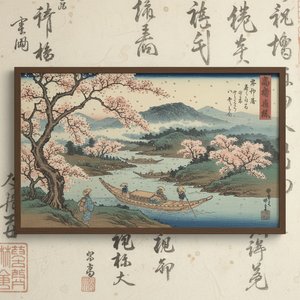
Komuro Suiun (1874 – 1945): Echoes of Tani Bunchō’s Legacy
Komuro Suiun, born August 31, 1874, in Komuro Village, Saitama Prefecture, Japan, was a prolific Japanese painter who dedicated his life to preserving and furthering the artistic traditions established by Tani Bunchō (1805 – 1895). His oeuvre represents a crucial link between Edo-period aesthetics and modern sensibilities, embodying a profound respect for nature’s grandeur and spiritual depth. Suiun's unwavering commitment to mastering Bunchō’s distinctive style cemented his place as one of the foremost practitioners of Nanga painting—a genre blending Buddhist iconography with landscape depictions—leaving an indelible mark on Japanese art history.
- Early Life & Artistic Training:
Suiun’s formative years were marked by a deep connection to his family's involvement in the textile industry. He received initial artistic instruction from his father, who instilled in him a foundational understanding of brushwork and compositional principles. Recognizing Suiun’s exceptional talent, he was subsequently apprenticed to renowned Nanga painter Ōitsu Yoshitoshi, solidifying his grasp on Bunchō’s stylistic nuances.
The Influence of Tani Bunchō: A Stylistic Paradigm
Tani Bunchō stands as Suiun's primary artistic inspiration. Bunchō championed a revolutionary approach to landscape painting—known as *yakusha-ga*—which prioritized capturing the essence of nature through expressive brushstrokes and subtle tonal gradations rather than slavishly replicating visual reality. Bunchō’s technique emphasized conveying emotion and spiritual contemplation, mirroring Buddhist ideals of serenity and interconnectedness. Suiun meticulously studied Bunchō's works, absorbing his compositional strategies and mastering his distinctive brushwork—characterized by loose, flowing lines and a masterful manipulation of ink tones to evoke atmospheric conditions.
- Key Characteristics of Suiun’s Style:
Suiun’s paintings consistently demonstrate Bunchō's stylistic hallmarks:
- Emphasis on Atmospheric Perspective: Suiun skillfully employed tonal variations to simulate the effects of mist and haze, creating a palpable sense of depth and tranquility.
- Dynamic Brushwork: Loose, energetic brushstrokes conveyed movement and vitality, capturing the dynamism inherent in natural landscapes.
- Symbolic Representation: Suiun incorporated Buddhist symbols—such as cranes and lotus blossoms—into his compositions to imbue them with spiritual significance.
Notable Works & Artistic Achievements
Suiun produced an impressive body of work spanning several decades, showcasing a remarkable versatility in subject matter and technique. Among his most celebrated paintings is “Yōrō Waterfall,” a breathtaking depiction of Yōrō Falls in Saitama Prefecture—a location deeply resonant with Buddhist pilgrimage traditions. This monumental canvas exemplifies Suiun’s mastery of yakusha-ga, capturing the waterfall's cascading torrents and misty surroundings with unparalleled sensitivity to light and color. His meticulous attention to detail and profound understanding of Buddhist iconography solidified his reputation as a leading figure in Nanga painting.
- Legacy & Significance:
Komuro Suiun’s artistic legacy extends beyond the individual paintings he created; he served as a crucial conduit for transmitting Bunchō's stylistic principles to subsequent generations of artists. His unwavering dedication to preserving and innovating upon Nanga tradition ensured that Bunchō’s vision—a harmonious blend of art and spirituality—continued to inspire Japanese painters throughout the 20th century. Suiun’s work remains a testament to the enduring power of landscape painting as a vehicle for conveying profound philosophical ideas.
Further Exploration
For more information on Komuro Suiun and his artistic contributions, consult resources such as Wikipedia (
) and online art databases featuring images of his paintings.