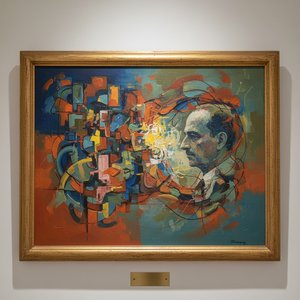
The Dual Soul of an Albacete Creator
In the vibrant cultural landscape of contemporary Spain, few figures command as much unexpected affection as Joaquín Reyes Cano. Born in the historic city of Albacete on August 16, 1974, Reyes Cano has masterfully navigated the delicate boundary between the ephemeral joy of comedy and the enduring permanence of fine art. His artistic identity was forged through a rigorous formal education at the University of Castile-La Mancha, where he honed his skills in fine arts. This academic foundation provided him with much more than technical proficiency; it gifted him with a unique way of seeing the world—a perspective that would later allow him to bridge the gap between the satirical sketches of television and the delicate, expressive strokes of an illustrator’s pen.From Satirical Stages to Illustrative Mastery
The ascent of Reyes Cano into the public consciousness was marked by a brilliant explosion of humor in the early 2000s. Through iconic programs such as La Hora Chanante and Muchachada Nui, he became a central figure of the celebrated "Trío de Albacete," captivating audiences across Spain with an irreverent, observational wit that felt both deeply local and universally relatable. Yet, even as his face graced television screens and his comedic timing defined an era of Spanish humor, his hands remained intimately connected to the craft of drawing. His work as an illustrator for esteemed publications like El Barco de Vapor and Zumo de lluvia revealed a different facet of his genius: a capacity for capturing human character through playful exaggeration and meticulous detail. In his illustrations, the observational humor of his comedic persona finds a visual language, where caricature becomes a sophisticated tool for emotional resonance and narrative depth.A Visionary Tribute and Artistic Legacy
As his career has matured, Reyes Cano has moved beyond the boundaries of mere entertainment to engage in profound artistic dialogues that honor the masters of the past. One of his most significant achievements lies in his ability to undertake projects of great reverence, notably through his evocative work, Dog Barking to the Moon, a poignant tribute to the legendary Mexican artist Rufino Tamayo. This project demonstrates a shift toward a more contemplative and symbolic style, proving that his artistic sensibilities are capable of profound gravity and respect for art history. His legacy is not defined by a single medium, but by a seamless integration of disciplines: the comedic timing that captures the fleeting essence of human folly, the illustrative precision that brings characters to life on the page, and the fine art sensibility that seeks to honor the giants of the past. Through this synthesis, Joaquín Reyes Cano continues to enrich the Spanish cultural tapestry, reminding us that laughter and beauty are often two sides of the same creative coin.Spørgsmål og svar
I hvilken historisk periode arbejdede Joaquín Reyes Cano?
Joaquín Reyes Cano var aktiv i Contemporary-perioden. Denne periode placerer kunstnerens virke i en historisk kontekst.
Findes der en komplet liste over Joaquín Reyes Canos værker?
Se alle værker af Joaquín Reyes Cano på denne hjemmeside på kunstnerens Alle kunstværker-side.
Kan jeg gennemse Joaquín Reyes Canos værker efter kunstretning?
De kunstretninger, som Joaquín Reyes Cano arbejdede inden for, kan findes på kunstnerens Alle kunstretninger-side, hvor værkerne er grupperet efter kunstretning.
Hvordan finder jeg alle værker af Joaquín Reyes Cano inden for et bestemt medie?
Siden Alle medier grupperer Joaquín Reyes Canos værker efter teknik.