The Path of a Draftsman
Eugen Altman, known also by the names Eugen Nevan and Eugen Neufeld, lived a life defined by a quiet shift in direction. Born in Mohács, Hungary, his early years were not destined for the canvas. He initially sought a path in medicine, spending time between 1934 and 1936 studying at the Faculty of Medicine at Charles University in Prague. This period of medical training was a brief detour before his focus settled entirely on the visual arts. He eventually moved away from the clinical world to embrace the life of a draftsman, teacher, and painter.
His formal training was shaped by the academic environments of Central Europe. He studied at the Academy of Ukraine under Robert Lisovskyi, which provided the technical foundation for his later work. Later, from 1936 to 1939, he refined his skills at the Academy of Fine Arts in Prague under Willy Nowak. This education allowed him to transition from a student to a professional deeply embedded in the artistic circles of the era.
A Life of Artistic Affiliations
Altman’s career was marked by his presence in significant professional networks. He did not merely work in isolation but sought out the structured life of the academy and the union. His professional movements included several key roles and memberships:
- An assistantship at the Academy of Fine Arts in Prague from 1948 to 1950.
- A teaching position at the Pedagogical Faculty of Comenius University in Bratislava between 1950 and 1953.
- Membership in the Mánes Union in Prague by 1943.
- Induction into the Hollar Union in 1945.
Beyond the studio, his interests were varied. He worked as a professional dance judge, a role that added a different rhythm to his daily life. Eventually, he moved into a period of freelance practice, working independently as the social and political landscapes of the mid-20th century shifted around him.
The Visual Record
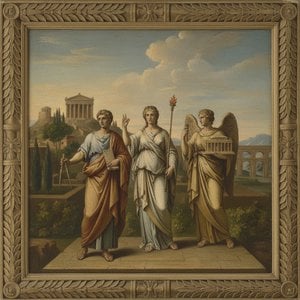
The works left behind by Altman offer a glimpse into his technical range. His output included landscapes and figurative compositions, often rendered in oil on materials like plywood or cardboard. His presence in the art world is preserved in collections such as the Nitra Gallery, which holds examples of his paintings. These works, ranging from landscapes with rocks to figurative scenes, reflect a man who spent his life translating the world through line and color.
Spørgsmål og svar
I hvilken historisk periode arbejdede Eugen Altman?
Eugen Altman var aktiv i Modern-perioden. Denne periode placerer kunstnerens virke i en historisk kontekst.
Kan jeg studere Eugen Altmans farvebrug på tværs af alle værker?
Farveprofilen for Eugen Altmans værker kan ses på kunstnerens Farvepalettens DNA-side.
Findes der et overblik over alle de motiver, som Eugen Altman har malet?
Eugen Altmans værker kan udforskes efter emne på kunstnerens Emneoversigt-side.
Findes der en virtuel 3D-tour af Eugen Altmans værker?
Eugen Altmans værker kan opleves i et 3D-galleri på kunstnerens 3D-galleri-side.