Se i rummet Se i AR Bestil håndmalet reproduktion Skift til digitalt billede Send
Detaljer Studieguide til kunstværker Tilføj til favoritter Download Lignende værker Røntgenundersøgelse Se diasshow Statistik

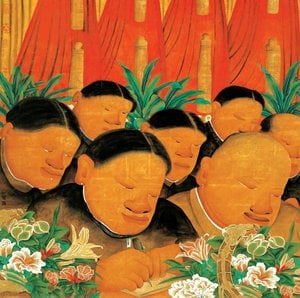
The Square, No.9

Zhu Wei’s ‘The Square, No.9’ presents a captivating scene of a man blowing from his mouth amidst intricate symbols and stars, reflecting the artist's subtle critique of Chinese society through post-Tiananmen era ink painting – discover this unique artwork.

Udforsk Zhu Weis tankevækkende kinesiske malerier og tryk! Som en vigtig samtidskunstner forener han klassiske teknikker med subtil kritik af det moderne Kinas kompleksitet.

Kunstværket vist på denne side er beskyttet af ophavsretsloven, hvilket betyder, at vi ikke lovligt kan skabe eller sælge en identisk reproduktion. Denne beskyttelse håndhæves i henhold til internationale aftaler som f.eks. den Bernerkonventionen og af nationale love, herunder de bestemmelser, der er fastlagt i Amerikansk ophavsretslov - Titel 17.

Denne metode overholder fuldt ud ophavsretsreglerne, da den ikke indebærer kopiering eller duplikering af det beskyttede kunstværk. I stedet er der tale om en kreativ nytolkning – et nyt maleri, som er inspireret af det oprindelige, men ikke identisk med det.

Giclée / Kunsttryk

Giclée- eller lærredstryk i museumskvalitet med hurtig produktion og fleksible muligheder for finish. ( Bestil håndmalet reproduktion Skift til digitalt billede)

Corner sample of the P118B picture frame: støbt polystyren, 5 cm wide and 3 cm thick
P118B Dkr10
Corner sample of the P118H picture frame: støbt polystyren, 5 cm wide and 3 cm thick
P118H Dkr10
Corner sample of the P118W picture frame: støbt polystyren, 5 cm wide and 3 cm thick
P118W Dkr10
Corner sample of the P438Z picture frame: støbt polystyren, 5.5 cm wide and 3.5 cm thick
P438Z Dkr10
Corner sample of the P508JH picture frame: støbt polystyren, 7 cm wide and 3.5 cm thick
P508JH Dkr12
Corner sample of the P508YH picture frame: støbt polystyren, 7 cm wide and 3.5 cm thick
P508YH Dkr12
Corner sample of the P805H picture frame: støbt polystyren, 5 cm wide and 3.5 cm thick
P805H Dkr10
Corner sample of the P805Z picture frame: støbt polystyren, 5 cm wide and 3.5 cm thick
P805Z Dkr10
Corner sample of the P919BZ picture frame: støbt polystyren, 7 cm wide and 3.5 cm thick
P919BZ Dkr10
Corner sample of the P919G picture frame: støbt polystyren, 7 cm wide and 3.5 cm thick
P919G Dkr10
Corner sample of the P919XJ picture frame: støbt polystyren, 7 cm wide and 3.5 cm thick
P919XJ Dkr10
Corner sample of the P959ZH picture frame: støbt polystyren, 5 cm wide and 3 cm thick
P959ZH Dkr10
Corner sample of the P968JZ picture frame: støbt polystyren, 6 cm wide and 4 cm thick
P968JZ Dkr12
Corner sample of the W106C picture frame: massivt træ, 5 cm wide and 3 cm thick
W106C Dkr8
Corner sample of the W218G picture frame: massivt træ, 5 cm wide and 3 cm thick
W218G Dkr10
Corner sample of the W218JH picture frame: massivt træ, 5 cm wide and 3 cm thick
W218JH Dkr8
Corner sample of the W218Y picture frame: massivt træ, 5 cm wide and 3 cm thick
W218Y Dkr10
Corner sample of the W307PJ picture frame: massivt træ, 6 cm wide and 3 cm thick
W307PJ Dkr10
Corner sample of the W316G picture frame: massivt træ, 6 cm wide and 3 cm thick
W316G Dkr10
Corner sample of the W316PJ picture frame: massivt træ, 6 cm wide and 3 cm thick
W316PJ Dkr8
Corner sample of the W316Y picture frame: massivt træ, 6 cm wide and 3 cm thick
W316Y Dkr10
Corner sample of the W398PJ picture frame: massivt træ, 5 cm wide and 3 cm thick
W398PJ Dkr8
Corner sample of the W4111J picture frame: massivt træ, 6.5 cm wide and 3.5 cm thick
W4111J Dkr10
Corner sample of the W500HY picture frame: massivt træ, 7 cm wide and 5 cm thick
W500HY Dkr15
Corner sample of the W500JH picture frame: massivt træ, 7 cm wide and 5 cm thick
W500JH Dkr15
Corner sample of the W692G picture frame: massivt træ, 8 cm wide and 4 cm thick
W692G Dkr12
Corner sample of the W849H picture frame: massivt træ, 5 cm wide and 3 cm thick
W849H Dkr8
Corner sample of the W940BG picture frame: massivt træ, 7.5 cm wide and 4.5 cm thick
W940BG Dkr15
Corner sample of the W953PJ picture frame: massivt træ, 6 cm wide and 3.5 cm thick
W953PJ Dkr8

Standardstørrelse
speciallavet
CM
INCH

Vælg mellem vores forudindstillede størrelser, der matcher kunstværkets originale proportioner.

bredde
højde

Indtast den bredde og højde, du har brug for, så det passer til din ramme eller din væg. Et print kan kun beskæres, aldrig gøres større end billedet, så en størrelse med en anden form vil miste en del af motivet. Vi sender dig en digital mockup til godkendelse, før vi printer noget. Billedet vist på denne side viser ikke den faktiske beskæring — det er kun mockuppen, der gør.

Verdensomspændende levering () på 2 uger i stedet for de sædvanlige 4/5 uger. (23 oktober)

Gratis ekspresforsendelse til hele verden
Lærred af linned i høj kvalitet
Komplet transportforsikring
Garanti for refusion af told og importafgifter
Garanti for autentisk farvegengivelse
100 dages returret ved fabrikationsfejl
100% fuld returret
Mængderabat ved flere køb

Samlet pris

Dkr 454

The Square, No.9

Giclée / Kunsttryk

Reproduktionsstørrelse

-

Samlet pris

Dkr 454

Kort om værket

  • Subject or theme: Man blowing object
  • Artistic style: Chinese Ink Painting
  • Movement: Contemporary Chinese Art
  • Artist: Zhu Wei
  • Location: Private Collection

Zhu Wei’s ‘The Square, No.9’: A Chronicle of Contemplation

Zhu Wei's “The Square, No.9” is more than just a depiction of a man blowing; it’s a meticulously rendered meditation on memory, power, and the subtle anxieties simmering beneath the surface of contemporary China. Executed in a style deeply rooted in traditional Chinese ink painting – *shui mou* – yet infused with a distinctly modern sensibility, this work offers a compelling glimpse into the artist's unique perspective as one of the most significant voices emerging from post-Tiananmen era art.

  • Subject and Narrative: The central figure, rendered with remarkable detail, captures a moment of intense focus – a man seemingly expelling something from his mouth. This simple action becomes laden with symbolic weight, prompting questions about release, denial, or perhaps even a desperate attempt to erase the past.
  • Technique - Shui Mou Mastery: Zhu Wei’s mastery of *shui mou* is immediately apparent. The use of delicate washes and controlled brushstrokes creates a luminous quality, characteristic of this technique, while simultaneously conveying a sense of quiet contemplation. The layering of ink tones builds depth and texture, inviting the viewer to linger on every detail.

Decoding the Symbols: A Layered Narrative

“The Square, No.9” is not presented with overt political messaging, but rather through a carefully constructed visual language. Scattered throughout the composition are symbols and writing – cryptic characters and celestial bodies – that contribute to a complex narrative. The stars, often associated with fate and destiny in Chinese cosmology, suggest an awareness of larger forces at play. The presence of other figures in the background, though less defined, hints at a broader social context, perhaps representing those affected by the events surrounding Zhu Wei’s own artistic journey.

  • Historical Context: Created during a period of significant political and social change in China, the painting reflects the artist's cautious engagement with the era. His background as a former military artist, followed by years creating propaganda art, informs his nuanced approach – a subtle critique embedded within a seemingly traditional aesthetic.
  • Symbolic Elements: The specific symbols employed are open to interpretation, adding another layer of intrigue to the work. Some scholars suggest references to ancient philosophical texts and beliefs, while others see them as personal reflections on Zhu Wei’s own experiences.

The Emotional Resonance & Artistic Significance

“The Square, No.9” possesses a haunting beauty that transcends its subject matter. The artist's skillful manipulation of light and shadow, combined with the enigmatic quality of the central figure, evokes a profound sense of unease and contemplation. This work is not merely a visual representation; it’s an emotional experience – a reminder of the complexities of memory, identity, and the enduring power of art to provoke thought and inspire dialogue.

  • Size & Presentation: Presented in a generous 193 x 192 cm format, this reproduction allows for immersive viewing, maximizing the impact of Zhu Wei’s artistic vision.
  • Collector's Appeal: This piece represents a rare opportunity to own a significant work by one of China’s most compelling contemporary artists. Its unique blend of traditional and modern aesthetics makes it a valuable addition to any discerning collection.

About the Artist – Zhu Wei

Born in Beijing in 1966, Zhu Wei has established himself as a leading figure in Chinese ink painting since the late 1990s. His work is exhibited internationally and held in major collections worldwide. He continues to explore themes of memory, identity, and social commentary through his distinctive artistic practice.

Spørgsmål & svar

Hvilken farvemætning har "The Square, No.9" af Zhu Wei?

Farvepaletten i "The Square, No.9" har en mætning på Clear Color Presence.

Hvilke proportioner har "The Square, No.9" af Zhu Wei, og hvor stor er den?

"The Square, No.9" af Zhu Wei er en Square komposition med de originale mål på 193 x 192 cm.

Hvem er kunstneren bag "The Square, No.9"?

"The Square, No.9" blev skabt af Zhu Wei. Informationen på denne side beskriver Zhu Weis originale værk.


Om kunstneren

Zhu Wei: En samtidsstemme i kinesisk tusjmaling

Zhu Wei blev født i Beijing, Kina, i 1966 og er en fremtrædende moderne kinesisk kunstner, der er anerkendt for sin subtilt kritiske tilgang til politik og samfund i det hastigt udviklende moderne Kina. Han står som en af de mest markante udøvere af kunsten fra post-Tiananmen-æraen, hvor han udviser en bemærkelsesværdig troskab mod det traditionelle kinesiske maleri, samtidig med at han tilbyder en nuanceret kommentar til dets historiske kontekst.

Tidligt liv og kunstnerisk dannelse

  • Militærtjeneste & Kunstakademi: Zhu Weis rejse begyndte med militærtjeneste som teenager. Denne periode kulminerede med hans optagelse på People’s Liberation Army Art Academy i 1989, hvor han modtog sin formelle kunstneriske uddannelse.
  • Propagandakunst og demobilisering: Efter sin eksamen brugte han flere år på at skabe propagandakunst, før hans enhed blev demobiliseret i 1992. Denne erfaring gav ham en grundlæggende forståelse for statsautoriseret kunst, samtidig med at den fostrede et kritisk perspektiv.
  • Filmstudier & tilbagevenden til traditionen: Han studerede efterfølgende ved Beijing Academy of Film, hvilket viste en interesse, der rakte ud over de rent visuelle kunstarter. På trods af denne bredere uddannelse besidder Zhu Wei en dyb og gennemgribende viden om den kinesiske kunsttradition; han har dedikeret betydelige kræfter til at mestre de indviklede teknikker i tusjmaling (shuimohua), en stil med rødder i århundreder gamle taoistiske praksisser.

Kunstnerisk stil og centrale temaer

  • Mestring af tusjmaling: Zhu Weis værk er karakteriseret ved hans exceptionelle færdigheder inden for traditionelle kinesiske tusjteknikker, hvilket vidner om en dyb forståelse for penselstrøg, komposition og det ekspressive potentiale i monokrome toner.
  • Subtil kritik & fremmedgørelse: Hans kunstneriske vision formidler ofte en følelse af angst og fremmedgørelse ved at forene personlig introspektion med politisk kommentar. Han benytter ikke åbenlys protest, men anvender i stedet subtile visuelle tegn til at stille spørgsmålstegn ved samfundsnormer og magtstrukturer.
  • Diverse medier: Selvom han primært er maler, udforsker Zhu Wei også grafik og figurativ skulptur, hvilket udvider omfanget af hans kunstneriske udtryk.
  • Serien "China China": Hans mest ikoniske værk er uden tvivl “China China”-serien (påbegyndt i 2000), som indeholder monumentale skildringer af kinesiske embedsmænd klædt i jakker fra Mao-æraen. Disse værker er øjeblikkeligt genkendelige og er blevet symboler på moderne kinesisk kunst, der fremprovokerer refleksion over historie, ideologi og national identitet.

Vigtige værker og udstillinger

  • Bemærkelsesværdige malerier: Centrale værker inkluderer "Zhu Wei: Utopia, No.4_46", som eksemplificerer hans mesterskab i tusjteknik, samt den førnævnte “China China”-serie. Andre bemærkelsesværdige værker udforsker temaer som byliv, forbrugskultur og kulturel transformation i det moderne Kina.
  • International anerkendelse: Zhu Weis arbejde er vidt udbredt i samlinger hos museer og private samlere i Europa, USA og Asien. Hans malerier optræder jævnligt på internationale auktioner, hvilket vidner om både deres markedsværdi og kunstneriske betydning.
  • Udstillingshistorik: Han har udstillet omfattende både nationalt og internationalt, herunder på prestigefyldte steder som Hubei Museum of Art, Tel Aviv Museum of Art, Beijing Today Art Museum, National Contemporary Art Center of Greece og mange andre på tværs af kontinenter.

Historisk betydning og eftermæle

Zhu Wei indtager en afgørende position inden for moderne kinesisk kunst. Som en kunstner, der trådte frem i kølvandet på Tiananmen-pladsen, afspejler hans arbejde en kompleks forhandling mellem tradition og modernitet, statslig kontrol og individuel udfoldelse. Hans subtile kritik af politiske og sociale strukturer, leveret gennem den klassiske kinesiske malerkunsts linse, tilbyder et unikt perspektiv på Kinas hurtige transformation. Han demonstrerer, at traditionelle kunstformer med stor kraft kan tilpasses for at adressere samtidens bekymringer, hvilket cementerer hans eftermæle som en vital stemme i den globale kunstneriske diskurs.

Zhu Wei

Zhu Wei

1966 - , Kina

Hurtige fakta

  • Artistic Movement Or Style: Kinesisk maleri, Samtidskunst
  • Artists Who Influenced This Artist: ['Taoistiske kunstnere']
  • Date Of Birth: 1966
  • Full Name: Zhu Wei
  • Nationality: Kinesisk
  • Notable Artworks:
    • China Diary, No.54
    • Curtain, No.8
    • Zhu Wei: Utopia, No.46
    • China China-serien
  • Place Of Birth (City And Country): Beijing, Kina