Kunstnerens biografi
Winslow Homer (1836-1910): En Brødrekomst til Amerikas Ånd
Winslow Homer, født i Boston i 1836, blev ikke skulpteret af de traditionelle europæiske kunstakademier, der formede mange af hans samtidige. Han dukkede frem fra en distinkt amerikansk erfaring, grundlagt på praktisk sans og observation. Hans rejse begyndte ikke med grandiose historiske lærreder, men som kommerciel illustratør allerede i alderen tolv for Harper's Weekly. Denne tidlige læreplads var afgørende, hvorved han udviklede en ekstraordinær evne til at fange scener med klarhed og detaljer – færdigheder, der skulle blive kendetegnende for hans modne værk. Han lærte ikke perspektiv i Paris; han lærte *at se* Amerika, dets mennesker og dets udfoldende historie. De travle gader i Boston, den stille ære ved amerikansk landliv – disse var hans første motiver, gengivet med præcision født af behovet for tryksagens krav. Dette fundament tillod ham at skifte til maleri, først i akvarel og senere fuldt ud omfavne oliepenslens ekspressive potentiale.
Fra Pastoral Scener til Åbenhedens Brutale Magt
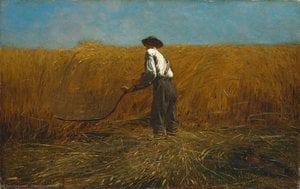
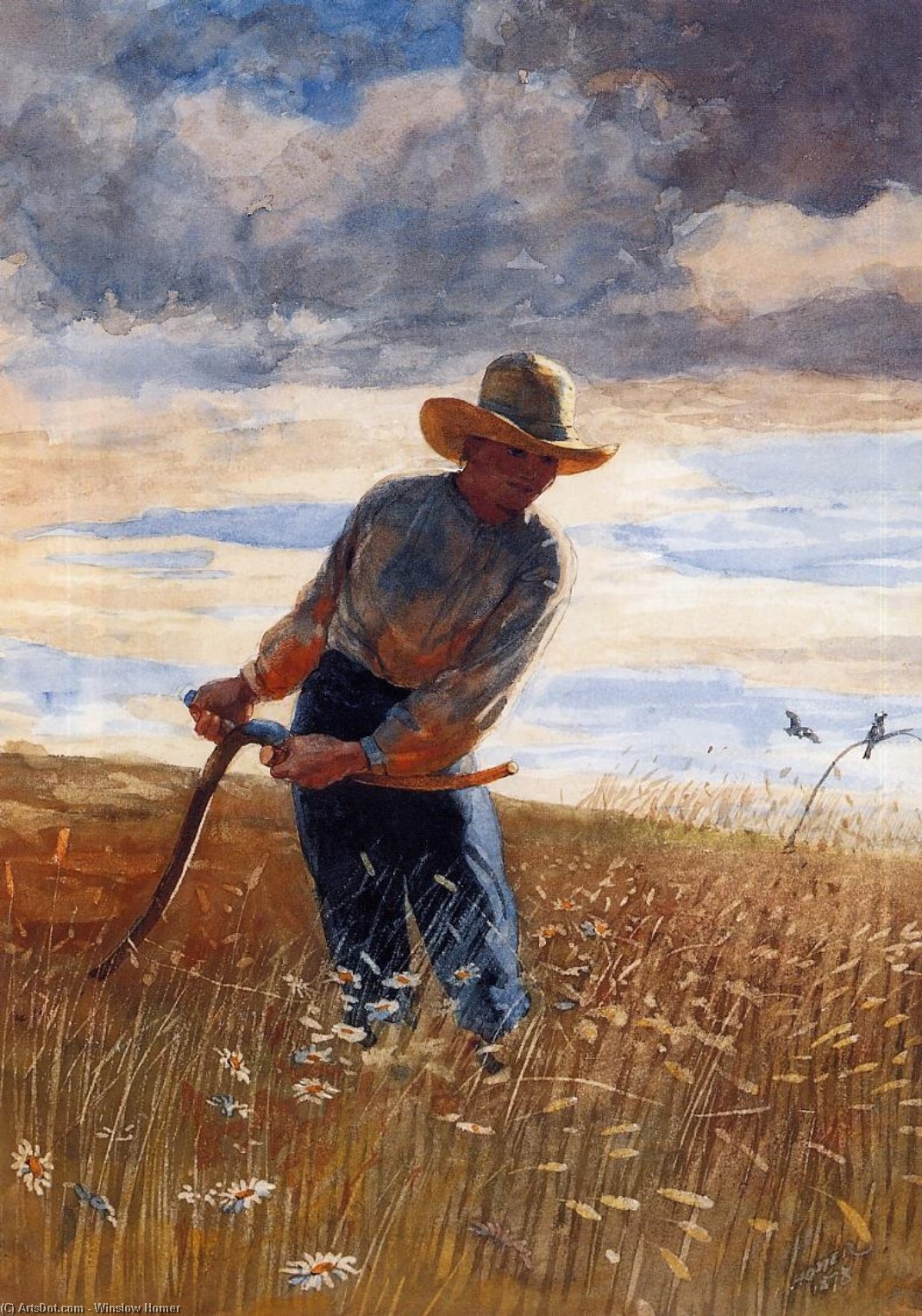
Homers tidlige malerier afbildede ofte idylliske scener – børn legende, bønder plejede deres marker, stille øjeblikke af hjemlighed. Disse værker var charmerende nok til at antyde en dybere kunstnerisk sans, der ventede på at blive løftet frem. Katalysatoren for denne transformation var uden tvivl Borgerkrigen. Som korrespondent for Harper's Weekly vidnede Homer direkte til krigens brutale realiteter. Han fokuserede ikke på episke slag eller grandiose strategier; snarere dokumenterede han dagligdagen hos soldater og civile, de stille øjeblikke af sorg og modstand midt i kaoset. Denne erfaring ændrede hans kunstneriske vision dybtgående. De pastoral scener gav efter for mere udfordrende temaer: veteraner kæmpende med traumer, frigivne slaver navigerede gennem en ny verden og landskaber præget af vanskeligheder. Han begyndte at udforske temaer om kamp, ensomhed og menneskehedens skrøbelige forhold til natur – temaer, der skulle dominere hans mest kraftfulde værker. Hans stil udviklede sig også, blev mere vågen og direkte, hvilket afspejlede den rå følelsesmæssige virkning af hvad han havde været vidne til.
Mestring Af Lys, Tekstur Og Det Amerikanske Landskab
Winslow Homers kunstneriske teknik er straks genkendelig for sin soliditet og tekstur. Han var ikke interesseret i flygtige indtryk; han ville opbygge en følelse af håndgribelig virkelighed på lærredet. Hans oliepaneler er karakteriseret af en direkte maleteknik – lag af maling påført med selvtillid, hvilket skaber dybde og lysstyrke. Han besad en ekstraordinær evne til at fange lys, om det var solens blendende glans over havet eller månens bløde skær over et landskab præget af sparsomhed. Dette mesterskab udvidedes til hans akvareller, hvor han opnåede bemærkelsesværdige atmosfæriske effekter gennem levende farver og delikate strøg. *Breezing Up (A Fair Wind)*, malet i 1876, er et perfekt eksempel på dette talent – en ikonisk gengivelse af amerikansk søfartsliv, fyldt med energi og bevægelse. **The Gulf Stream**, skabt årtier senere, er måske hans mest betydningsfulde værk, en kraftfuld og symbolsk repræsentation af en ensom mand kæmpende mod kræfterne i naturen – en metafor for menneskelig kamp mod overvældende odds. Han var ikke bare malede hvad han så; han udtrykte følelser, en kunstnerisk sandhed om menneskeligheden.
Han blev uddannet som litograf i sin fødeby og senere på New Yorks Nationalakademi. Han vandt først et navn ved illustrationer efter Borgerkrigen for Harper's Weekly. Denne tidlige læreplads var afgørende, hvorved han udviklede en ekstraordinær evne til at fange scener med klarhed og detaljer – færdigheder, der skulle blive kendetegnende for hans modne værk. Han lærte ikke perspektiv i Paris; han lærte *at se* Amerika, dets mennesker og dets udfoldende historie. De travle gader i Boston, den stille ære ved amerikansk landliv – disse var hans første motiver, gengivet med præcision født af behovet for tryksagens krav. Dette fundament tillod ham at skifte til maleri, først i akvarel og senere fuldt ud omfavne oliepenslens ekspressive potentiale.
Han var ikke interesseret i at efterligne europæiske kunstnere; han ville skabe kunst, der var unik for Amerika – hvilket afspejlede dets landskaber, dets mennesker og dets udfordringer. Hans arv ligger i hans evne til at gengive Amerika med ærlighed og autenticitet uden romantisering eller idealisering. Han var ikke interesseret i åbenhedens brutale magt; han ville skabe kunst, der var unik for Amerika – hvilket afspejlede dets landskaber, dets mennesker og dets udfordringer. Hans stil udviklede sig også, blev mere vågen og direkte, hvilket afspejlede den rå følelsesmæssige virkning af hvad han havde været vidne til. Han var ikke bare malede hvad han så; han udtrykte følelser, en kunstnerisk sandhed om menneskeligheden.
Han vandt først et navn ved illustrationer efter Borgerkrigen for Harper's Weekly. Denne tidlige læreplads var afgørende, hvorved han udviklede en ekstraordinær evne til at fange scener med klarhed og detaljer – færdigheder, der skulle blive kendetegnende for hans modne værk. Han lærte ikke perspektiv i Paris; han lærte *at se* Amerika, dets mennesker og dets udfoldende historie. De travle gader i Boston, den stille ære ved amerikansk landliv – disse var hans første motiver, gengivet med præcision født af behovet for tryksagens krav. Dette fundament tillod ham at skifte til maleri, først i akvarel og senere fuldt ud omfavne oliepenslens ekspressive potentiale.
Han vandt først et navn ved illustrationer efter Borgerkrigen for Harper's Weekly. Denne tidlige læreplads var afgørende, hvorved han udviklede en ekstraordinær evne til at fange scener med klarhed og detaljer – færdigheder, der skulle blive kendetegnende for hans modne værk. Han lærte ikke perspektiv i Paris; han lærte *at se* Amerika, dets mennesker og dets udfoldende historie. De travle gader i Boston, den stille ære ved amerikansk landliv – disse var hans første motiver, gengivet med præcision født af behovet for tryksagens krav. Dette fundament tillod ham at skifte til maleri, først i akvarel og senere fuldt ud omfavne oliepenslens ekspressive potentiale.


 Se i fuld skala
 Skift til print
 Del
Del Del
Del
 Detaljer

 Download
 Lignende værker
 Røntgenundersøgelse
 Diasshow
 Statistik

 Se mere