Om kunstneren
William Merritt Chase: En Lysende Stemme i Amerikansk Impressionisme
William Merritt Chase, et navn der er synonymt med blomstringen af amerikansk impressionisme, var mere end blot en maler; han var en central kraft i at forme nationens kunstneriske identitet i begyndelsen af det 20. århundrede. Født den 1. november 1849 i de ydmyge omgivelser af Williamsburg (senere Nineveh), Indiana, er hans rejse fra landlige rødder til at blive en anerkendt kunstner og indflydelsesrig lærer et vidnesbyrd om hans urokkelige dedikation og iboende talent. Hans tidlige liv var præget af en families flytning til Indianapolis i 1861, hvor han i første omgang assisterede sin fars forretningsvirksomhed. Alligevel blev frøene af kunstnerisk passion sået, plejet af studier med lokale instruktører Barton S. Hays og Jacob Cox. Denne grundlæggende træning antændte en længsel efter yderligere udforskning, hvilket førte til et kortvarigt forsøg på at blive sømand, inden han endelig fandt sin vej til det pulserende kunstmiljø i New York City i 1869. Der, under veiledningen af Joseph Oriel Eaton ved National Academy of Design og senere Lemuell Wilmarth, en elev af Jean-Léon Gérôme, begyndte Chase at finpudse sine færdigheder, hvilket lagde grundlaget for en karriere, der skulle omdefinere amerikansk maleri. En midlertidig økonomisk tilbageslag tvang ham til at flytte til St. Louis i 1870, men selv denne udfordring viste sig frugtbar, da han etablerede sig inden for det lokale kunstsamfund og opnåede anerkendelse for sin voksende talent.
Fra Akademisk Rod til Impressionistisk Brilliance
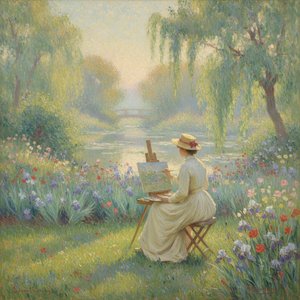
Chases kunstneriske udvikling var ikke en pludselig springvand ind i impressionisme, men snarere en gradvis evolution informeret af streng akademisk træning og omfattende rejser. Et afgørende vendepunkt kom med hans udvidede ophold i München begyndende i 1872, hvor han studerede ved Kunstakademiet under Alexander von Wagner og Karl von Piloty. Denne periode indgydede ham en mesterskab i traditionelle teknikker og en tilbøjelighed til dramatiske kompositioner, men det var under et efterfølgende besøg i Venedig med andre amerikanske kunstnere Frank Duveneck og John Twachtman, at Chase begyndte at omfavne en mere løsnet tilgang til maleri. Inspireret af den strålende lys og livlige farver på den italienske landskab begyndte han at eksperimentere med mere frie penselstrøg og en forøget følsomhed over for atmosfæriske effekter. Ved sin tilbagevenden til New York i 1878 omfavnede Chase fuldt ud impressionistiske principper, fangede flygtige øjeblikke af moderne liv med en energisk og fængslende stil. Arbejder som Keying Up – The Court Jester (1876), udstillet til anerkendelse på Boston Art Club og Philadelphia Centennial Exposition, viste hans evne til at formidle bevægelse og personlighed gennem dristige penselstrøg og en dynamisk komposition. Han fortsatte med at udforske forskellige emner – slående portrætter som Portrait of Virginia Gerson, evocative landskaber som *Gowanus Bay (aka Misty Day, Gowanus Bay)* og scener, der skildrer pulsen i bylivet, herunder *Alice Fernandez*. Andre bemærkelsesværdige værker omfatter “A Friendly Call”, “A Study in Curves” og “Terrace at the Mall, Central Park”.
Den Lærer: Formning af en Generation af Kunstnere
Ud over sine præstationer som maler efterlod William Merritt Chase et varigt aftryk på amerikansk kunst gennem sin dedikation til undervisning. Erkendelsen af behovet for innovativ kunstuddannelse førte han til at grundlægge Chase School i New York City i 1896, som senere udviklede sig til Parsons The New School for Design. Denne institution blev et frirum for kunstnerisk talent, der fremhævede direkte observation, teknisk dygtighed og kreativ eksperimentering. I modsætning til mange af sine samtidige, der foretrak streng akademisk instruktion, opmuntrede Chase sine elever til at udvikle deres individuelle stemmer og udforske forskellige stilarter. Han holdt undervisningsstillinger på Pennsylvania Academy of the Fine Arts, Art Students League og Brooklyn Art Association, formidling sin kunstneriske filosofi langt og bredt. Hans indflydelse spredte sig til mange kunstnere, herunder Wayman Elbridge Adams, der åbent anerkendte Chase som mentor. Betoningen på plein air maleri – at male direkte udendørs fra naturen – blev en hjørnesten i hans pædagogiske tilgang, hvilket fremmede en dybere forbindelse mellem eleverne og deres emner.
Arv og Historisk Betydning
William Merritt Chases plads i amerikansk kunsthistorie er sikker. Han brolagde mellem etablerede akademiske traditioner og den spirende impressionistiske bevægelse, hvilket bidrog væsentligt til udviklingen af en distinkt amerikansk kunstnerisk identitet. Hans engagement i at fange essensen af moderne liv – de travle bylandskaber, intime hjemmemiljøer og afslappede fornødenheder i sin tid – resonerede med publikum, der søgte et nyt visuelt sprog. Selvom hans senere år oplevede en midlertidig dæmpning af kritisk anerkendelse, har hans værk oplevet en genopblomstring i de seneste årtier, hvilket bekræfter hans status som en af Amerikas mest betydningsfulde og indflydelsesrige kunstnere. Han var ikke blot dokumenterede scener; han fortolkede ånden i et udviklende land gennem impressionismens strålende linse. Hans arv strækker sig ud over hans lærred til de utallige kunstnere, han inspirerede, hvilket sikrer at hans innovative tilgang til maleri fortsætter med at forme kunstlandskabet i Amerika i fremtiden.



 Se i rummet
 Bestil håndmalet reproduktion
 Send
Send Del
Del
 Detaljer
 Guide
Guide

 Download
 Lignende værker
 Røntgenundersøgelse
 Se diasshow
 Statistik


 Læs mere






































 Glasmulighed er kun tilgængelig i størrelser under 110 cm