Om kunstneren
En Liv Skabt i Abstraktion
Willem de Kooning, et navn synonymt med den rå energi og den dybe følelsesmæssige intensitet af Abstract Expressionismen, blev født i Rotterdam, Holland, i 1904. Hans tidlige liv var præget af en familiær skilsmodel – hans forældre separerede, da han var ung – hvilket måske indkodede en følelse af rastløs søgen i ham, der ville gennemsyre hans kunstneriske rejse. Han droppede formel uddannelse klokken 12 og blev lærling hos et kommercielt kunstfirma, hvilket lagde grundlaget for hans tekniske færdigheder, samtidig med at han samtidig nærede en længsel efter at bryde fri fra konventionelle begrænsninger. Aftenkurserne på Academie van Beeldende Kunsten en Technische Wetenschappen i Rotterdam gav yderligere fundamentale træning, men det var en længsel efter noget mere – et mere dristigt, mere udtryksfuldt sprog – der ultimativt drev ham mod Amerika i 1926. Hans ankomst var ikke ligefrem; han stødte berømt sammen på et skib, hvilket afspejlede ånden hos en outsider, der søgte nye horisonter. New York City blev hans adopterede hjem, og byens pulserende, ofte grusomme energi formåede dybtgående at forme hans udviklende stil. Han navigerede gennem forskellige jobs – husmaler, tømrer – alt imens han utrætteligt forfulgte sin kunstneriske vision, absorberede byens puls ind i sit arbejde.
Fra Byscener til Abstrakt Vrede
De Koonings tidlige malerier afspejlede hans umiddelbare omgivelser: bylandskaber og portrætter, der fangede New Yorks dynamik. Men disse var blot trin for at udforske form og følelse på en dybere måde. Et vendepunkt kom med hans forbindelse til Arshile Gorky, hvis indflydelse viste sig transformerende. Gorky opmuntrede De Koonings eksperimenter med abstraktion, hvilket fremmede en villighed til at nedbryde traditionel repræsentation i jagten på noget dybere. 1930'erne så De Kooning engagere sig i socialrealisme og vægmaleriprojekter gennem Works Progress Administration (WPA), en periode, der skar hans færdigheder, men også fremhævede begrænsningerne ved rent repræsentativ kunst. Han følte sig tiltrukket af arbejdet fra Stuart Davis og John Graham, kunstnere, der pressede grænserne for deres egen ret. Denne sammensmeltning af indflydelser førte gradvist ham væk fra bogstavelig gengivelse og mod en stadig mere abstrakt ordforråd. Det var ikke et pludseligt skift, men snarere en langsom proces – en bevidst nedbrydning af etablerede normer, drevet af intellektuel nysgerrighed og en vedholdende søgen efter kunstnerisk sandhed.
Kvinde-serien: Et Monumentalt Opnåelse
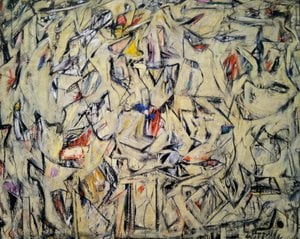
Efter 2. verdenskrig dukkede De Kooning op som en central figur i det voksende Abstract Expressionist bevægelse. Denne periode markerede et vendepunkt, der kulminerede i hans ikoniske "Kvinde"-serie (1950-1953). Disse malerier – herunder det monumentale *Kvinde I* – er ikke blot gengivelser af kvindelige figurer; de er visuelle udforskninger af femininitet, seksualitet og kompleksiteten af menneskelige følelser. Karakteriseret ved aggressive penselstrøg, fragmenterede former og en foruroligende juxtaposition af farver, udfordrede "Kvinde"-serien konventionelle opfattelser af skønhed og repræsentation. De var kontroversielle, endda chokerede for nogle, men deres styrke lå præcist i deres nægtelse af at overholde normerne. De Kooning var ikke interesseret i at skabe idealiserede billeder; han søgte at fange de rå, uforfinede essenser af sine emner. Udover "Kvinde"-serien demonstrerede værker som *The Glazier* og *Excavation* hans dynamiske tilgang til maleri, hvilket viste en mesterlig kommando over tekstur, farve og komposition. Han tøvede ikke for at omfavne kaos og tvetydighed; snarere omfavnede han dem som integrale komponenter i sit kunstneriske sprog.
Udviklende Landskaber og Vedvarende Arv
I 1960'erne gennemgik De Koonings stil en yderligere betydelig udvikling. Selvom abstraktion forblev central for hans arbejde, begyndte landskabs elementer at spille en mere fremtrædende rolle, ofte gengivet med en lysere palet og en løsere, mere flydende penselstrøg. Han fortsatte med at eksperimentere utrætteligt i hele sit liv, udforskede forskellige teknikker og materialer, aldrig tilfreds med at hvile på sine kunstneriske præstationer. Willem de Koonings historiske betydning er uomtvistelig. Han hjalp med at etablere New York City som et globalt centrum for kunst, udfordrede europæisk dominans og banede vejen for fremtidige generationer af kunstnere. Hans arbejde inspirerer stadig i dag til undren og debat, minder os om den kraft, abstraktion har til at udtrykke dybe følelsesmæssige sandheder. De Kooning døde i 1997 og efterlod en omfattende og indflydelsesrig kunstnerisk arv, der står som et vidnesbyrd om hans urokkelige forpligtelse til kunstnerisk innovation og hans vedvarende arv som en af de vigtigste amerikanske kunstnere i det 20. århundrede. *Hans indvirkning resonerer stadig.*



 Se i rummet
 Bestil håndmalet reproduktion
 Send
Send Del
Del
 Detaljer
 Guide
Guide

 Download
 Lignende værker
 Røntgenundersøgelse
 Se diasshow
 Statistik

 Læs mere






































 Glasmulighed er kun tilgængelig i størrelser under 110 cm