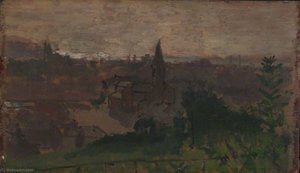
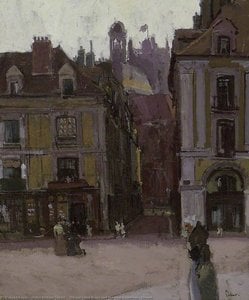
Walter Richard Sickert: En Skyggefuld Maler af Londons Underliv
Walter Richard Sickert, født i München i 1860, var en kunstner fanget mellem to verdener – tysk ved fødslen, britisk ved valg og altid svingende mellem traditionel malerkunst og den spirende moderne bevægelse. Hans tidlige liv var præget af konstant forandring; familiens flytning til England i 1868, drevet af politiske omvæltninger i Europa, indgav hos ham en følelse af fremmedgørelse – måske en drivkraft bag hans livslange fascination med udstødte og marginaliserede figurer. Selvom han kom fra en kunstnerisk linje – sin far, Oswald Sickert, var en dansk maler – havde ung Walter i starten ambitioner om scenen, hvor han kortvarigt optrådte som skuespiller sammen med den berømte Sir Henry Irving. Denne tidlige erfaring med scenekunsten, med illusion og karakterspil, ville dybt påvirke hans kunstneriske vision, og give hans malerier en teateragtighed og psykologisk dybde, der adskilte ham fra sine samtidige. Alligevel viste sig den visuelle udtrykskraft at være mere tiltrækkende, og han meldte sig ind på Slade School i 1881 og blev derefter en dedikeret elev af James Abbott McNeill Whistler. Denne vejledning var afgørende, og indgydede Sickert en præference for tonalstudier malet *alla prima*, direkte fra naturen, og en raffineret æstetisk sans, der underbyggede hans tidlige arbejde. Whistlers indflydelse var ikke blot teknisk; den fremmede en værdsættelse af kunstnerisk uafhængighed og en villighed til at udfordre konventionelle normer.
Londons Underliv og Nøglen til Moderne Liv
Sickerts kunstneriske kompas drev hurtigt mod London, byens pulserende, ofte grusomme virkelighed. Han blev betaget af atmosfæren i musikhallerne – rum fyldt med energi, spektakel og et mangfoldigt samfund. Hans malerier fra denne periode, såsom
Katie Lawrence at Gatti's, er bemærkelsesværdige for deres ubarmhjertige portrætter af disse miljøer og deres beboere. De var ikke blot gengivelser; de var udforskninger af moderne byliv, der fangede flygtige øjeblikke og rå følelser i disse mure. Han søgte at male livet, som det blev levet – et radikalt brud med den victorianske kunsts idealiseringer. Denne forpligtelse til realisme udløste kontrovers. Kritikere fandt hans emner "skønne" og "ulækre," udfordrende af sensibilities, der foretrak idealiserede repræsentationer. Sickerts villighed til at male almindelige mennesker, især kvindelige artister, med ærlighed og uden romantik, var en provokerende handling – et forvarsel om skiftet mod socialrealisme i det 20. århundredes kunst. Hans tid i Dieppe, Frankrig, fra 1894 og fremefter gav ham også nye perspektiver på lys, farve og komposition, mens hans efterfølgende besøg i Venedig yderligere forfinede hans tilgang til at male indvendige rum og komplekse arrangementer af figurer. Han malede ikke blot det, han så; han fortolkede det gennem en tydeligt personlig linje, og lagde selv de mest banale scener med en følelse af mystik og psykologisk spænding.
En Katalysator for Forandring: Camden Town Group og Udover
Da det 20. århundredes begyndelse nærmede sig, blev Sickert en central figur i den spirende britiske avantgarde bevægelse. Han sluttede sig til New English Art Club i 1888, og alliancede sig med kunstnere, der omfavnede franske impressionistiske principper. Senere spillede han en afgørende rolle i at etablere Camden Town Group i 1911 – en gruppe af kunstnere dedikeret til at portrættere moderne liv med ubarmhjertig ærlighed og stilistisk innovation. Sickerts indflydelse på denne gruppe var betydelig, idet han opfordrede dem til at bryde med traditionelle akademiske begrænsninger og udforske nye former for udtryk. Han fremmede en unromantiseret vision af det urbane landskab, der fokuserede på hverdags scener og almindelige mennesker. Hans malerier i denne periode havde ofte en ubehagelig karakter, såsom hans
Camden Town Murder-serie, der afspejlede en voksende fascination med kriminalitet og psykologisk spænding. Denne villighed til at konfrontere vanskelige temaer cementerede hans ry som en provokerende og udfordrende kunstner. Han var ikke blot interesseret i at male overfladen; han ville dykke ned i de mørkere afgrunde af den menneskelige psyke, og udforske temaer om alienation, angst og moralsk tvetydighed.
Arv og Bliver Mystiske
Walter Richard Sickerts arv strækker sig langt udover hans produktive output. Han var en katalysator for forandring i britisk kunst, der banede vejen for efterfølgende generationer af kunstnere til at omfavne modernismen og udforske nye veje for udtryk. Hans indflydelse kan ses i arbejdet hos mange kunstnere, især dem, der er forbundet med Camden Town Group og andre avantgarde bevægelser. Sickerts pionerånd, hans engagement i realisme og hans villighed til at udfordre samfundets normer resonerer stadig med kunstnere i dag. Hans malerier er kraftfulde vidnesbyrd om en foranderlig verden, der giver glimt af livets skønhed, ubehag og kompleksitet. *Han var en kunstner, der turde kigge ud over overfladen, konfrontere de ubehagelige sandheder i det moderne liv og fange dem på lærredet med ubarmhjertig ærlighed.*
Nøgle Detaljer & Indflydelser
- Født: 31. maj 1860, München, Bayern
- Død: 22. januar 1942, Bathampton, England
- Nøgle Indflydelser: James Abbott McNeill Whistler, Edgar Degas
- Forbundne Grupper: New English Art Club, Camden Town Group
Sickerts arbejde findes i store museer over hele verden, hvilket sikrer at hans vision fortsætter med at inspirere og provokere publikum i mange år fremover. Han er en central figur i kunsthistorien, en kunstner der turde udfordre konventionerne og male verden som han så den – i al sin skønhed, ubehag og kompleksitet.



 Se i rummet
 Skift til printversion
 Send
Send Del
Del
 Detaljer
 Studieguide til kunstværker

 Download
 Lignende værker
 Røntgenundersøgelse
 Se diasshow
 Statistik


 Læs mere