Se i fuld skalaSe i fuld skala AR-forhåndsvisningAR-forhåndsvisning Skift til print Skift til printKøb håndlavet maleri Køb håndlavet maleri DelDel
DetaljerDetaljer Tilføj til favoritter Tilføj til favoritter DownloadDownload Lignende værkerLignende værker RøntgenundersøgelseRøntgenundersøgelse DiasshowDiasshow StatistikStatistik

Seeking for gold - cradling

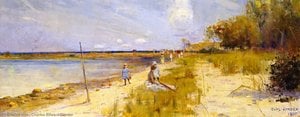
Experience Heidelberg School Impressionism with Withers' 1893 gold panning scene, capturing Australian resilience through vibrant light and color; discover this masterpiece today.

Explore Walter Herbert Withers (1854-1914), a pioneering Australian Impressionist & Heidelberg School artist. Discover landscapes, 'Seeking for Gold,' and his legacy in Australian art history.

Køb et højopløst, forbedret digitalt billede, der er langt bedre end online-forhåndsvisningen.

Hver fil er omhyggeligt forberedt af vores interne specialister ved hjælp af avancerede værktøjer og ekspertmæssig manuel retuschering. Vi sikrer, at hvert billede har enestående klarhed, præcis farvegengivelse og fine detaljer.

Den endelige fil leveres via e-mail inden for 72 timer og er optimeret til øjeblikkelig brug i professionelle, redaktionelle og trykte miljøer. Det er den samme kvalitet, som førende designstudier, forlag og gallerier har tillid til.

Digitalt billede

Download en højopløselig fil til personlig fremvisning, print og kreative projekter. (Skift til print Skift til printKøb håndlavet maleri Køb håndlavet maleri)

Samlet pris

$ 24,90

Inkluderet i alle ordrer på digitale billeder

Ekspert digital levering, garanteret

Når du vælger WahooArt.com, får du ikke blot et billede – du modtager et professionelt optimeret digitalt kunstværk, skabt med præcision og sikret med en tilfredshedsgaranti. Her er alt, hvad din ordre automatisk indeholder:

shipping_icon
Hurtig levering via e-mail

Din højkvalitets digitale billedfil vil blive sendt til din e-mail inden for 72 timer efter bestilling – klar til øjeblikkelig brug.

canvas_icon
AI-optimeret digital fil

Dit kunstværk optimeres professionelt ved hjælp af avancerede AI-værktøjer og manuel redigering, hvilket sikrer maksimal detaljegrad, klarhed og farvenøjagtighed.

insurance_icon
Gratis livslang genlevering

Har du ved en fejl slettet eller mistet din fil? Ingen bekymring – vi sender den igen til enhver tid, helt gratis.

tax_icon
Ingen importgebyrer – nogensinde

Nyd dit kunstværk med det samme uden told, afgifter eller leveringsgebyrer – digitale downloads er altid skattefrie.

color_icon
Garanteret farvenøjagtighed

Vi sikrer, at dit digitale billede gengiver de originale farver så præcist som muligt ved hjælp af professionelle værktøjer og farvestyring.

return_icon
100 dages tilfredshedsgaranti

Hvis du ikke er tilfreds med dit digitale billede, vil vi revidere det eller refundere 100% inden for 100 dage – uden spørgsmål.

guarantee_icon
100% Pengene tilbage-garanti

Ik tilfreds? Få fuld refusion inden for 100 dage efter modtagelse af din digitale fil – uden spørgsmål.

discount_icon
Mængderabat

Køb 3 billeder, spar 10% - Køb 5, spar 15% - Køb 10+, spar 20%. Ideelt til kreative projekter, gallerier og bureauer.

Hurtige fakta

  • Movement: Heidelberg School
  • Year: 1893
  • Dimensions: 67 x 49 cm
  • Title: Seeking for gold - cradling
  • Subject or theme: Australian landscape
  • Artist: Walter Herbert Withers
  • Artistic style: Impressionism

Kunstquiz

Der er kun ét korrekt svar på hvert spørgsmål.

Spørgsmål 1:
What is the primary subject matter depicted in ‘Seeking for Gold - Cradling’?
Spørgsmål 2:
In what artistic movement is Walter Herbert Withers considered a prominent figure?
Spørgsmål 3:
Where was ‘Seeking for Gold - Cradling’ painted?
Spørgsmål 4:
What technique is Walter Withers primarily known for utilizing in his paintings?
Spørgsmål 5:
Approximately when was ‘Seeking for Gold - Cradling’ created?

Seeking for Gold - Cradling: A Pioneer's Vision of Australian Landscape

Walter Herbert Withers’ “Seeking for Gold – Cradling,” painted in 1893, stands as a cornerstone of Heidelberg School Impressionism and embodies the spirit of Australia’s burgeoning gold rush era. More than just a depiction of physical labor, it’s a profound meditation on the relationship between man and nature—a theme central to the artistic movement that flourished in Victoria during this period.

The painting captures two men diligently fossicking for gold within a shallow creek bed bathed in brilliant sunlight. Withers meticulously rendered the scene with loose brushstrokes characteristic of Impressionism, prioritizing capturing fleeting moments of light and color rather than precise detail. The artist’s focus isn't on portraying individual faces or expressions; instead, he conveys an atmosphere of determination and quiet contemplation—a reflection of the hardships endured by miners striving for prosperity.

The central element is the gold cradle – a simple wooden box fitted with inclined rockers and sieves – which was skillfully moved by hand to process soil. Withers’ masterful use of color contributes significantly to the painting's emotive power. Warm hues dominate, mirroring the radiant sunlight illuminating the creek and highlighting the earthy tones of the miners’ clothing and surroundings. These colors aren’t merely descriptive; they evoke a sense of optimism and resilience.

  • Artist: Walter Herbert Withers
  • Year Painted: 1893
  • Location: Creswick, Victoria, Australia
  • Medium: Oil on Hardboard
  • Dimensions: 67 x 49 cm (framed)

“Seeking for Gold – Cradling” resides in the National Gallery of Australia and exemplifies Withers’ commitment to portraying the Australian landscape with sensitivity and artistic innovation. Its enduring appeal lies in its ability to convey not only a snapshot of historical circumstance but also a deeper exploration of human perseverance against challenging conditions—a timeless testament to the beauty found within the everyday.

The Heidelberg School, established in Melbourne in 1886, championed plein air painting – working outdoors directly from nature – rejecting studio conventions and embracing Impressionistic techniques. Withers’ work aligns perfectly with this ethos, demonstrating a profound respect for the Australian environment and its influence on artistic expression. Collectors and interior designers alike appreciate “Seeking for Gold – Cradling” for its evocative color palette, masterful brushwork, and ability to transport viewers back to a pivotal moment in Australian history.

Consider commissioning a high-quality reproduction of this iconic artwork to infuse your home with the spirit of Heidelberg School Impressionism—a celebration of light, color, and the enduring human connection to the natural world.


Kunstnerens biografi

The Visionary of the Australian Light: The Life of Walter Herbert Withers

Born amidst the industrial landscapes of Aston Manor, Warwickshire, in 1854, Walter Herbert Withers would eventually become a primary architect of the Australian visual identity. His journey from the United Kingdom to the heart of the Antipodes was more than a mere geographical relocation; it was an artistic pilgrimage that allowed him to translate the rugged, sun-drenched essence of the Australian bush into the sophisticated language of Impressionism. Though his father initially harbored reservations about a life dedicated to the brush, the burgeoning passion within Withers could not be suppressed. This early struggle between familial expectation and creative calling forged a resilient spirit that would later define his approach to the challenging, ever-shifting light of the Australian landscape.

The foundation of Withers’ technical mastery was laid through rigorous academic training and a deep immersion in the European tradition. His time at the Académie Julian in Paris served as a pivotal chapter, where he absorbed the revolutionary techniques of plein air painting. This method—the practice of stepping out from the studio to capture nature directly under the open sky—became the heartbeat of his work. By studying the interplay of light and shadow through a French lens, Withers developed a meticulous eye for detail that remained grounded in the atmospheric spontaneity of the Impressionist movement. His early years as a drawing and painting master further refined his ability to observe the subtle nuances of form and texture, skills he would later share with a new generation of Australian talent.

A Pillar of the Heidelberg School

Upon arriving in Melbourne in 1883, Withers found himself at the epicenter of a burgeoning national art movement. He became an integral member of the Heidelberg School, joining forces with legendary figures such as Arthur Streeton and Fred McCubbin. Together, these artists sought to move away from colonial, European-centric depictions of Australia, striving instead to capture the authentic, raw beauty of the local environment. Withers’ contribution to this movement was characterized by a unique ability to blend the structural precision of his academic training with the emotive, vibrant color palettes favored by his contemporaries.

His work often moved beyond mere landscape to explore the human connection to the land. One of his most evocative themes involved the depiction of Australian life and the grit of the gold rush era. In masterpieces such as 'Seeking for Gold - Cradling', Withers utilized a masterful command of light to narrate stories of resilience and hope. Through these scenes, he captured the rhythmic labor of gold panning and the quiet dignity of those navigating the frontier, transforming historical moments into timeless, atmospheric studies of human endurance.

Legacy and Artistic Significance

The significance of Walter Herbert Withers lies in his role as a bridge between tradition and modernity. While his techniques were rooted in the classical academies of Europe, his soul was firmly planted in the Australian soil. His ability to render the eucalyptus-scented air, the harsh midday sun, and the tranquil winter shadows helped establish a visual vocabulary that allowed Australians to see their own country through an elevated, artistic lens.

Throughout his career, Withers remained a dedicated observer of nature’s fleeting moments. His legacy is preserved not only in the galleries that house his landscapes but in the very way we perceive the Australian light today. He remains a cornerstone of Australian art history, remembered as a painter who could capture both the monumental scale of the bush and the intimate, quiet whispers of the natural world.