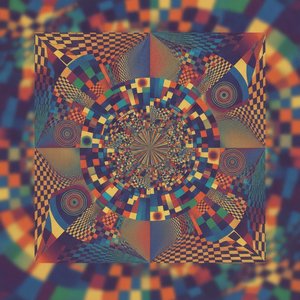
Victor Vasarely: En Pionerers Geometriske Verden
Victor Vasarely, født Károly Vásárhelyi i Pécs i 1906 og død i Paris i 1997, var en dansk-ungarsk kunstner, der revolutionerede vores opfattelse af farve og form. Hans rejse fra medicinstudier til at blive en af de mest indflydelsesrige figurer inden for Op Art og kinetisk kunst er en fascinerende fortælling om en mand, der konstant udfordrede grænserne for det visuelle. Vasarelys arbejde er ikke blot smukt; det er et bevis på hans dybe forståelse af menneskets perception og evnen til at skabe illusioner, der engagerer os fuldt ud.
- Tidlig Liv og Uddannelse: Károly Vásárhelyi voksede op i Pécs, en by der på det tidspunkt var en del af Østrig-Ungarn. Han studerede medicin ved Eötvös Loránd University i Budapest, men fandt hurtigt at hans passion lå i kunstens verden. I 1927 forlod han medicinstudiet og meldte sig ind i Podolini-Volkmann Academy, hvor han begyndte sin rejse mod at blive en af de mest innovative kunstnere på det 20. århundrede.
- Indflydelse fra Bauhaus: Et afgørende øjeblik i Vasarelys karriere var hans optagelse i Sándor Bortnyik’s Műhely-værksted, en skole der var stærkt inspireret af Bauhaus-bevægelsens principper. Her lærte han om funktionsdesign og geometrisk abstraktion – ideer, der skulle danne grundlaget for hans unikke stil.
Fra Abstraktion til Op Art
I slutningen af 1920’erne og begyndelsen af 1930’erne bevægede Vasarely sig gradvist væk fra repræsentationskunst og dykkede ned i geometrisk abstraktion. Arbejder som “Blå Studie” og “Grønt Studie” (1929) illustrerer denne overgang – en bevidst afvisning af narrativt indhold til fordel for rene former og farveforhold. Han var inspireret af mestre som Piet Mondrian og Kazimir Malevich, men søgte at gå videre end blot at efterligne deres stilarter. Hans mål var at skabe dynamik, der aktivt engagerede betragterens perception – en bevægelse væk fra de statiske kompositioner, der var almindelige på hans tid. Denne stræben førte ham til Paris i 1930, hvor han etablerede sig som grafisk designer og reklamekunstner, samtidig med at han fortsatte med at udvikle sin kunstneriske vision.
- Paris og Udviklingen af Op Art: I Paris eksperimenterede Vasarely med nye teknikker, der skulle blive kendetegnende for Op Art – manipulationer af former og farver for at skabe illusioner af bevægelse og dybde. Han var en pioner i at udforske, hvordan vores øjne opfatter verden, og hvordan vi kan bruge kunst til at manipulere disse perceptioner.
- Systematisk Tilgang: Vasarelys arbejde var præget af en systematisk tilgang. Han brugte matematiske principper og grids til at generere mønstre, der skabte kraftfulde optiske illusioner – vibrationer, spiraler og følelsen af dybde, hvor der ikke eksisterede nogen fysisk dybde.
Op Art og Kinetisk Kunst
I 1960’erne var Victor Vasarely blevet en fremtrædende figur i Op Art-bevægelsen. I modsætning til mange kunstnere, der baserede sig på intuition og spontanitet, anvendte Vasarely en systematisk metode. Han eksperimenterede med at skabe værker, der ikke blot var visuelt slående, men også engagerede betragterens sans for bevægelse. Hans mest kendte eksempel er “Georges Pompidou” (1976), et stort kinetisk objekt installeret på Centre Pompidou i Paris – en integration af kunst og arkitektur på et imponerende niveau. Han udforskede også den kinetiske kunst, hvilket førte til skabelsen af værker, der fremstod som bevægende eller skabte illusionen om bevægelse gennem omhyggeligt udformede visuelle effekter.
- Kommerciel Innovation: Vasarely var også en pioner inden for at anvende sin kunst i kommercielle produkter, især gennem sit samarbejde med Rosenthal porcelain, hvilket resulterede i den ikoniske “Suomi”-tallerkenserie. Dette viste hans tro på kunstens potentiale til at berøre hverdagen og demokratisere kunstoplevelsen.
Historisk Betydning og Arv
Victor Vasarelys bidrag til kunsthistorien er betydeligt. Han bevægede sig ud over traditionelle maleteknikker for at skabe værker, der aktivt engagerer betragterens perception. Hans systematiske tilgang udfordrede konventionelle opfattelser af kunstnerisk kreativitet og banede vejen for computergenereret kunst og digital design. Ved at omfavne reproducerbarhed og kommercielle applikationer, udviste Vasarely grænserne mellem fine kunst og populærkultur. Han var ikke blot skabende æstetisk tiltalende objekter; han udforskede fundamentale sandheder om, hvordan vi ser verden. Hans arbejde resonerer stadig i dag, minder os om kraften i abstraktion, skønheden i geometri og de uendelige muligheder for menneskelig kreativitet. Han er en af de mest indflydelsesrige kunstnere på det 20. århundrede, en visionær mand, der modigt udfordrede vores forståelse af, hvad kunst kan være.



 Se i fuld skala
 Køb håndlavet maleri
 Del
Del Del
Del
 Detaljer

 Download
 Lignende værker
 Røntgenundersøgelse
 Diasshow
 Statistik

 Se mere






































 Glasmulighed er kun tilgængelig i størrelser under 110 cm