

Kunstværket vist på denne side er beskyttet af ophavsretsloven, hvilket betyder, at vi ikke lovligt kan skabe eller sælge en identisk reproduktion. Denne beskyttelse håndhæves i henhold til internationale aftaler som f.eks. den Bernerkonventionen og af nationale love, herunder de bestemmelser, der er fastlagt i Amerikansk ophavsretslov - Titel 17.
Denne metode overholder fuldt ud ophavsretsreglerne, da den ikke indebærer kopiering eller duplikering af det beskyttede kunstværk. I stedet er der tale om en kreativ nytolkning – et nyt maleri, som er inspireret af det oprindelige, men ikke identisk med det.
Giclée- eller lærredstryk i museumskvalitet med hurtig produktion og fleksible muligheder for finish. ( Køb håndmalet maleri Skift til digitalt billede)





























Vælg mellem vores forudindstillede størrelser, der matcher kunstværkets originale proportioner.

Indtast den bredde og højde, du har brug for, så det passer til din ramme eller din væg. Et print kan kun beskæres, aldrig gøres større end selve billedet, så en størrelse med et andet format vil medføre, at dele af motivet går tabt. Vi sender dig en digital mockup til godkendelse, før vi printer noget. Billedet vist på denne side viser ikke den faktiske beskæring — det er kun mockuppen, der gør.
Verdensomspændende levering () på 2 uger i stedet for de sædvanlige 4/5 uger. (8 november)
Ion-20
Størrelse på reproduktion
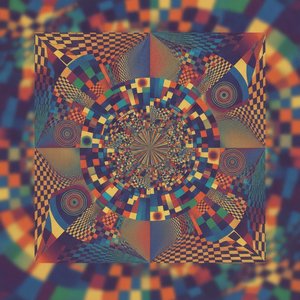
“Ion-20,” created by the visionary Victor Vasarely, is more than just a painting; it's an invitation to question your perception. This striking work, rendered in vibrant red, blue, and white hues, exemplifies the groundbreaking style of Op Art – Optical Art – that captivated the art world in the mid-20th century. Vasarely, born Károly Vaszary in 1906 in Pécs, Croatia, initially pursued a medical career before dedicating himself to exploring the fascinating relationship between mathematics and visual experience. His journey began with formal training at the Podolini-Volkmann Academy and the influential Műhely workshop under Sándor Bortnyik, where he absorbed the principles of functional design and geometric abstraction – concepts that would become the bedrock of his artistic practice.
At first glance, “Ion-20” appears as a chaotic jumble of squares. However, a closer examination reveals a meticulously constructed illusion. Vasarely’s genius lies in manipulating color and form to create an optical effect, deliberately disrupting our natural tendency to perceive objects as stable and unified. The overlapping shapes, varying sizes, and contrasting colors actively engage the viewer's eye, generating a sense of movement and depth that seems to defy the two-dimensional surface. This technique, central to Op Art, challenges the brain’s processing of visual information, creating a dynamic and mesmerizing experience. The painting’s title, “Ion-20,” subtly hints at the underlying mathematical principles – specifically, the concept of ionization – that informed Vasarely's artistic explorations.
Created using oil on canvas, "Ion-20" is a prime example of Op Art’s broader aims. Emerging in the 1960s, Op Art sought to translate scientific theories about perception and visual illusions into artistic expression. Artists like Vasarely were fascinated by the way our eyes and brains interpret patterns and shapes, leading them to create works that deliberately tricked the viewer's senses. This movement was heavily influenced by developments in psychology and neuroscience, reflecting a growing interest in understanding how we see the world. Vasarely’s work anticipated later explorations in motion graphics and digital art, demonstrating the enduring power of manipulating visual perception.
"Ion-20" doesn't convey explicit narrative content; its strength lies in its purely formal qualities. The geometric abstraction represents a detachment from representational imagery, focusing instead on the fundamental elements of form and color. The vibrant palette evokes feelings of energy, dynamism, and perhaps even a slight sense of disorientation – mirroring the perceptual challenges presented by the artwork. This piece is an invitation to contemplate the nature of perception itself, prompting viewers to consider how their brains actively construct reality.
Siden Forhåndsvisning for "Ion-20" giver dig mulighed for at se en forhåndsvisning af kunstværket, før du bestiller.
I forhold til den oplevede lysstyrke er "Ion-20" af Victor Vasarely deep_shadow.
"Ion-20" af Victor Vasarely benytter en Dark farvepalette, der indfanger værkets overordnede farvekarakter.

1906 - 1997 , Kroatien
Explore the mesmerizing world of Victor Vasarely. Discover how his Bauhaus-inspired Op Art masters the science of perception through geometric abstraction and vibrant color. A sophisticated guide for discerning art collectors seeking to understand the legacy of optical illusion.

Embark on a visual journey through the mesmerizing world of Op Art. Discover the masters of optical illusion, explore geometric abstraction, and learn how to curate high-impact kinetic works for your private collection with expert guidance from art professionals.
 Se i rummet
 Del som kort
 Del
Del
 Detaljer
 Guide
Guide

 Download
 Lignende værker
 Røntgenundersøgelse
 Diasshow
 Spørgsmål og svar
 Statistikker

 Vis mere









 Glasmulighed er kun tilgængelig i størrelser under 110 cm


